Content
Ask anyone on a jobsite what a horizontal lifeline is and you will get roughly the same answer: a cable or rope strung between two anchors so that workers can travel along a leading edge, a roof, or a bridge deck without unclipping. Ask which rules apply to that system, and the answers begin to drift. Someone quotes the 5,000-pound anchor rule. Someone else mentions sag and clearance. A third person insists the whole thing has to be designed by an engineer. They are all partly right, which is why horizontal lifeline requirements are worth laying out in order.
The requirements come in two families. The first covers the engineered system: who may design it, how strong the anchors and supporting structure must be, how far apart the intermediate anchors may sit, how many workers may be connected at once, and how much clearance the layout must leave. The second covers the equipment each worker wears: a full body harness, a connecting lanyard or self-retracting lifeline, and the connectors that join them. Satisfying one family and ignoring the other does not produce fall protection. It produces a hazard with good paperwork.
A horizontal lifeline is not a catalogue item that a maintenance technician bolts down on a Saturday morning. Fall protection rules treat it as a system that must be designed by a qualified person and installed under the supervision of a qualified person. The word "qualified" is doing real work in that sentence: it means someone who can calculate the forces a fall will place on the cable, the end anchors, and the structure behind them.
That calculation matters because the geometry changes during a fall. The line sags, the angle at each anchor flattens, and the force arriving at the anchor can be several times the weight of the falling worker. A qualified person accounts for that multiplication, for the number of users on the span, and for the strength of the structure the anchors connect to.
Most of the numbers quoted in horizontal lifeline conversations come from the anchorage rules for personal fall arrest systems. An anchorage must support at least 5,000 pounds per attached worker, or it must be designed and installed as part of a complete system that maintains a safety factor of at least two. For a horizontal lifeline, the second option is usually the one in play, because the cable, end anchors, intermediate brackets, and tensioner are engineered together as one assembly.
In practical terms, four things are verified before anyone hooks up:
Our guide to horizontal lifeline anchor types, load rules, and span sizes walks through the underlying force calculations if you want to see where those numbers come from.
Span, sag, and clearance are where a correctly purchased system still ends up unsafe. The distance between intermediate anchors is limited by the design; 60 feet is a common ceiling for a two-person span, but the design governs, not the catalogue photo. Sag matters because every inch the cable deflects adds to the distance a worker drops before the system starts to arrest the fall.
Free fall distance should stay at six feet or less, and for horizontal systems a common design target is two feet or less. Clearance is the number that decides whether the system works on your building at all, and it is calculated rather than estimated.
If the total exceeds the available clearance, the layout needs a shorter span, a different anchor height, or a connecting device that arrests within a shorter distance. No amount of good equipment fixes a clearance calculation that never happened.
Permanent systems are welded or bolted to the structure and engineered for one specific roof, runway, or bridge. Their requirements are mostly about documentation: drawings, load ratings, and inspection records that stay with the building for years. Temporary systems are assembled from stanchions, base plates, or parapet clamps, and their practical requirements are stricter. The clamps must be rated for the host structure, the person erecting the system still works from a design, and the components are inspected before every deployment, because they get moved, dropped, and stored in trucks.
Everything above describes hardware in the air. The requirements that shape what crews actually wear are just as specific, and they are the part buyers can control directly.
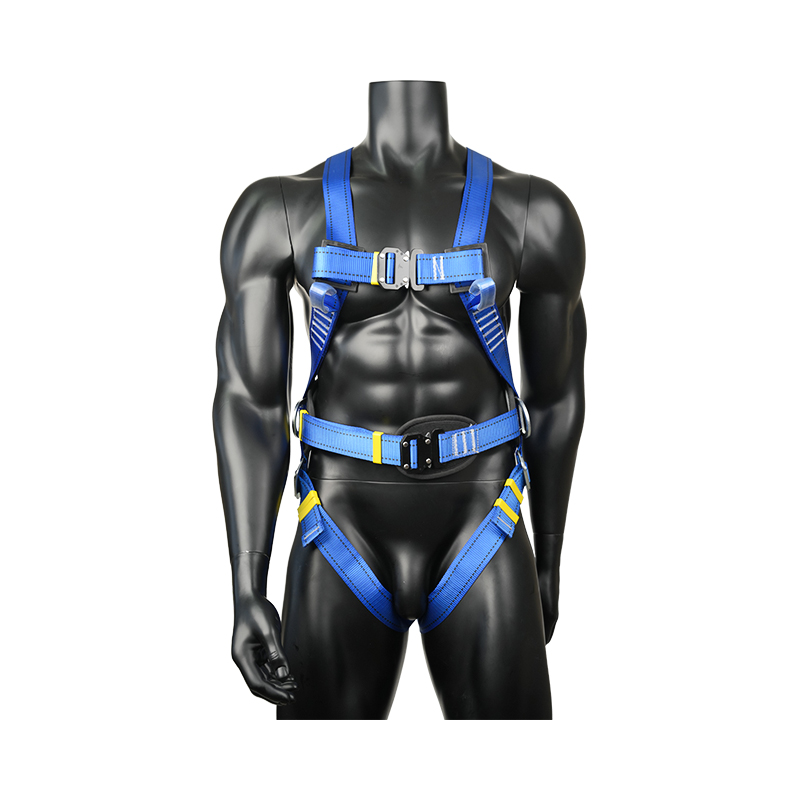
Fall arrest on a horizontal lifeline requires a full body harness. Body belts are not permitted for arrest, and a harness that has taken a fall, shows damaged or faded webbing, or has deformed hardware is removed from service. The dorsal D-ring is the attachment point for arrest, while front and side D-rings serve positioning and ladder work.
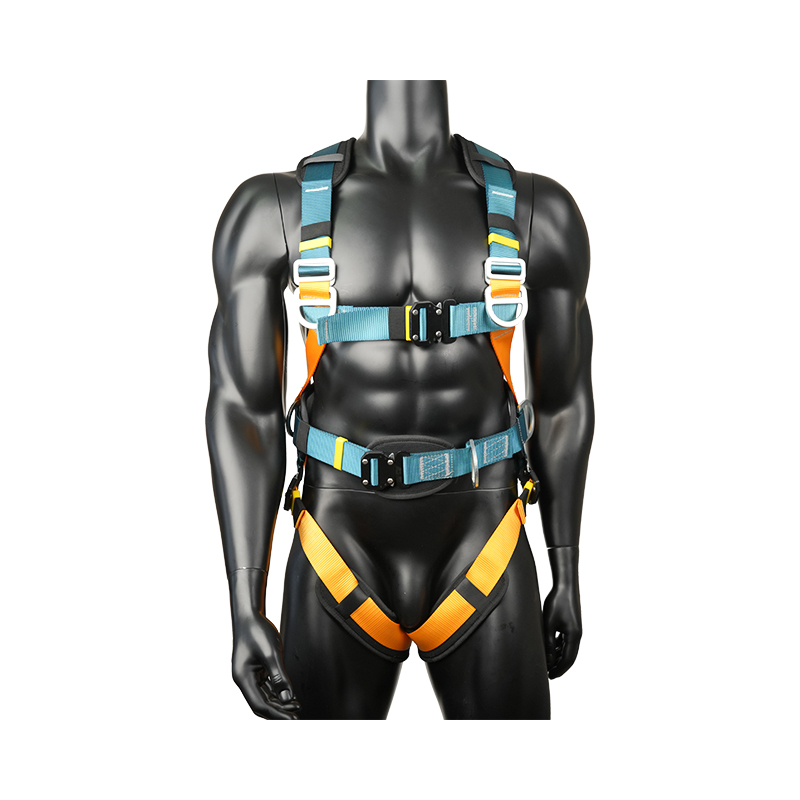 KA01 Full Body Fall Protection Harness with Six D-RingsEN 361:2002 full-body harness with six D-rings, quick-release buckles, and padding, relevant where horizontal-lifeline fall arrest demands a complete harness.View Product →
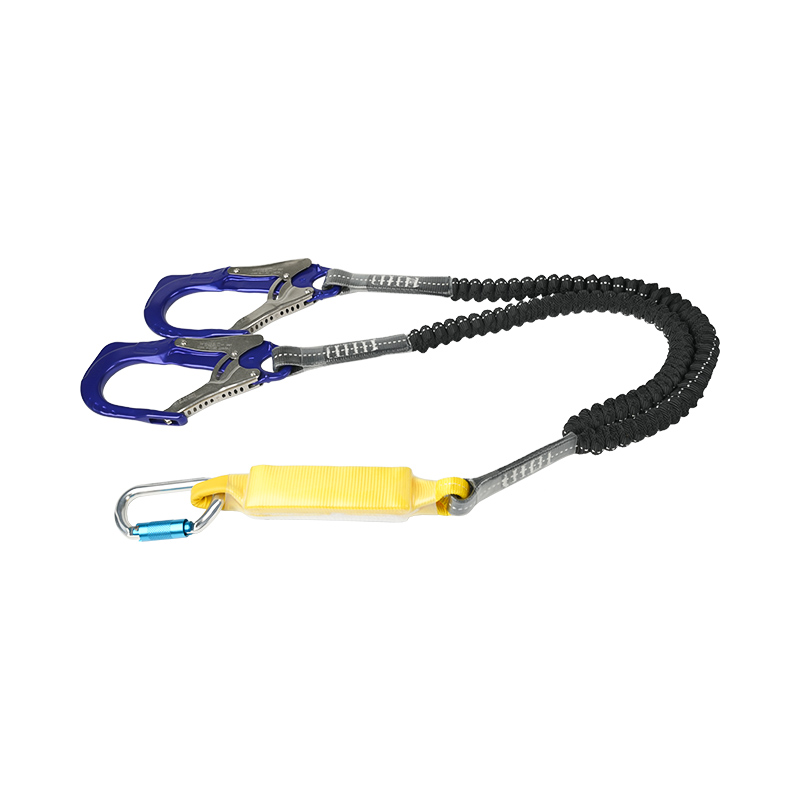
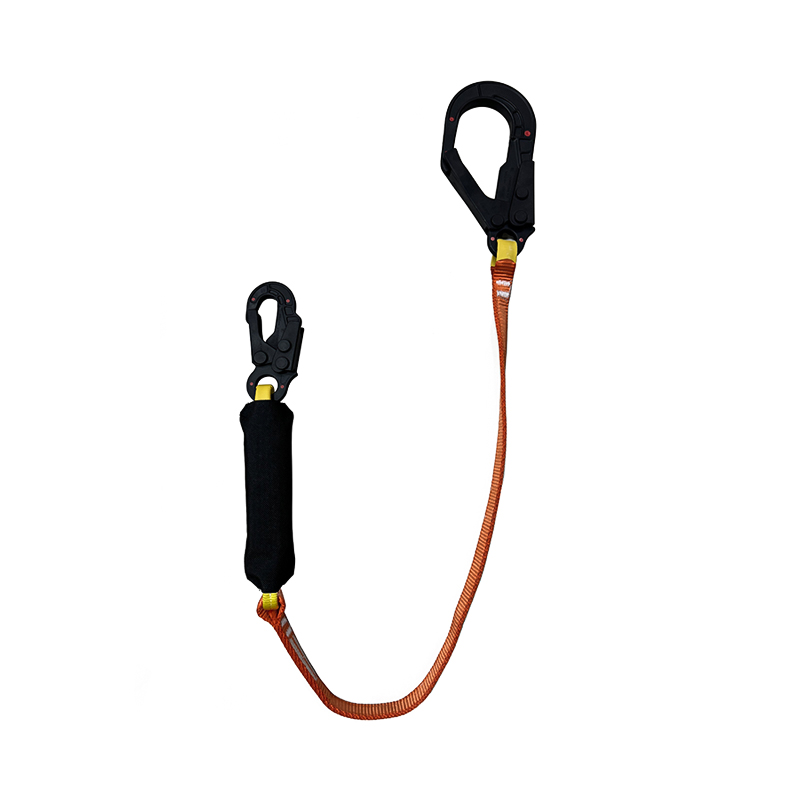
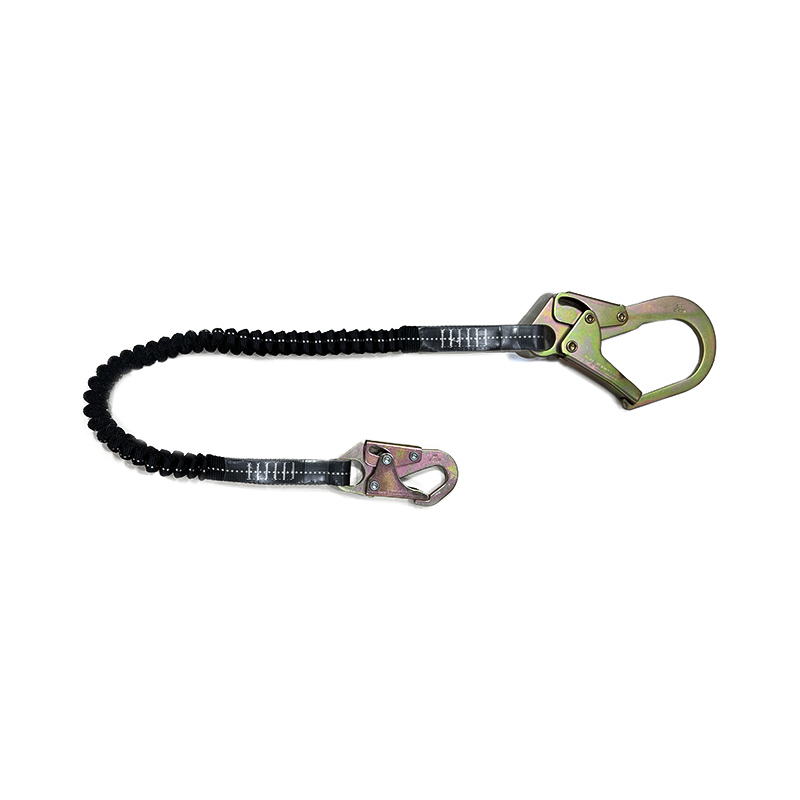
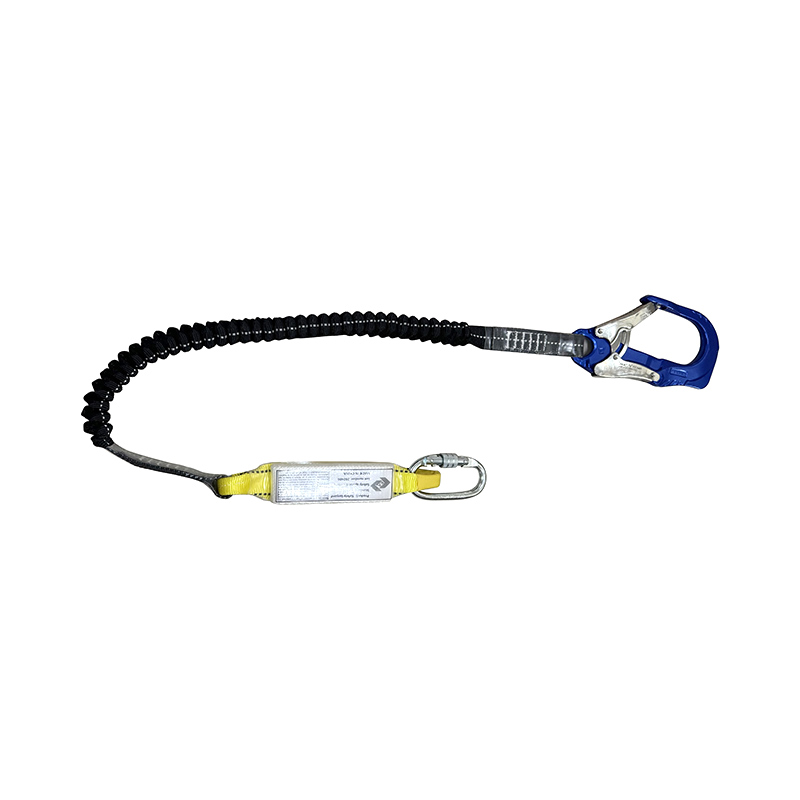
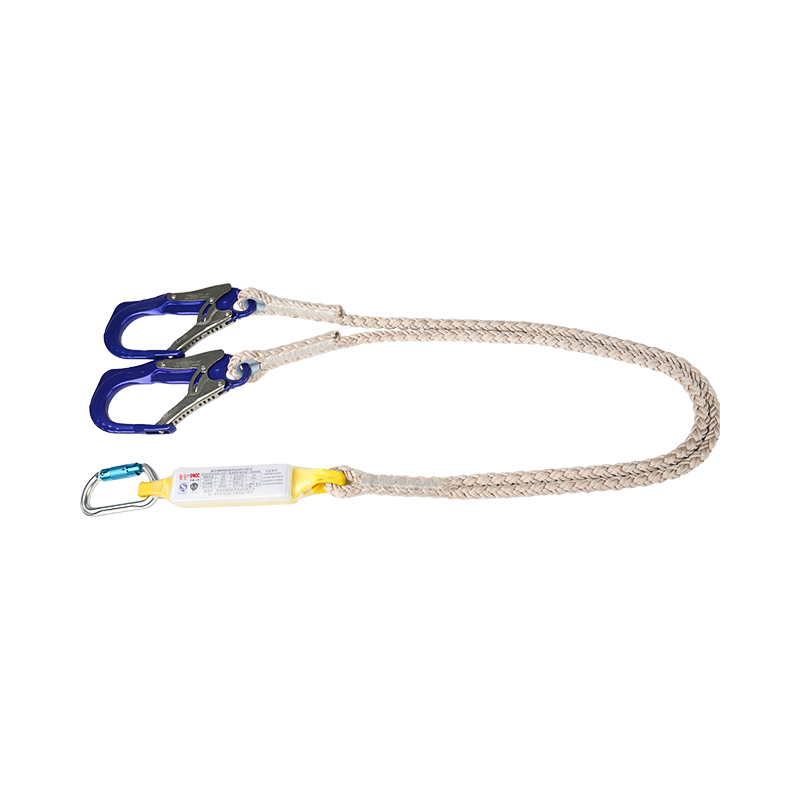
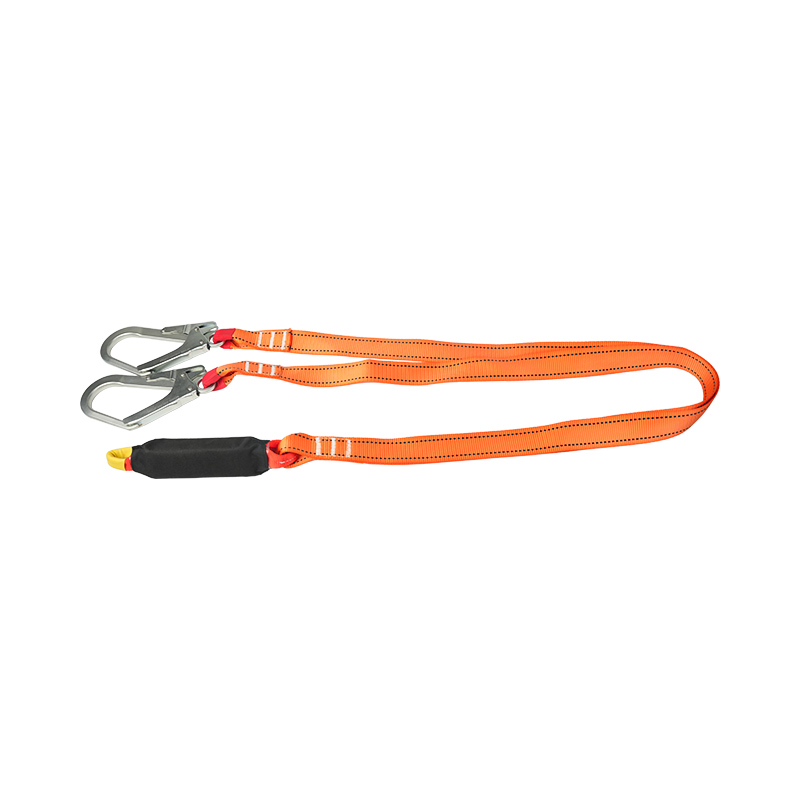
For travel along a horizontal lifeline, a twin or double lanyard is common because it lets a worker transfer between the line and a fixed anchor without ever being disconnected, which is the principle behind 100 percent tie-off. Shock absorbers keep arrest forces inside the limits a body can tolerate, and hook gate strength and compatibility with the cable or rail matter as much as the webbing does.
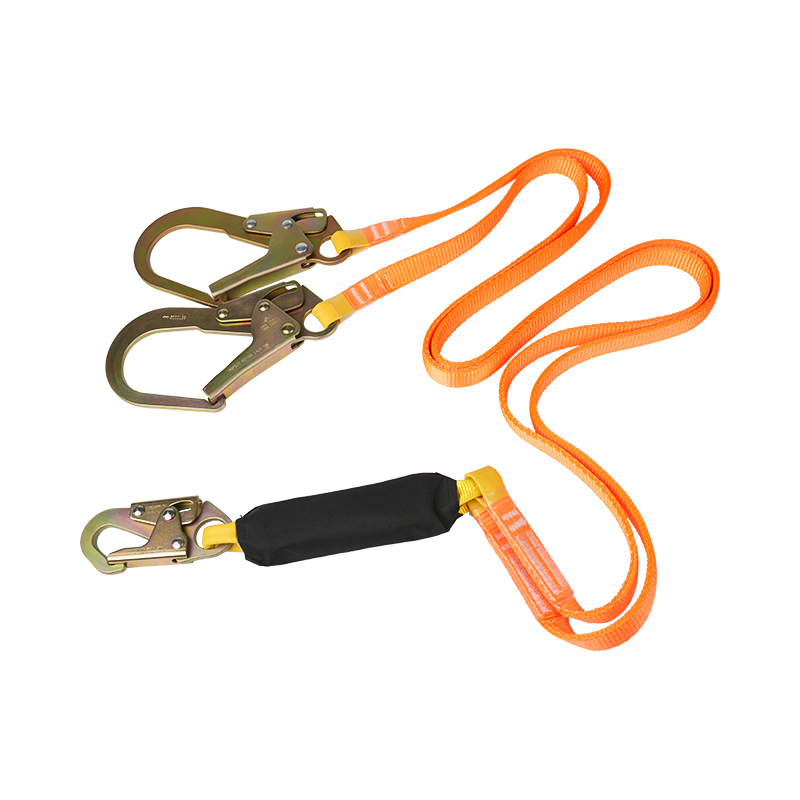 L19 Twin Fall Arrest Lanyard with Energy Absorber and ANSI HooksCE EN 354/355 twin lanyard with energy absorber and ANSI hooks supports transfer between a horizontal lifeline and fixed anchor before positioning work.View Product →
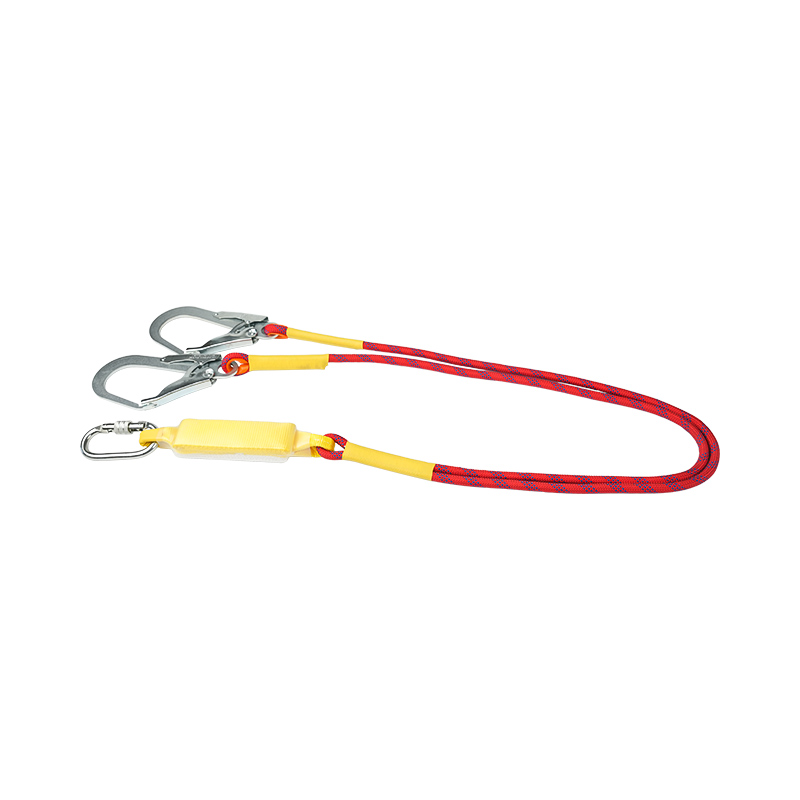
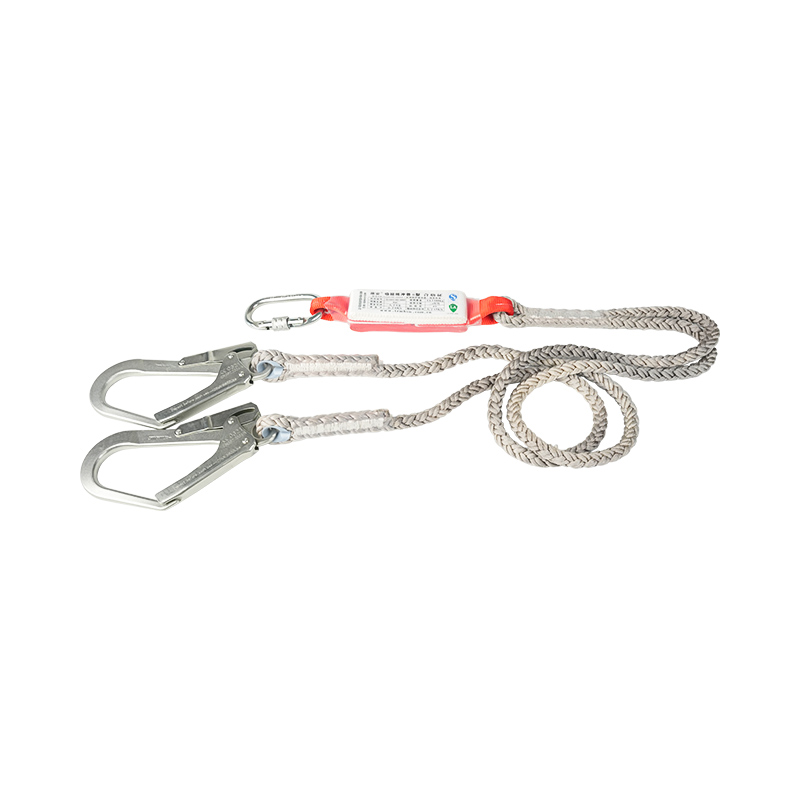
Where the job calls for positioning rather than free fall, such as a worker on a column or a ladder who needs both hands free, a positioning line or tensioned rope lifeline provides support while the arrest system stays connected to a separate anchor.
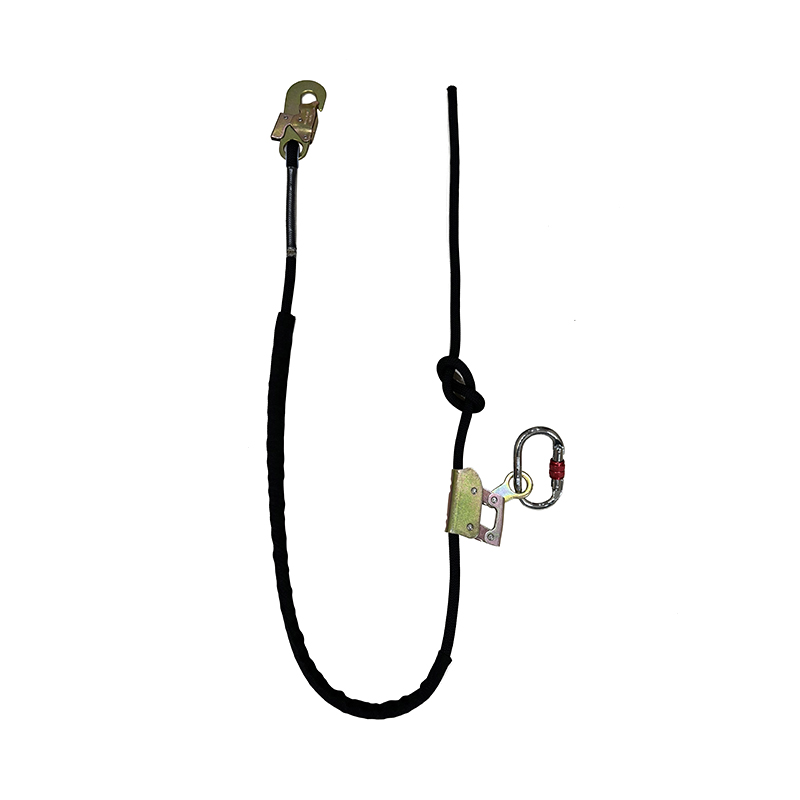 Position Lifeline with 12mm Static Nylon RopeCE EN 358 positioning lifeline using a 12mm static rope, rope grab, and two hooks for aerial work where hands-free positioning support is needed.View Product →
A horizontal lifeline is only as reliable as the routine around it. A competent person inspects the complete system at least annually and documents the result, and users check the line, anchors, tension, and their own equipment before each shift. Every worker who hooks up needs training on the specific system: how to transfer, how to work at the limits of the span, and what to do if a fall occurs. Rescue deserves the same attention. A worker suspended in a harness after an arrest has to be reached quickly, so a rescue plan with equipment on hand is part of the requirements rather than an afterthought.
| Requirement area | What it usually means | Typical source |
|---|---|---|
| Design authority | Designed by a qualified person and installed under qualified supervision | OSHA fall protection rules |
| Anchorage strength | 5,000 pounds per user, or a complete system with a safety factor of at least two | OSHA anchorage requirements |
| Supporting structure | Host structure verified to carry the full design load | System design documents |
| User capacity | Number of users per span fixed by the design, not by convenience | Engineer or manufacturer |
| Span and sag | Intermediate anchor spacing and post-fall sag limited per design, often 60 feet or less | System design, ANSI Z359.6 |
| Free fall | Six feet or less, with two feet or less as a common design target | OSHA rules, ANSI Z359.6 |
| Clearance | Free fall plus deceleration, harness stretch, sag, and margin | System design calculations |
| Personal equipment | Full body harness with a dorsal D-ring; body belts not used for arrest | OSHA personal equipment rules |
| Inspection and training | Annual competent-person inspection plus user training and a rescue plan | OSHA rules, ANSI Z359.2 |
Most horizontal lifeline problems we are asked about are not failures of engineering. They are mismatches: a well-designed span paired with lanyards that are too long, a harness with a single attachment point where the work demands transfer, or rope lifelines with the wrong stretch characteristics for the clearance available. The system drawing and the equipment list have to agree with each other.
We have been manufacturing safety harnesses, lanyards, positioning lines, and rope since 1986, and we supply distributors, safety equipment brands, and project contractors across the United States, Europe, and Asia. If you are building a range around fall protection or sourcing equipment for a specific installation, our custom safety harness and lanyard programs start from your standard, your drawing, and your packaging requirement.
Horizontal lifeline requirements are not complicated once they are separated into the engineered system and the equipment the worker wears. The system needs a qualified designer, anchors and a structure that carry the load, a span and clearance calculation that fits the building, and documentation that survives the years. The worker needs a harness, a connecting device, and training that matches the system overhead. Get both halves right, and the lifeline does exactly what it was installed to do.

San Ye Road, Si Xiang Sub-district, Hai Ling District, Tai Zhou City, Jiang Su Province, China

+86 151-5262-8620
Copyright @ Taizhou KA Protection Products Co., Ltd. All Rights Reserved



 English
 Español
 عربى
عربى
