Content
Fall protection harnesses are critical safety gear used across various industries, including construction, maintenance, and industrial work. Among the most commonly used types are the 3-point and 5-point harnesses, each with unique features designed for different levels of protection and use cases. Understanding the structural differences, strength variations, and target user scenarios can help workers choose the right harness for their specific needs.
The main structural difference between 3-point and 5-point fall protection harnesses lies in the number of straps and their configuration. While both are designed to distribute the force of a fall across the body, they do so in different ways.
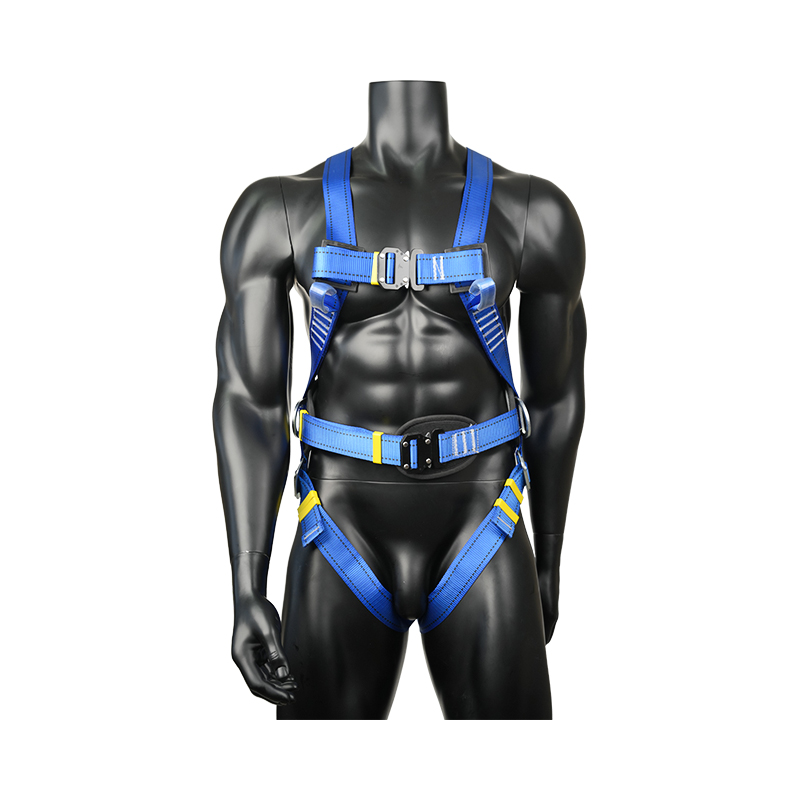
A 3-point fall protection harness typically consists of three main straps: two shoulder straps and one waist strap. This design is simple yet effective for basic fall protection needs. The straps connect at the front, usually via a chest buckle, which provides stability and a secure fit. However, because the 3-point harness doesn't offer additional lower body support, it is best suited for tasks that involve minimal movement or require less flexibility.
A 5-point harness offers a more advanced structure, including two shoulder straps, one waist strap, and two leg straps. The addition of leg straps improves the overall stability and comfort by ensuring that the harness is securely fastened around the lower body. This provides better protection during prolonged activities or jobs that involve significant movement. The 5-point harness distributes fall impact across a larger area, making it ideal for workers who need more robust protection and comfort.
When it comes to fall protection, the strength of the harness is paramount. While both the 3-point and 5-point harnesses are made from high-strength materials like nylon or polyester webbing, their structural differences affect their durability and load-bearing capacity.
The 3-point harness is designed for basic fall protection and is typically rated for standard applications with moderate load-bearing requirements. It is ideal for lighter tasks where there isn't much movement, such as working on scaffolding or using ladders. Its strength is sufficient for general safety, but for more demanding tasks or environments, the 3-point harness may not provide enough support, especially in the event of a fall.
The 5-point harness is built for higher durability and strength. With its extra straps and broader coverage, it offers superior load distribution. This design is more suitable for high-risk environments where falls are more likely, such as in construction or oil rig work. The extra leg straps and the additional connection points ensure that the harness remains firmly in place even under the strain of a fall, providing enhanced security and reducing the risk of injury.
The choice between a 3-point and a 5-point fall protection harness largely depends on the nature of the job and the specific safety requirements of the task at hand.
3-point harnesses are typically used in situations that do not require extended movement or long periods of wear. They are well-suited for tasks where workers need basic fall protection, such as:
In contrast, 5-point harnesses are designed for higher-risk tasks that require both movement and maximum protection. They are ideal for jobs such as:
The following table summarizes the key differences between the 3-point and 5-point fall protection harnesses:
| Feature | 3-Point Harness | 5-Point Harness |
| Straps | 3 (2 shoulder, 1 waist) | 5 (2 shoulder, 1 waist, 2 leg) |
| Strength | Moderate | High |
| Best for | Basic, low-risk tasks | High-risk, demanding tasks |
| Comfort | Basic | Advanced, more secure |

San Ye Road, Si Xiang Sub-district, Hai Ling District, Tai Zhou City, Jiang Su Province, China

+86 151-5262-8620
Copyright @ Taizhou KA Protection Products Co., Ltd. All Rights Reserved



 English
 Español
 عربى
عربى
