Content
A California roofing contractor spreads the drawings on a tailgate: three workers, a 120-foot parapet edge, and the same question that comes up on every job. “How far apart do the anchor points need to be?” The expected answer is usually a number like 20 feet. Under the California Building Code (CBC), the honest answer is more useful: the CBC does not set a universal anchor-point spacing. It sets load, free-fall, and system-performance rules, and the spacing is your engineering output.
The CBC, together with California’s occupational safety rules, treats an anchor point as part of a complete personal fall arrest system (PFAS). For a PFAS, each anchor point must support at least 5,000 lb (22.2 kN) per worker attached, unless the entire system is engineered by a qualified person with a safety factor of at least two. That 5,000-lb value is the most common target in California, but it is only the start.
For work positioning, California regulations require anchorages to support two times the intended load, or a minimum of 3,000 lb. For a true fall restraint system that prevents a worker from reaching the fall hazard, the anchorage capacity is lower than an arrest anchor, but only because the restraint system should never allow the worker to enter the danger zone. Lower capacity does not mean less engineering care; it means you must verify that the system truly stops movement before the edge.
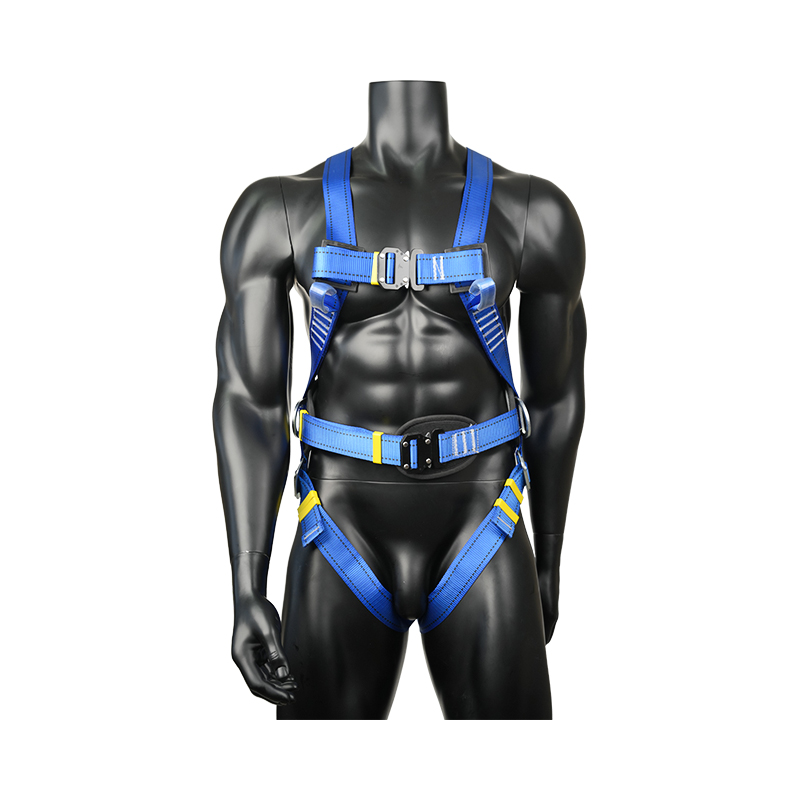
A compliant PFAS also needs a full-body harness that matches the task. The KA02 full-body construction and roof safety harness offers six D-rings, a wide waist pad, and quick-release buckles, giving workers multiple acceptable attachment points for arrest or restraint.
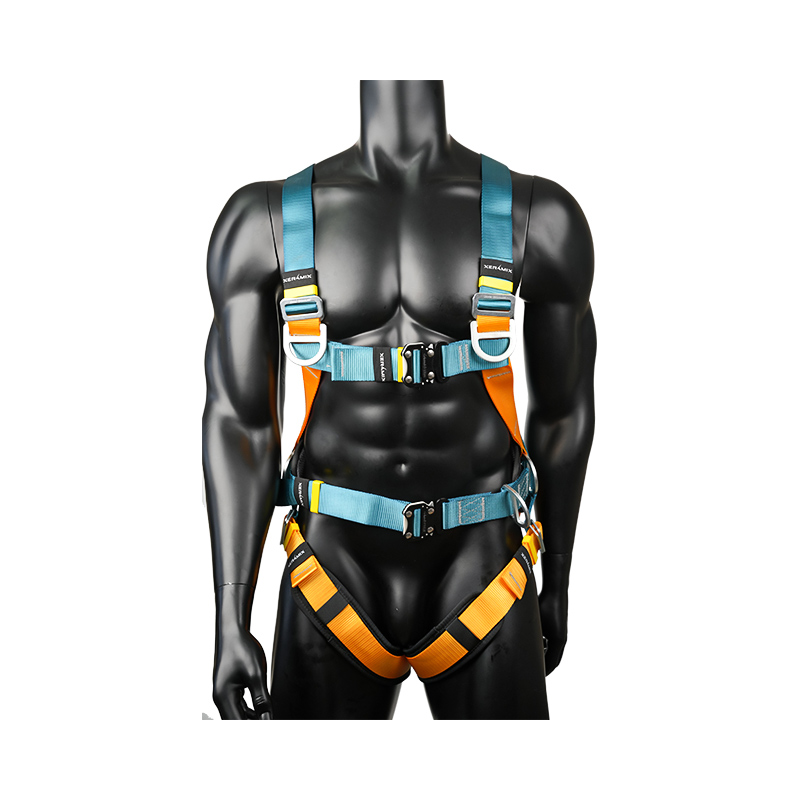 KA02 6 D rings , 2 quick-release buckle, big waist pad full body construction rKA Protective Products is China Suppliers of KA02 6 D rings , 2 quick-release buckle, big waist pad full body construction roof safety h...View Product →
Code language focuses on performance, not dimensions. The CBC and OSHA do not print a table that says “space anchors every X feet.” If someone gives you that number, ask to see the calculation behind it. The spacing depends on at least four variables: lanyard length and energy-absorber extension, the position of the anchor relative to the worker’s dorsal D-ring, horizontal lifeline deflection if you use an HLL, and swing-fall distance.
Take the most common setup: a 6-foot shock-absorbing lanyard. If the anchor is at the worker’s feet, a fall can produce 6 feet of free fall before the shock absorber opens. Add deployment of the energy absorber plus harness stretch, and the required clearance below the working surface can exceed 12 feet. On a single-story roof, that can mean hitting the ground. The safe response is to place anchors above the D-ring and space them so that the worker is not forced to work from a position that adds side loading.
A worker who walks 15 feet away from an anchor attached to an 8-foot lanyard may have horizontal slack in the line. If that worker slips, the anchor-to-worker connection becomes a pendulum, and the worker swings laterally before the system arrests. Swing fall can push a person into a parapet or an HVAC unit, and it also increases the forces on the anchor. Anchor spacing should therefore keep the worker close to the vertical line of the anchor. A widely used design rule is keeping the horizontal angle from the worker to the anchor within about 30 degrees, but even that must be verified for the specific equipment and clearance situation.
If you are not using an HLL, spacing individual anchor points follows the same logic. Identify the structural columns or roof framing that are strong enough, then lay out anchors so that every point along the work edge can be protected without exceeding the lanyard’s allowed geometry. In a roof with 20-foot column spacing, the “20-foot rule” gets quoted—but it only works if the columns themselves qualify as anchorages and the lanyard and D-ring position keep the worker inside the system’s limits.
For long roof edges or large-span structures, many contractors choose a horizontal lifeline (HLL). Anchors are installed at intervals, with a cable or rope spanning between them. The CBC treats HLLs as engineered systems: they must be designed, installed, and used under the supervision of a qualified person. This is not paperwork. HLL anchor spacing directly controls sag, and sag controls free-fall distance and clearance.
There is a common misconception that OSHA sets a maximum span of 30 feet for HLL anchors. What actually exists is product-specific engineering. Many pre-engineered HLL systems are rated for spans of 30 feet or less, and their manuals often state “maximum 30-foot span.” That number comes from the manufacturer’s testing, not from the CBC. If you use a component-based HLL, you must either follow a qualified person’s design or use a manufacturer-rated system. The anchor points also must be installed on structural members that can handle the reaction forces—an end anchor for a long HLL can see forces far above the static 5,000-lb rating.
The required load capacity changes with the type of system you install. This matters for procurement as well as layout.
| System type | Minimum anchor capacity | Typical driver |
|---|---|---|
| Personal fall arrest | 5,000 lb per worker (22.2 kN) or engineered system with safety factor of 2 | Arrest force after a fall |
| Fall restraint | 3,000 lb per worker in construction applications, or as engineered | Prevents the worker from reaching the hazard |
| Positioning device | 2 times the intended load, or 3,000 lb, whichever is greater | Supports the worker while hands are free |
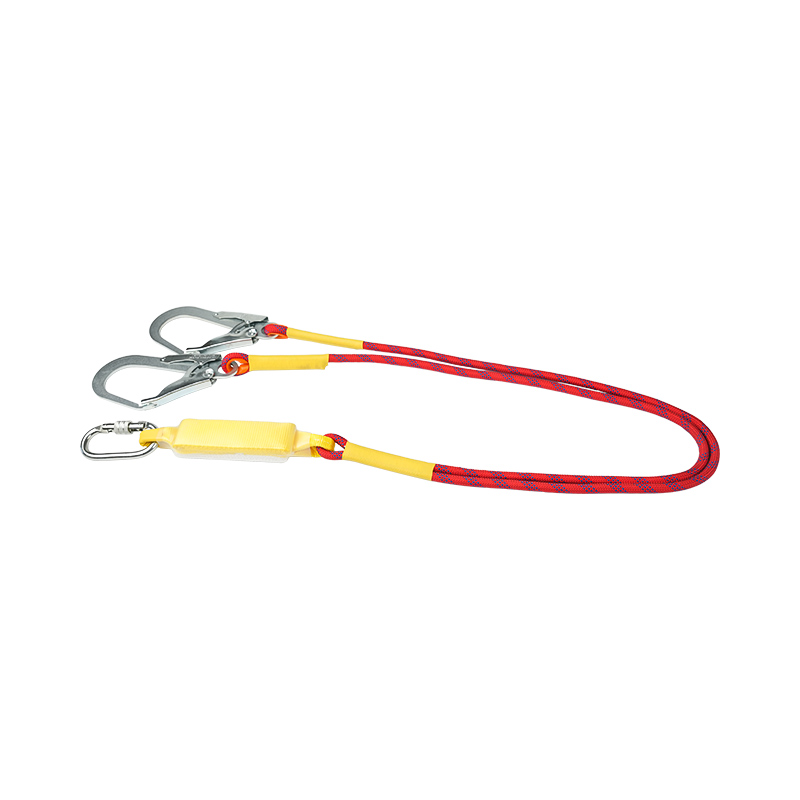
The table matters for purchasing. If you buy a positioning line, a 5,000-lb anchor is still not wrong, but you may not need one. If you buy a fall arrest lanyard, you must verify that the anchor system can take the full load. A nylon positioning lifeline can be part of a restraint or positioning arrangement, but only when the anchor point and clearances have been checked before work starts.
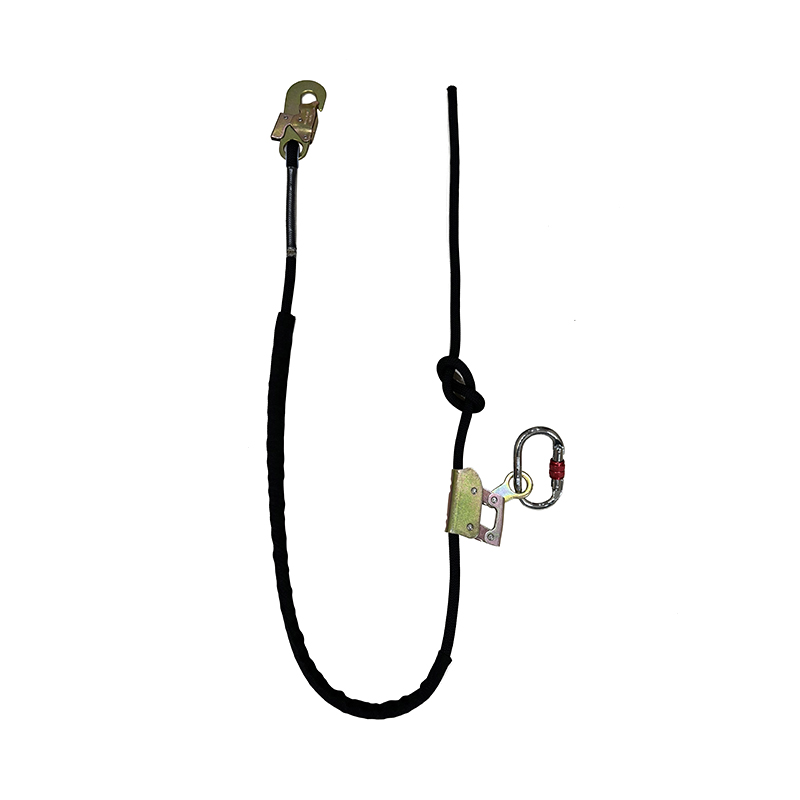 Position Lifeline With Nylon Rope Suppliers, Factory - Taizhou KA Protective ProKA Protective Products is China Suppliers of Position Lifeline With Nylon Rope , Factory Wholesale Position Lifeline With Nylon Rope,The ...View Product →
Treat the spacing exercise as a simple but rigorous process:
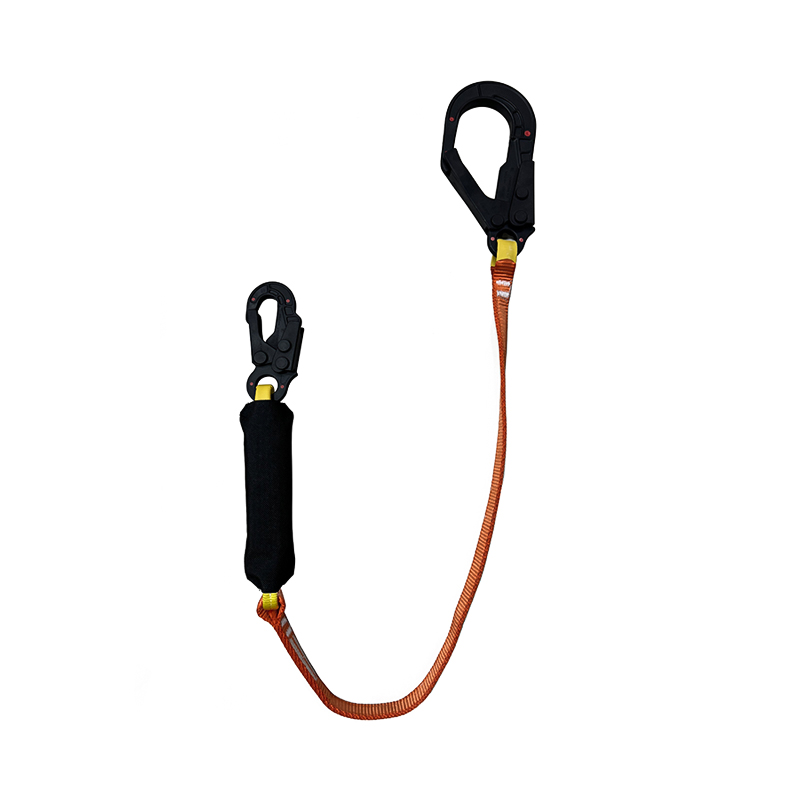
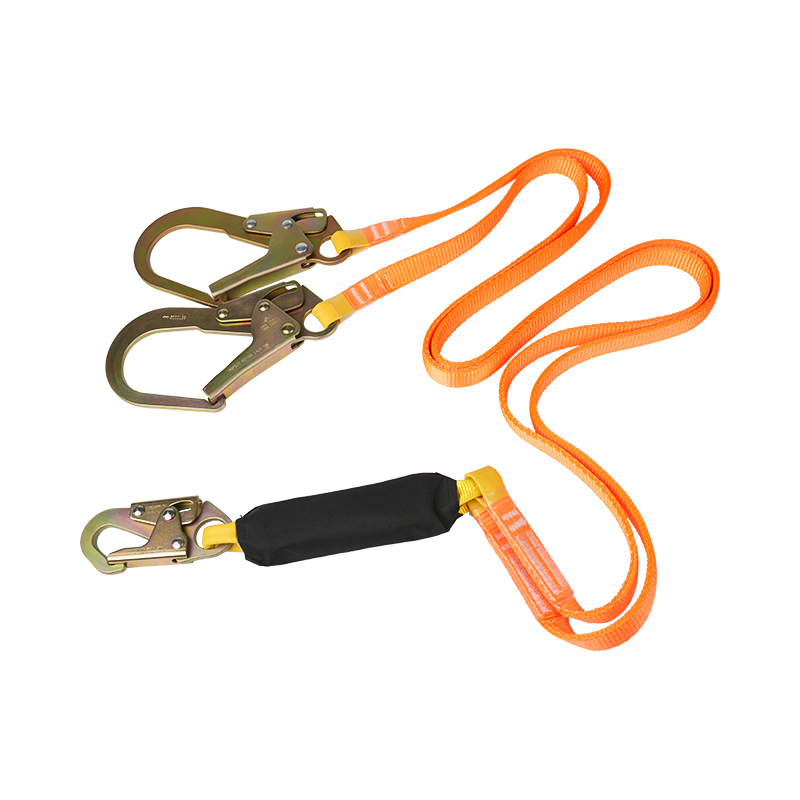
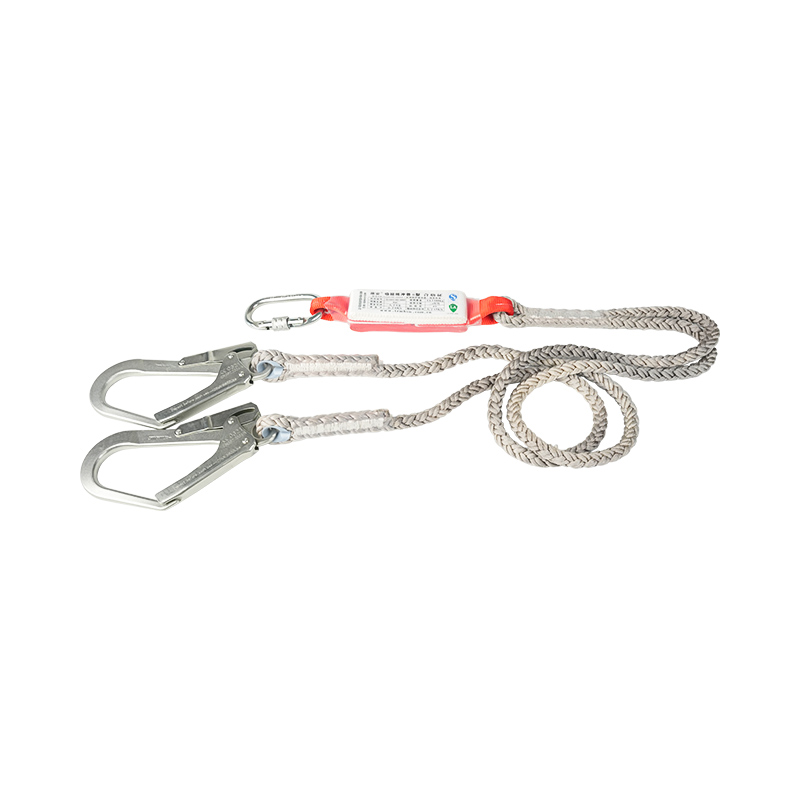
When anchors must be located at foot level or below, use a shorter lanyard or a fall arrest system designed for that condition. The components you choose—such as a single lanyard with a 44 mm polyester webbing shock absorber and scaffold hook—must be matched to the anchor height and the clearance calculation.
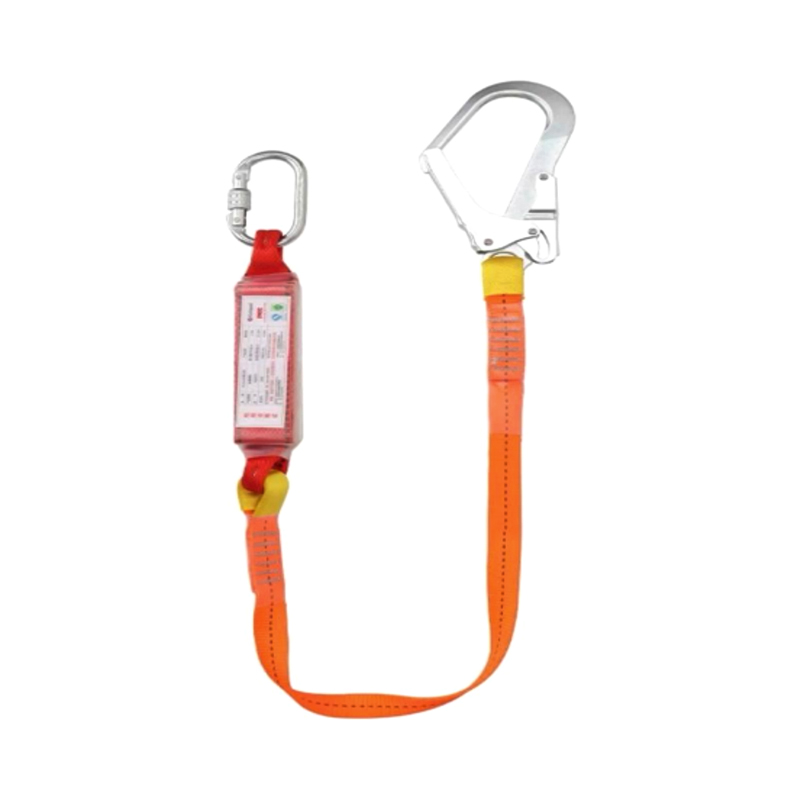 KA-LS06 Fall Arrest Shock Absorber Single Lanyard With Polyester 44mm Webbing,1 KA Protective Products is China Suppliers of KA-LS06 Fall Arrest Shock Absorber Single Lanyard With Polyester 44mm Webbing,1 Scafford Hoo...View Product →
Anchor spacing is only as good as the anchors themselves. Before each use, inspect the anchor for deformation, corrosion, loose bolts, and legible labels. Permanent roof anchors usually have a manufacturer-recommended inspection interval of one year, but a daily visual check is still the baseline. If an anchor has been subjected to a fall load, remove it from service until a qualified person or the manufacturer has evaluated it.
California’s emphasis on written fall protection plans means your anchor layout should be captured on paper. Include a site plan, anchor IDs, load capacities, lanyard types, and the calculations for clearance and swing fall. When a Cal/OSHA officer asks why anchors are 22 feet apart instead of 12, the answer must be the calculation, not the guess.
The next time someone asks for the CBC anchor-point spacing, reply that the code expects a design, not a digit. Anchor spacing falls out of the interaction between anchor strength, free-fall distance, lanyard deployment, HLL sag, and swing-fall geometry. Work with a qualified person, choose equipment that is compatible with your system, and keep clear records.
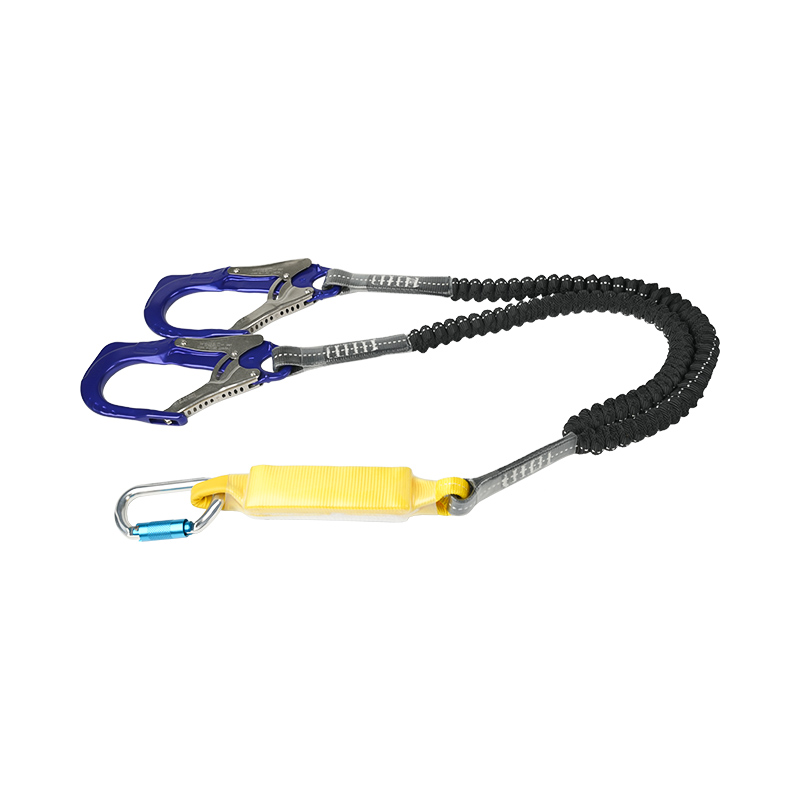
For buyers and safety managers, this also means sourcing from a supplier that can discuss system integration rather than just boxes of hardware. A fall protection equipment manufacturer with a range of harnesses, lanyards, and positioning lines can help you match components to the anchor layout before the first anchor is installed.


San Ye Road, Si Xiang Sub-district, Hai Ling District, Tai Zhou City, Jiang Su Province, China

+86 151-5262-8620
Copyright @ Taizhou KA Protection Products Co., Ltd. All Rights Reserved



 English
 Español
 عربى
عربى
