Content
A decking crew is closing out the last bay of a high-rise floor. The perimeter guardrails are not up yet, and the only practical anchor is the metal deck itself — at ankle height, a few feet from an open edge. Clipping a Class 1 SRL to that anchor fails twice at once: the device was never tested for anchorage below the worker's dorsal D-ring, and it was never tested for a lifeline that will drag across a sharp steel edge during the fall.
A Class 2 SRL exists for exactly this situation. Under ANSI/ASSP Z359.14-2021, it is a self-retracting lifeline rated for anchorage above, level with, or up to five feet below the dorsal D-ring, and it must pass dynamic drop testing over an edge. The rating alone does not make a fall survivable, though — anchor strength, fall clearance, and the harness at the other end of the line decide the rest. Here is what buyers, safety managers, and distributors should verify before specifying one.
An SRL houses a drum-wound lifeline that pays out under light tension and retracts as the worker moves. When deceleration exceeds a set threshold, an internal brake engages and stops the fall within a short, controlled distance. The US standard covering these devices, ANSI/ASSP Z359.14, was revised in 2021 and replaced the old Class A / Class B split with a two-class system based on where the device can be anchored.
One clarification matters for anyone managing older equipment: the familiar "LE" or "leading edge" tag has been folded into Class 2, and an old Class B device is not a Class 2 device. Class B posted similar arresting numbers on paper under the 2014 revision, but it was never subjected to the same edge-drop protocol that defines Class 2 today. Treating the two as interchangeable is one of the most common compliance gaps in aging fleets.
Both classes stop a fall within regulated limits of distance and force. The differences show up in where you can anchor, how far the device may let you drop, and what the hardware is built to withstand.
| Attribute | Class 1 SRL | Class 2 SRL |
|---|---|---|
| Permitted anchorage | At or above the dorsal D-ring | Above, at, or up to 5 ft (1.5 m) below the D-ring |
| Leading edge exposure | Not rated | Rated; dynamic drop tests over an edge required |
| Maximum arrest distance | 24 in (610 mm) | 42 in (1.07 m) |
| Maximum arresting force | 1,350 lbf (6 kN) | 1,350 lbf (6 kN) |
| Typical applications | Overhead anchors with no edge in the fall path | Steel erection, decking, roofing, formwork, foot-level anchors |
| Relative cost | Lower | Higher |
The larger permitted arrest distance is not a defect — it is the trade-off that makes foot-level anchorage possible — but it directly changes the clearance calculation covered below. At purchase volume, the cost difference buys flexibility: on a mixed job site, one Class 2 model can often replace a set of Class 1 units plus separate restraint arrangements.
Perimeter decking, unprotected roof edges, floor openings, pipe racks, and sloped formwork share one hazard: in a fall, the lifeline can come to rest across an edge, and concrete or steel can sever an unprotected line under dynamic load. Class 2 devices use reinforced lifelines and energy management designed to survive that contact, which is why general contractors increasingly write Class 2 into steel erection and decking scopes.
Rebar mats, column bases, and deck-mounted anchors put the worker's D-ring well above the anchor point. Free fall lengthens before the brake engages, and the device must still arrest cleanly. Class 2 is specifically tested with the D-ring up to five feet below the anchor; Class 1 simply is not.
If the anchor is reliably overhead and no edge sits in the fall path — inspection gantries, engineered horizontal lifelines inside a plant, crane runways — a Class 1 device protects equally well, arrests in a shorter distance, and costs less. One caution applies to both classes: neither rating protects against a pendulum swing, so position anchors so the line stays roughly perpendicular to the work path.
Start with the label. Z359.14-2021 requires a legible class marking on the housing, alongside the manufacturer, model, manufacture date, working length, and anchorage instructions. A device that only says "Class B," "LE," or "leading edge capable" without a Class 2 marking should be treated as pre-2021 stock.
There is no grandfathering and no conversion kit. An older unit cannot be relabeled or retrofitted into Class 2, because the class is proven through new testing of the current design, not paperwork.
For buyers, the practical risk is old inventory. Distributors clearing warehouses may still quote devices certified to the 2014 revision, and whoever signs that purchase order inherits a compliance problem. Put the standard revision and required class marking into the specification itself, and check labels at goods-in before anything is issued to a crew.
Anchor strength comes first. OSHA requires every personal fall arrest anchorage to hold 5,000 pounds per attached worker, or to be designed with a safety factor of at least two under a qualified person — a requirement worth studying in detail before any device, of any class, is clipped to it.
Clearance comes second. Total required clearance below the working level equals free fall, plus the deceleration distance — up to 42 inches on a Class 2 device — plus D-ring shift and harness stretch, plus a safety margin. A foot-level anchor adds the whole anchor-to-D-ring distance to free fall, which is why foot-level Class 2 applications often demand six feet of clearance or more. Use the manufacturer's published clearance figure for the exact model and configuration, never a jobsite rule of thumb.
OSHA also caps free fall at six feet and prohibits contact with any lower level during the fall. If the numbers do not close, the answer is a shorter device, a higher anchor, or a different system — never a smaller margin.
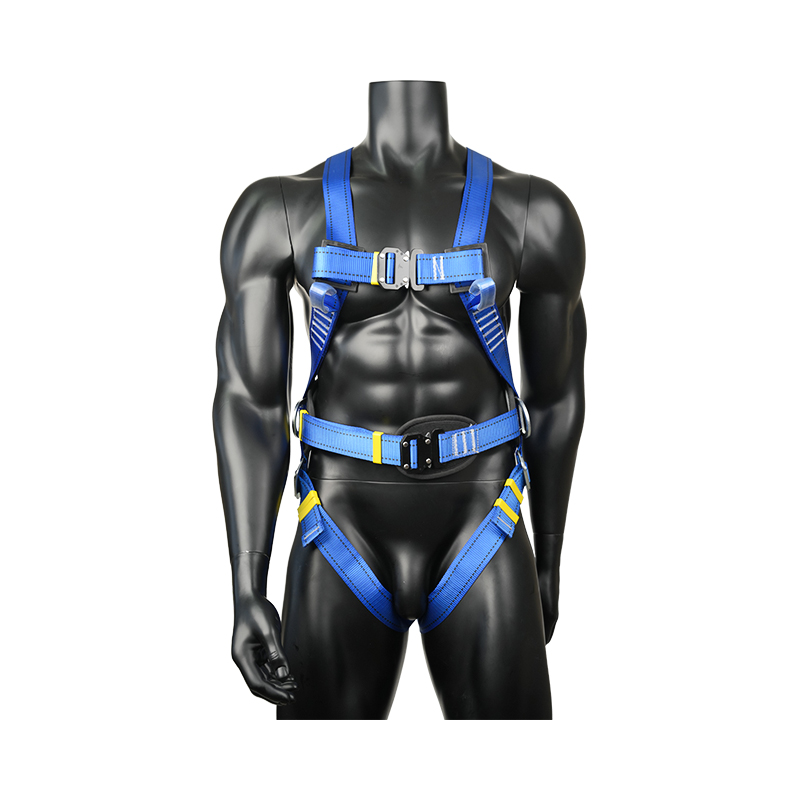
An SRL is only as good as the full-body harness it connects to. The dorsal D-ring carries the entire arrest load, so D-ring placement, webbing strength, and adjustment stability matter as much as the device rating. For crews on steel decks and roofs, we build harnesses around exactly this duty — multi-point models with heavy padding and quick-release buckles that stay comfortable through a full shift.
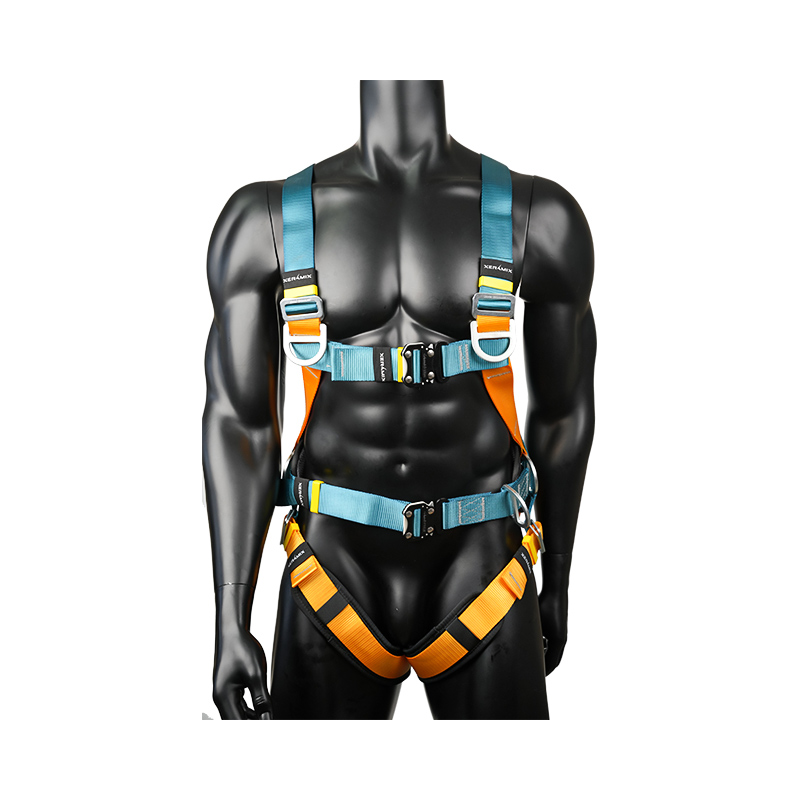 KA02 Full-Body Roof Safety Harness With Six D-Rings And Padded WaistA full-body harness with six attachment D-rings, two quick-release buckles, and a large EVA waist pad. Since the dorsal D-ring carries the full arrest load, a well-fitted, adjustable harness like this is the essential anchor-side counterpart to any SRL or lanyard.View Product →
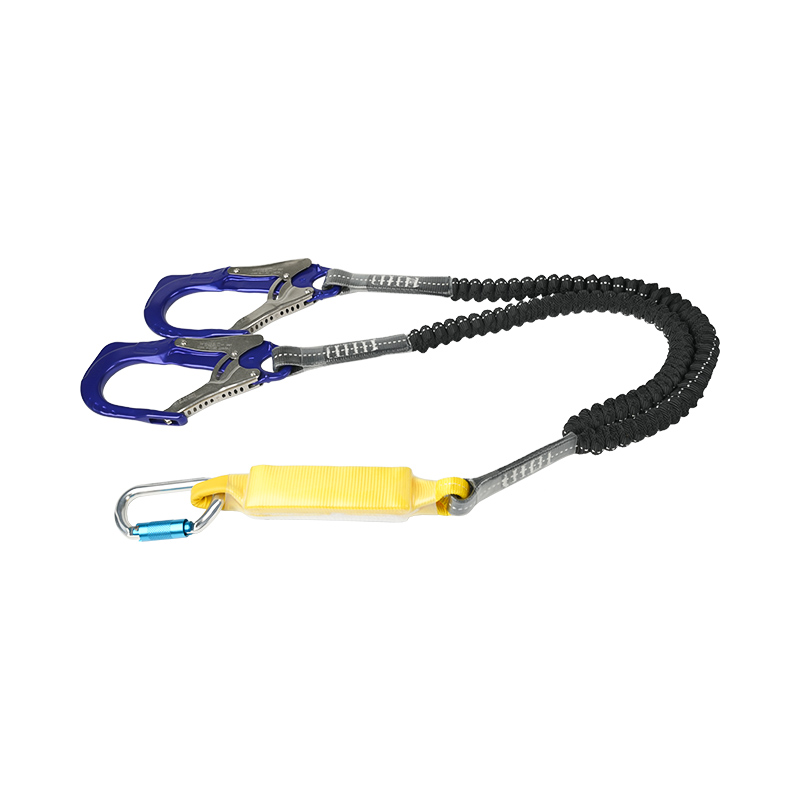
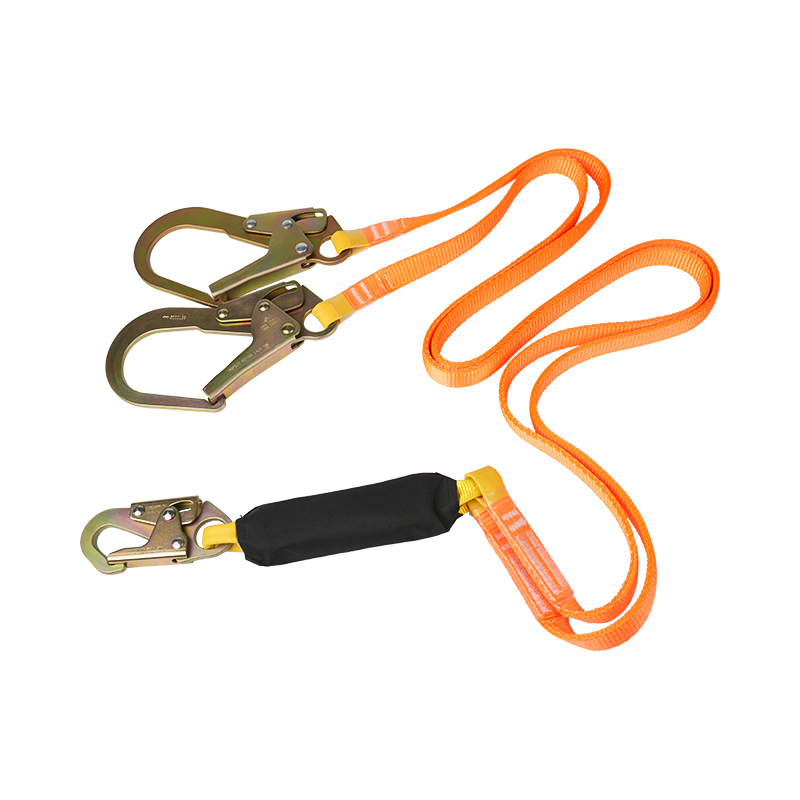
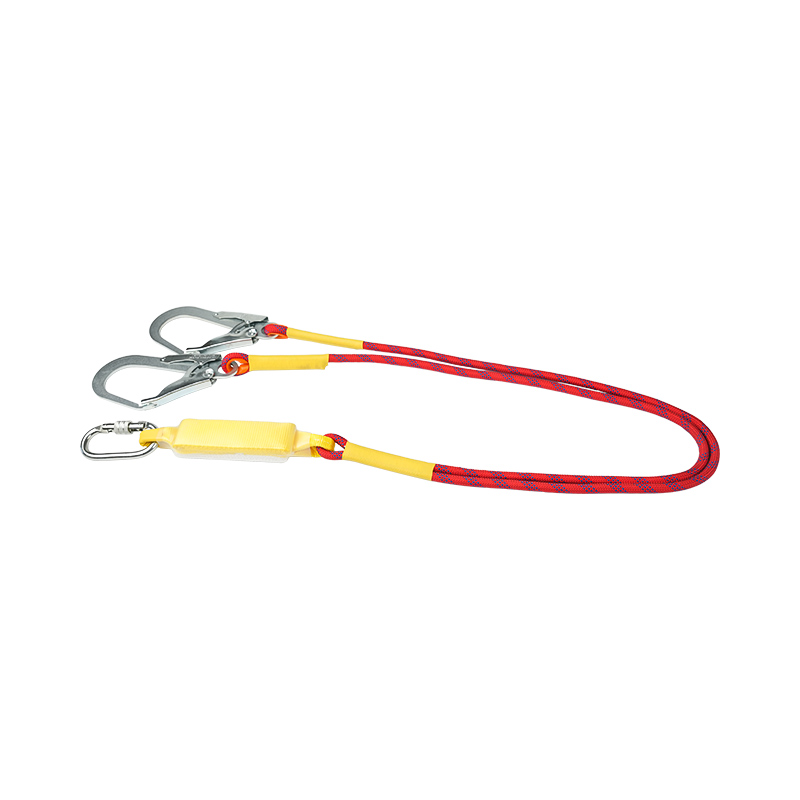
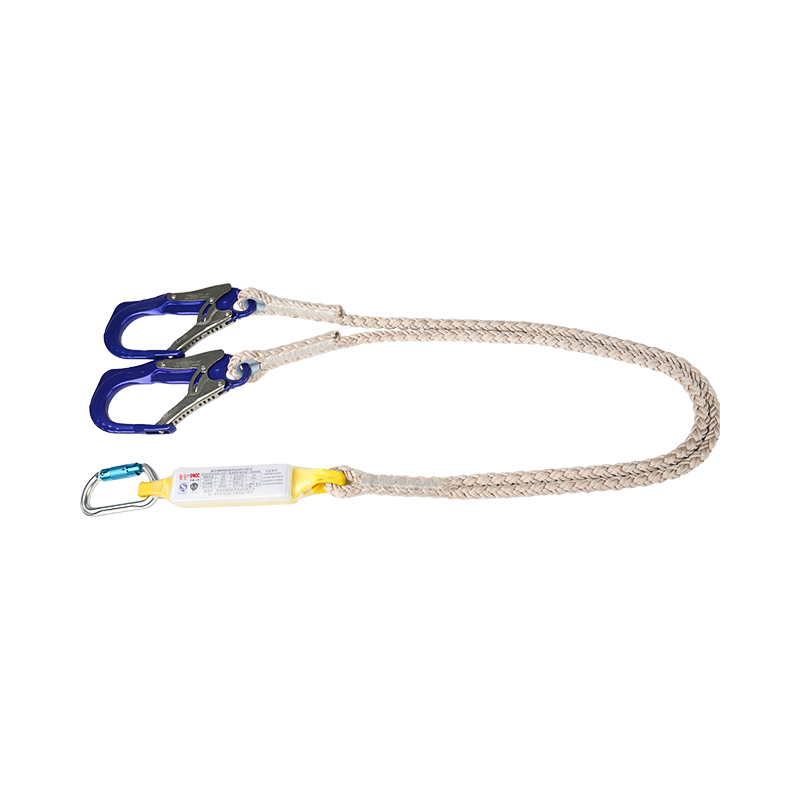
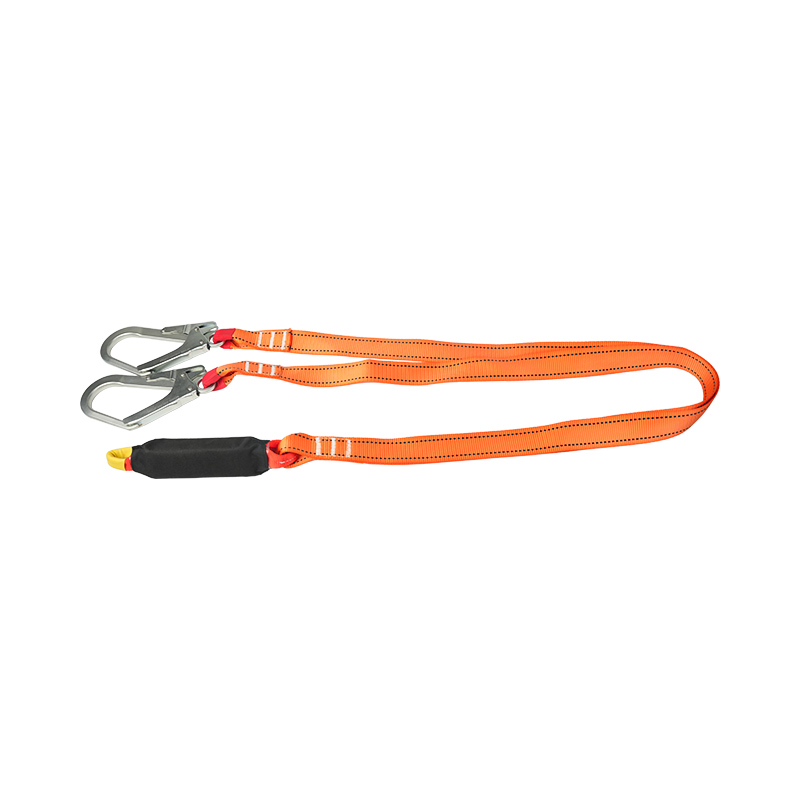
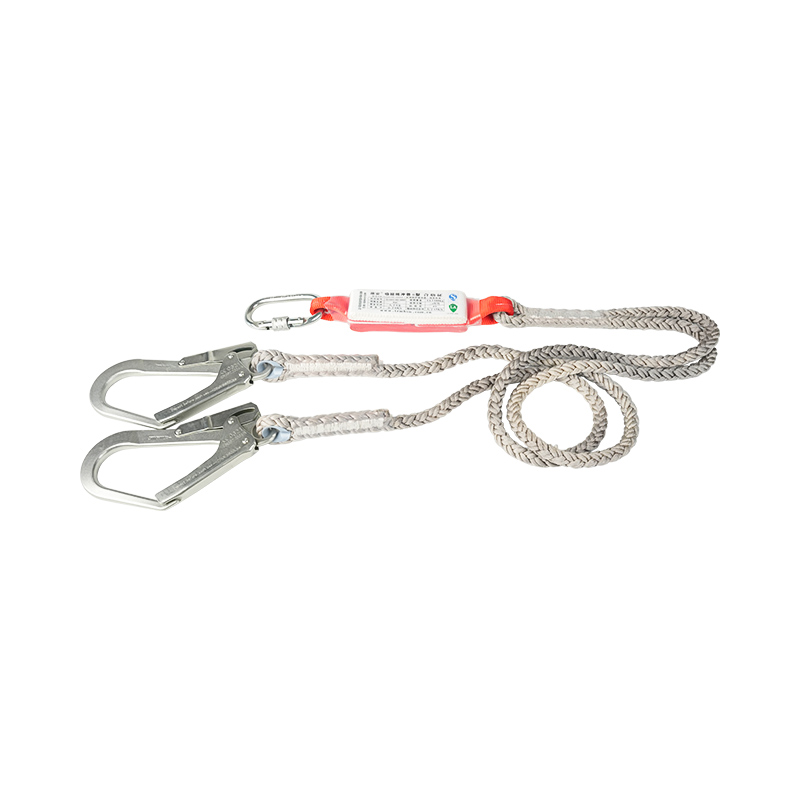
Workers stepping across rebar, moving between anchor points, or tying off on scaffolds often need continuous 100% tie-off in tight quarters, where an SRL housing gets in the way. A twin-leg shock-absorbing lanyard with scaffold hooks remains the default there: lighter, simpler to inspect, and always leaving one leg connected.
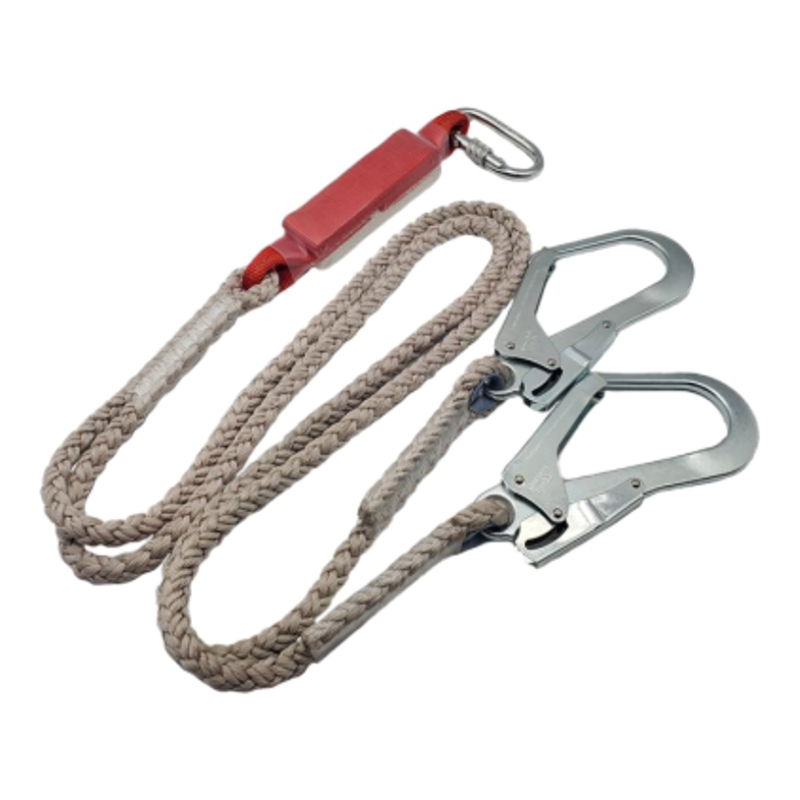 KA-L02 Twin-Leg Shock-Absorbing Lanyard With Scaffold Hooks And Polyamide RopeA 1.8 m twin-leg lanyard with high-strength polyamide rope, two forged scaffold hooks, a carabiner, and an energy absorber. In tight rebar and scaffold work where SRLs get in the way, it provides continuous 100% tie-off while staying light and easy to inspect.View Product →
Utility and line crews face a second constraint: energized equipment. Around conductors and switchgear, ordinary metal hardware introduces risks a standard kit does not address, which is why dielectric harnesses and lanyards with insulated hooks exist as their own product family rather than as add-on options.
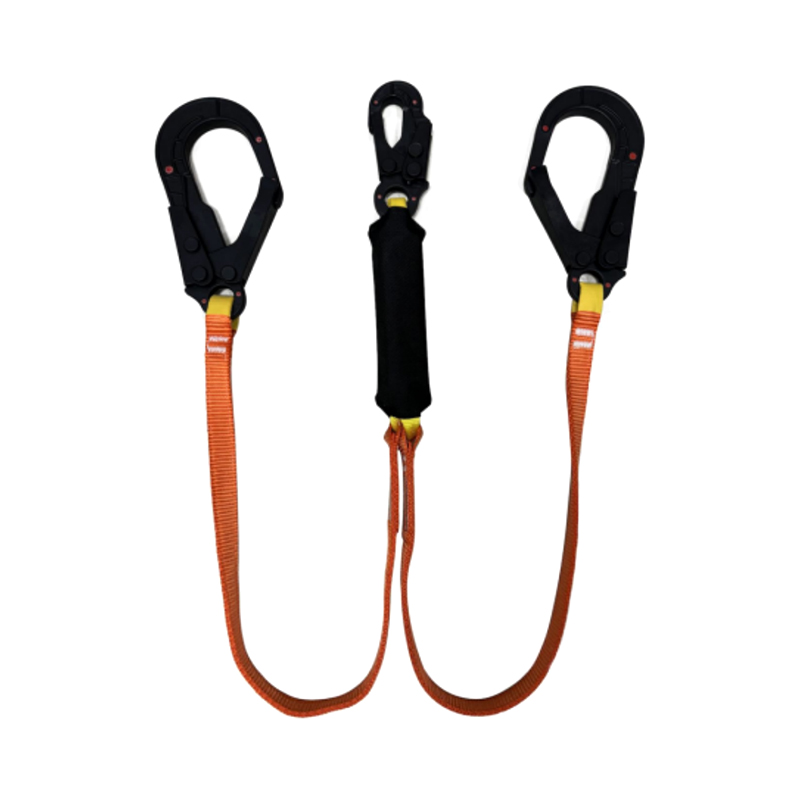 KA-L16 Dielectric Twin Lanyard With Insulated Hooks And Shock AbsorberA twin-leg lanyard with fully insulated metal components, two insulated scaffold hooks, an insulated connector, and a shock absorber under double-layer polyester webbing. For utility crews near energized equipment, dielectric hardware like this addresses risks standard lanyards cannot.View Product →
These pairing decisions — device class, harness configuration, twin-leg versus SRL — are system decisions, and they should be made together rather than department by department.
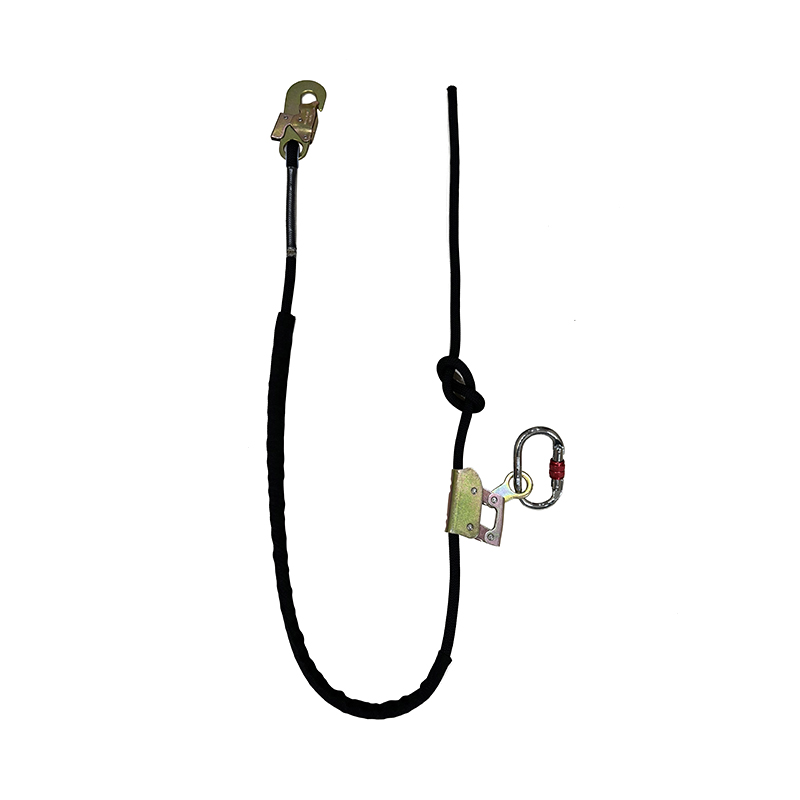
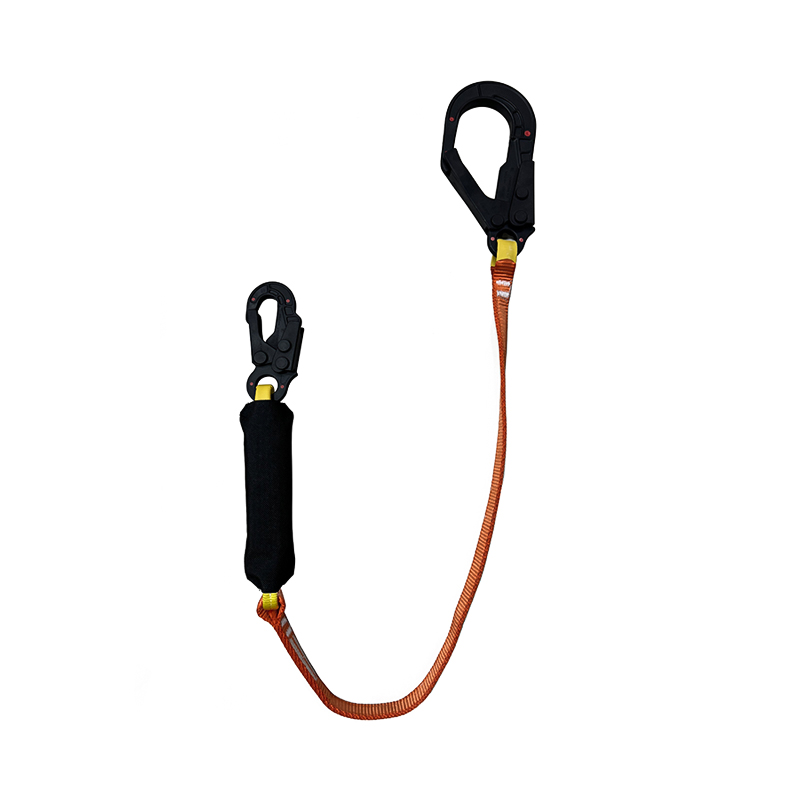
Class 2 SRLs are usually sourced from a fall protection systems partner, while the harnesses, lanyards, and positioning lines around them are contracted separately — and that second half is our manufacturing core. Since 1986, our factory in Taizhou has produced webbing-based fall protection and technical rope for buyers across the United States and Europe, including construction harnesses, single and twin-leg lanyards, dielectric models for electrical work, and custom PPE under OEM programs. If you are assembling complete kits around Class 2 SRLs, start from our full range of fall protection and rope products and send us the specification to match.

San Ye Road, Si Xiang Sub-district, Hai Ling District, Tai Zhou City, Jiang Su Province, China

+86 151-5262-8620
Copyright @ Taizhou KA Protection Products Co., Ltd. All Rights Reserved



 English
 Español
 عربى
عربى
