Content
Over 350 fall‑related fatalities occur each year in U.S. construction alone. Those deaths almost always trace back to one preventable failure: the wrong fall protection device on the right job—or none at all. Fall protection devices are not a single product. They form a linked system—anchor, body harness, and connector—each chosen for a specific height, movement pattern, and risk level.
OSHA classifies them under Personal Fall Arrest Systems (PFAS). The three core subsystems never change, but the device types multiply quickly. At a minimum, a compliant setup includes:
Every device carries a load rating, a deceleration limit, and a use‑case boundary. Skip the boundary and you’ve created a hazard, not a solution. That’s why proper selection starts with three questions: How far can you fall? What material stands up to the environment? And does the lanyard need to keep you tied off 100% of the time?
Two sets of rules shape every fall protection purchase: OSHA regulations and ANSI performance standards. OSHA tells you what you must do; ANSI tells you how the gear must perform to do it. Mistaking one for the other causes expensive re‑buying cycles.
OSHA 1910.140 (General Industry) and 1926.502 (Construction) both require that personal fall arrest systems limit maximum arresting force to 1,800 pounds and that the free‑fall distance never exceeds 6 feet. Anchorage points must support at least 5,000 pounds per employee attached, or be designed by a qualified person with a safety factor of two. Those numbers define the parameters for every harness and lanyard sold.
ANSI Z359.11‑2021 adds test rigor. Harnesses undergo a dynamic drop test with a 282‑lb test torso, and static strength tests pull the dorsal D‑ring to 3,600 pounds without major breakage. Lanyards under ANSI Z359.13 must limit peak arresting force to 1,800 pounds during a 6‑foot free fall, with a maximum elongation of 48 inches. The table below highlights key differences that affect daily purchasing decisions.
| Requirement | OSHA 1910.140 / 1926.502 | ANSI Z359.11 / .13 |
|---|---|---|
| Maximum arrest force | 1,800 lbs | 1,800 lbs (tested) |
| Free fall limit | 6 ft | 6 ft (tested) |
| Anchorage strength | 5,000 lbs per worker | 5,000 lbs or 2× design |
| Dynamic drop test | Not specified | 282‑lb torso, 6‑ft free fall |
| Labeling | General requirements | Detailed labels with capacity and standards |
When comparing products, look for both compliance marks. A harness stamped only "Meets OSHA" may skip the stricter ANSI drop test, leaving you exposed during a real fall. And for jobs that cross into electrical hazards, ANSI Z359.6‑2016 adds explicit non‑conductive material rules that ordinary nylon can’t meet.
Fabric choice drives everything—strength retention, UV life, chemical resistance, and what you actually pay per year of service. Safety managers often buy "nylon" harnesses out of habit, without knowing that polyester delivers double the abrasion cycles in dry, gritty construction work for nearly the same price.
UHMWPE (ultra‑high‑molecular‑weight polyethylene, sold as Dyneema) weighs 30% less than nylon, resists most chemicals, and exhibits negligible stretch. That makes it ideal for lanyards where you want minimal elongation and a softer wear experience. Kevlar (aramid) withstands temperatures above 400°F and resists cuts, so it appears in welding and foundry PPE—but its UV degradation is aggressive unless protected.
The table below distills 40 years of rope and webbing production data into a quick‑scan decision tool.
| Material | Tensile strength (kN) | Abrasion resistance | UV resistance | Flame resistance | Relative cost | Typical use |
|---|---|---|---|---|---|---|
| Nylon (polyamide) | 22‑28 | Moderate | Fair | Poor | $ | General construction harness/lanyard |
| Polyester | 20‑26 | High | Excellent | Poor | $ | Dry, abrasive environments; lanyards |
| UHMWPE | 30‑40 | Very high | Excellent | Poor | $$$ | Lightweight lanyards, synthetic rope lifelines |
| Kevlar (aramid) | 25‑35 | Very high | Low (degraded by sunlight) | Excellent | $$$$ | Welding, foundry, hot‑work harnesses |
For most construction teams, polyester webbing in a harness and a UHMWPE‑core lanyard provide the best longevity‑per‑dollar ratio. Kevlar only wins when heat exposure is daily. And when you need to combine flame resistance with electrical insulation, a dielectric polyester‑aramid hybrid lanyard becomes the only safe choice.
A harness is not a one‑size‑fits‑all garment. The number of adjustment points, D‑ring positions, and buckle type determine whether a worker can self‑rescue after a fall, or whether they’ll hang in suspension trauma long before rescue arrives.
Standard 5‑point adjustment (two legs, chest, two shoulders) fits 80% of applications. Three‑point harnesses cut cost but restrict movement and make injury‑free post‑fall suspension nearly impossible. Six‑point models add waist‑level adjustments for a precise, comfortable fit during long‑duration positioning work.
D‑rings are the real decision point. A dorsal D‑ring is non‑negotiable—it’s the fall‑arrest attachment. Side D‑rings (one or two pair) enable work positioning, while a chest D‑ring supports ladder climbing and rescue retrieval. Harnesses with 5 or 6 rings offer flexibility without swapping gear; 3‑ring units force you to carry multiple harnesses or compromise safety.
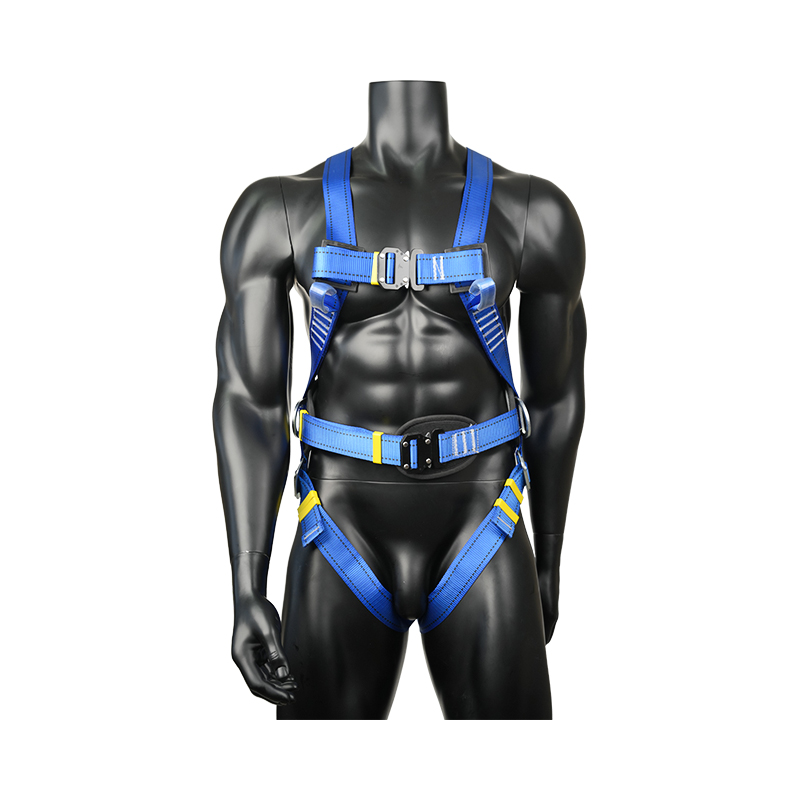
Quick‑release buckles cut donning time by 40% and reduce improper fitting, which is the single largest cause of harness failure in a fall. A full‑body harness like the KA01 6 D‑ring model with 4 quick‑release buckles illustrates the pattern: 310‑lb capacity, five‑point padded comfort, and multi‑ring configuration that keeps one worker efficient across steel erection, tower work, and confined space entry.
| Configuration | Best for | Post‑fall suspension risk | Approx. cost range |
|---|---|---|---|
| 3 D‑ring, 2 quick releases | Basic fall arrest only | High – no attachment for rescue | $12‑20 |
| 5 D‑ring, 4 quick releases | Construction, positioning, climbing | Moderate – front D‑ring aids rescue | $20‑35 |
| 6 D‑ring, 4 quick releases, padded | Multi‑craft, tower, rescue | Low – multiple rescue attachment points | $30‑50 |
Weight capacity also varies. Standard models top out at 310 lbs (including tools), while heavy‑duty harnesses handle 400+ lbs. Never push a 310‑lb harness beyond its rating—OSHA penalties stack fast when an inspector finds the wrong capacity gear on site.
Lanyard choice determines whether a worker can move freely on a beam or must re‑clip every few feet. It also defines the actual fall distance—and that number decides if the system will strike the ground before fully deploying.
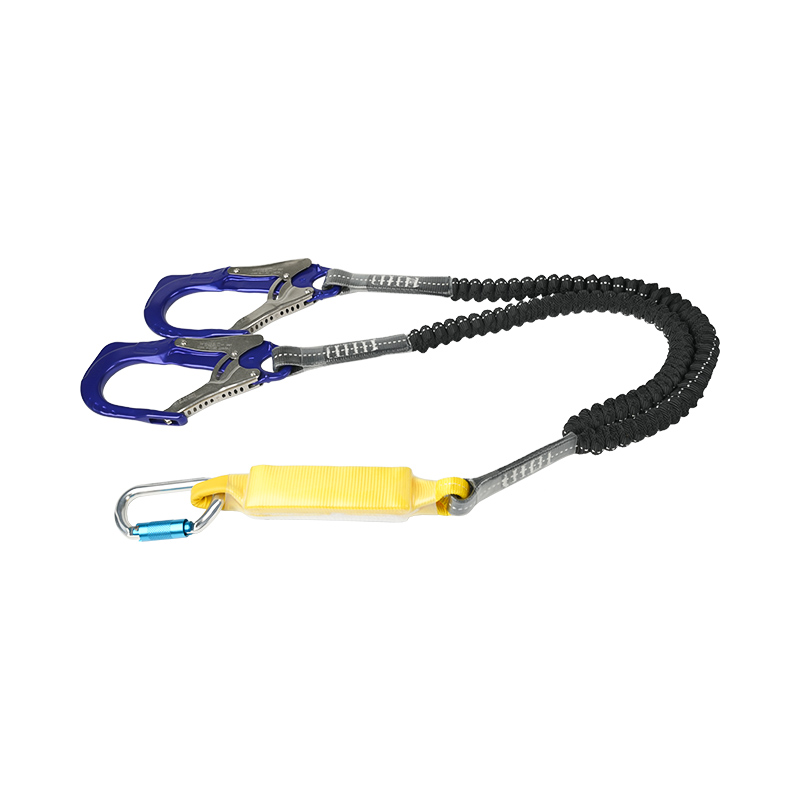
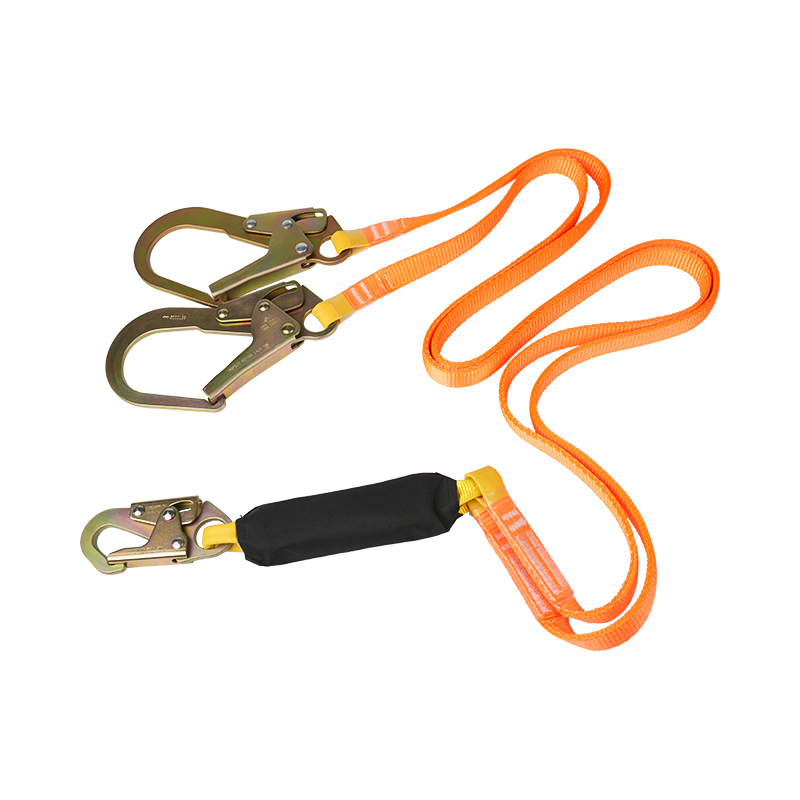
Single‑leg lanyards work only when a clear 18.5‑foot minimum clearance exists below the anchor (6‑ft lanyard + 3.5‑ft shock absorber deployment + 6‑ft worker height + safety margin). Twin‑leg lanyards let workers stay attached at all times while traversing—the 100% tie‑off rule becomes possible, and swing‑fall dangers shrink when using a second leg.
Shock‑absorbing lanyards rip open to limit force to 1,800 lbs, but they add 3.5 ft of deployment. Self‑retracting lifelines (SRLs) stop a fall within 24 inches, dramatically reducing total fall distance; however, they weigh more and cost 3–5× the price of a basic shock absorber. The following table lays out where each type justifies its cost.
| Lanyard type | Max fall distance (deployment) | Mobility | Relative cost | Ideal for |
|---|---|---|---|---|
| Single shock‑absorbing | 9.5 ft (6‑ft lanyard + 3.5‑ft deployment) | Limited – re‑clipping needed | $ | Short‑duration, fixed‑anchor work |
| Twin shock‑absorbing | 9.5 ft (per leg) | High – 100% tie‑off | $$ | Steel erection, tower climbing |
| Single SRL | ≤2 ft | Moderate – limited cable length | $$$ | Low‑clearance areas, warehousing |
| Twin SRL | ≤2 ft | High – dual retractable | $$$$ | Wind turbines, high‑angle rescue |
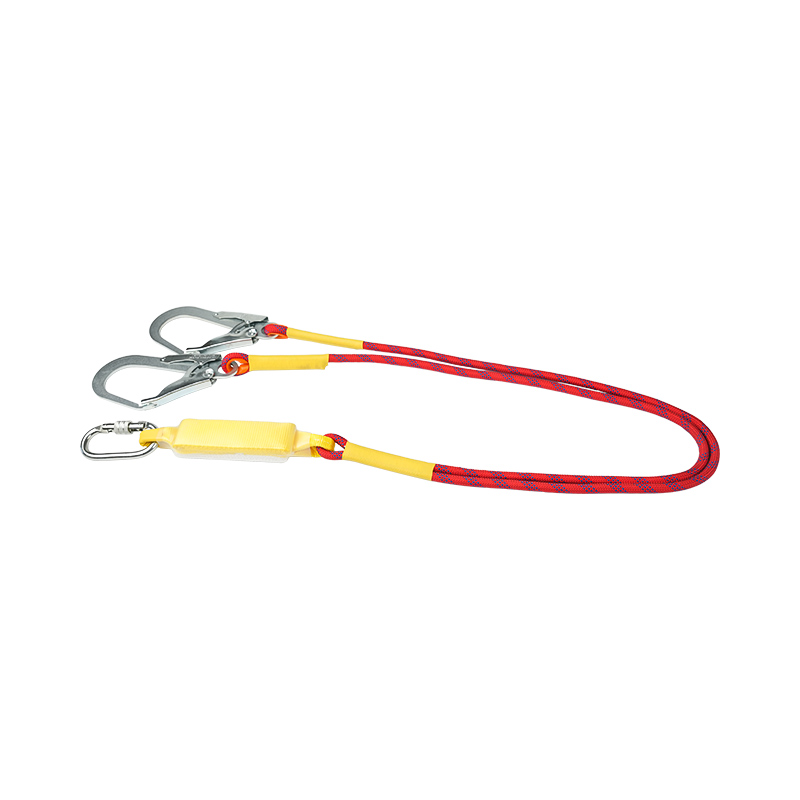
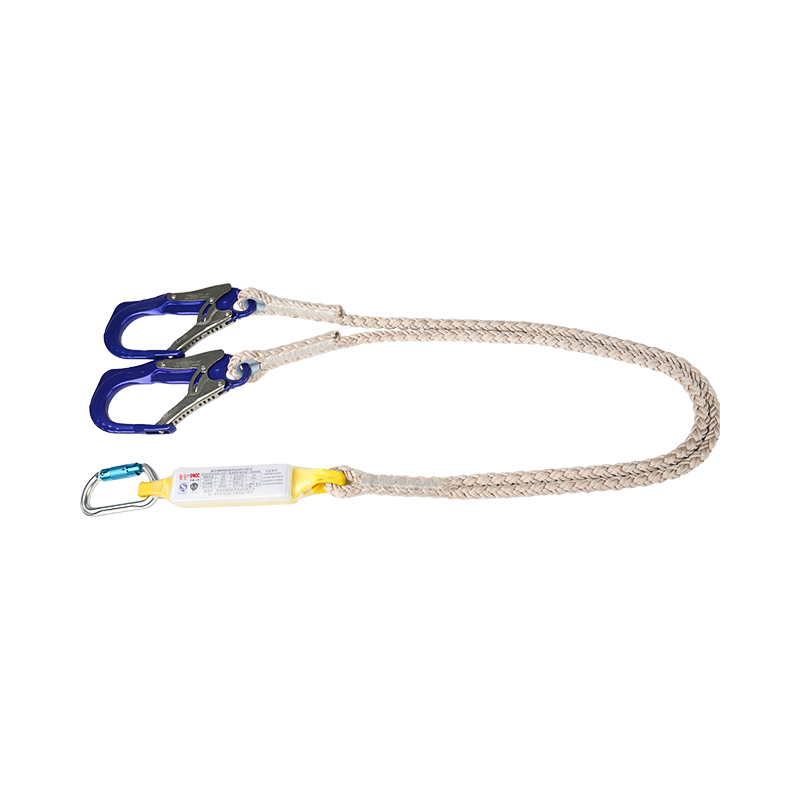
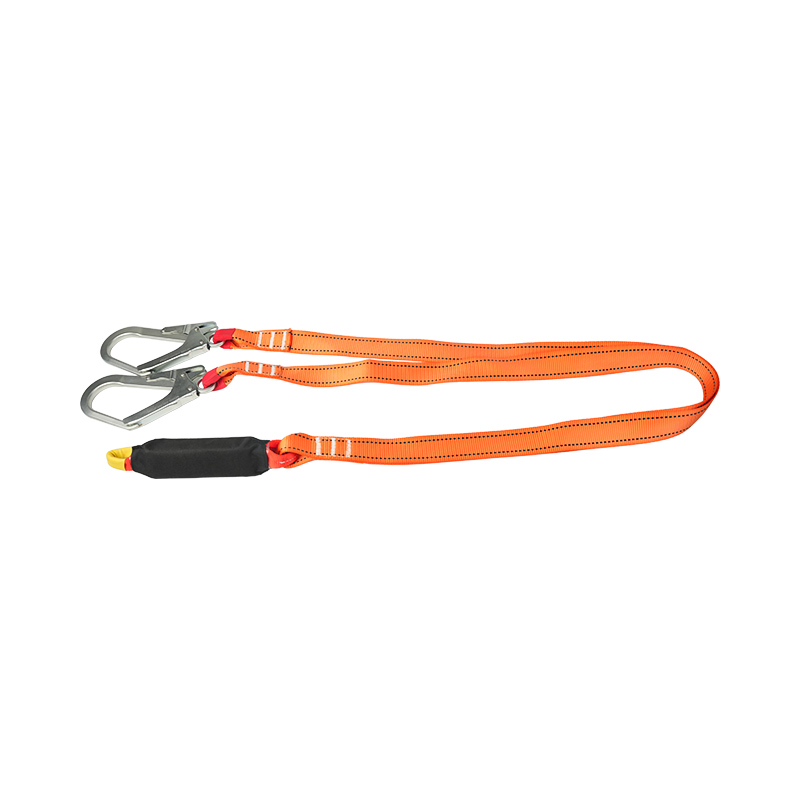
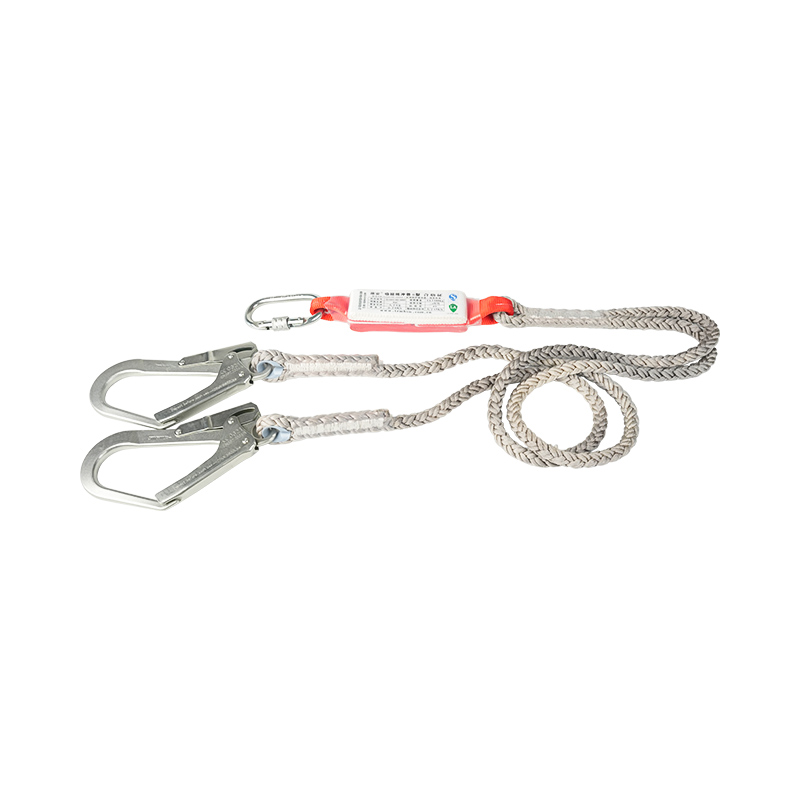
For the typical construction crew that moves horizontally all day, a twin shock‑absorbing lanyard like KAL02 eliminates the time‑wasting cycle of unhook‑walk‑re‑hook. The polyamide rope resists abrasion on scaffold edges and the integrated energy absorber keeps the deceleration below OSHA’s ceiling. Always pair a twin lanyard with a frontal harness D‑ring when climbing—dorsal attachment alone can force a dangerous swing.
No one device fits all. A roofer needs a dramatically different set than a lineman working 40 feet off a wood pole. Below, four industry‑specific stacks show what combination of harness, lanyard, and anchor point holds up best—and what you’ll roughly budget per worker.
These budgets assume full OSHA/ANSI certification and a two‑year replacement cycle. Cheaper uncertified gear often costs more in annual recertification fees and downtime after a near miss.
For buyers who supply safety distributors or operate large fleets with a corporate brand, custom OEM/ODM manufacturing cuts the middle layer. You define the label, the materials, and the certification marks—then the factory builds them. The sequence moves faster than you might assume.
Minimum order quantities often start at 100 pieces per SKU for harnesses and 500 pieces for lanyards, with lead times averaging 35–45 days from sample approval to shipment. When certification is already in place (e.g., a factory‑held ANSI certificate for a base model), the timeline shrinks to 25 days because only branding modifications require re‑testing.
Custom work does not mean wild cost premiums. A branded 5‑point harness with ANSI labels lands in the $15–$22 range at 500‑unit volumes—competitive with off‑the‑shelf pricing—and lanyard per‑unit costs drop below $6 when volumes exceed 1,000 units.
Procurement teams often compare upfront price tags, but a $6 lanyard that needs replacement every 300 cycles carries a higher five‑year cost than a $12 lanyard that lasts 1,500 cycles. Total cost of ownership (TCO) folds in annual inspections, replacement cadence, and the risk of an OSHA fine.
Factor in a standard 2‑person annual inspection cost of $25–$50 per device, and most woven products like harnesses and lanyards require retirement by year 5 at the latest—or immediately after a fall. The following projection models three price tiers across 5 years, assuming no fall event (which would trigger immediate replacement, raising cost further).
| Price tier | Initial cost | Annual inspection | Replacement interval | 5‑year TCO |
|---|---|---|---|---|
| Entry (<$6) | $6 | $20 | 2 years | $106 (2 replacements + inspections) |
| Mid ($6–$12) | $9 | $25 | 3 years | $85 (1 replacement + inspections) |
| Premium (>$12) | $15 | $30 | 5 years | $75 (no replacement, inspections) |
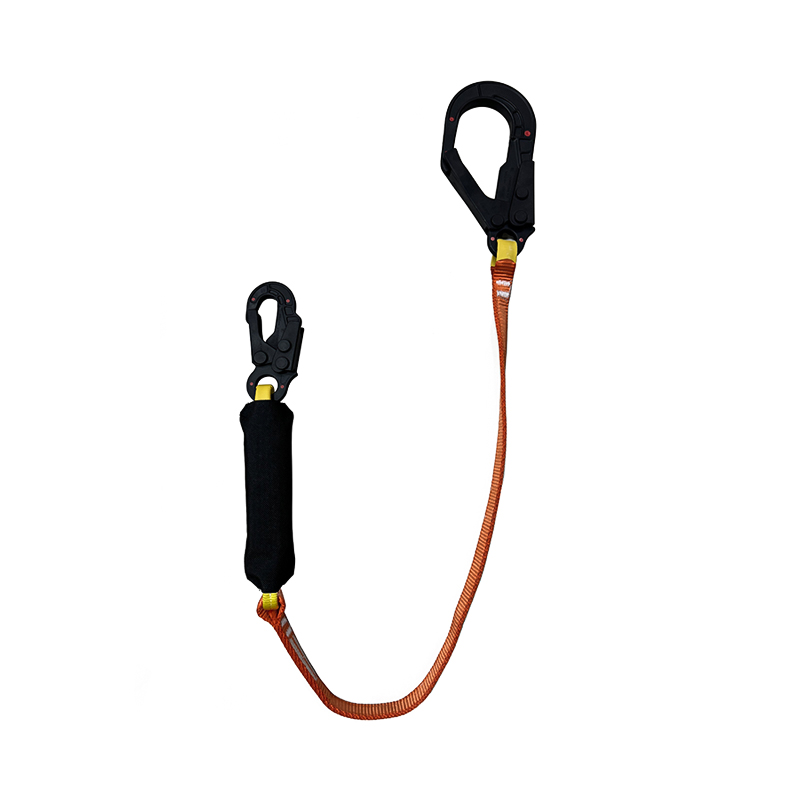
A mid‑tier twin lanyard like KAL11 sits in the $6–$12 bracket yet typically delivers 15% longer cycle life than entry models, pulling its TCO below the low‑cost option. And that’s before you consider the cost of one OSHA violation: $15,625 per serious citation. Budgeting backward from TCO, not sticker price, is the only way to keep a safety budget predictable.
The most expensive fall protection device is the one you have to buy twice because the first failed an inspection that could have been avoided.

San Ye Road, Si Xiang Sub-district, Hai Ling District, Tai Zhou City, Jiang Su Province, China

+86 151-5262-8620
Copyright @ Taizhou KA Protection Products Co., Ltd. All Rights Reserved



 English
 Español
 عربى
عربى
