Content
Falls remain the leading cause of death in construction, accounting for 395 of 1,069 fatalities in 2023 alone. Every one of those incidents involved either missing, improperly selected, or misused fall protection equipment. Safety harnesses and lanyards form the backbone of a compliant fall arrest system — the harness secures the body, the lanyard connects to an anchor point. Pick the wrong combination, and even certified gear fails when it matters most.
This guide cuts through catalog noise. You will get exact material comparisons, load ratings, OSHA/ANSI compliance thresholds, and a scenario-based matching matrix that tells you which harness-lanyard pair fits roofing, tower climbing, or utility pole work. No filler. Just the criteria that separate a reliable system from a liability.
A safety harness is a body-worn assembly of straps and D-rings that distributes fall forces across the thighs, pelvis, chest, and shoulders. It does not stop a fall on its own. That job belongs to the lanyard — a flexible tether connecting the harness dorsal D-ring to a certified anchor point. Together, they form a complete personal fall arrest system (PFAS) required under OSHA 1926.502 for any work above 6 feet in general industry or 4 feet in construction.
Confusing the two roles leads to deadly mistakes. A harness without a lanyard is just clothing. A lanyard without a harness has nothing to catch. The system works only when both components are rated for the same load class, inspected before every shift, and matched to the specific fall hazard — whether that is a leading edge, a vertical climb, or an overhead anchorage.
Lanyards fall into three functional categories, and each handles fall energy differently. The wrong type in the wrong scenario either fails to arrest the fall or introduces hazards like excessive swing or prolonged suspension. Your choice depends on fall clearance, mobility needs, and anchorage height.
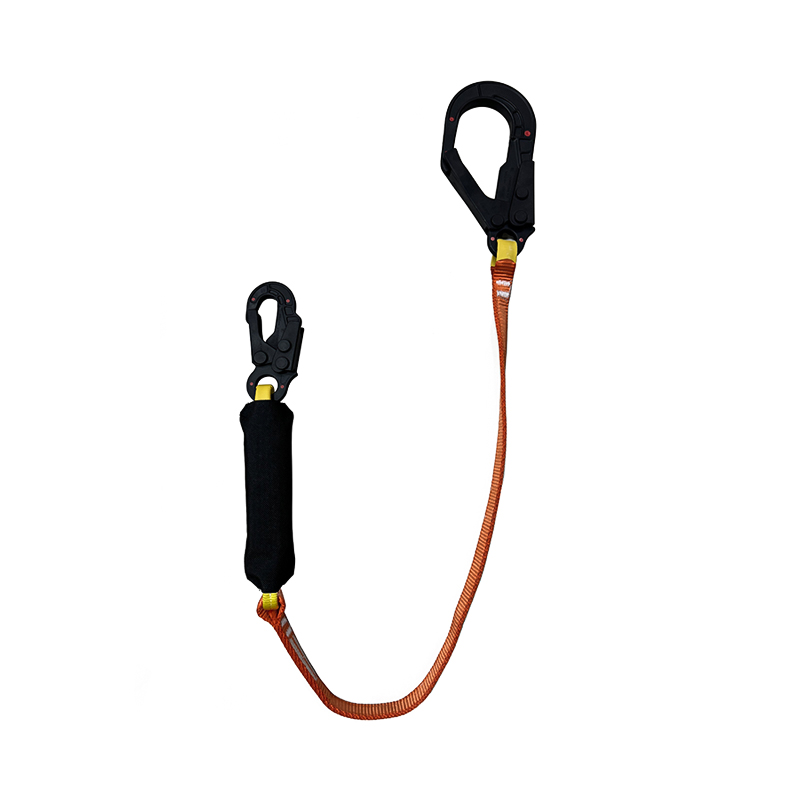
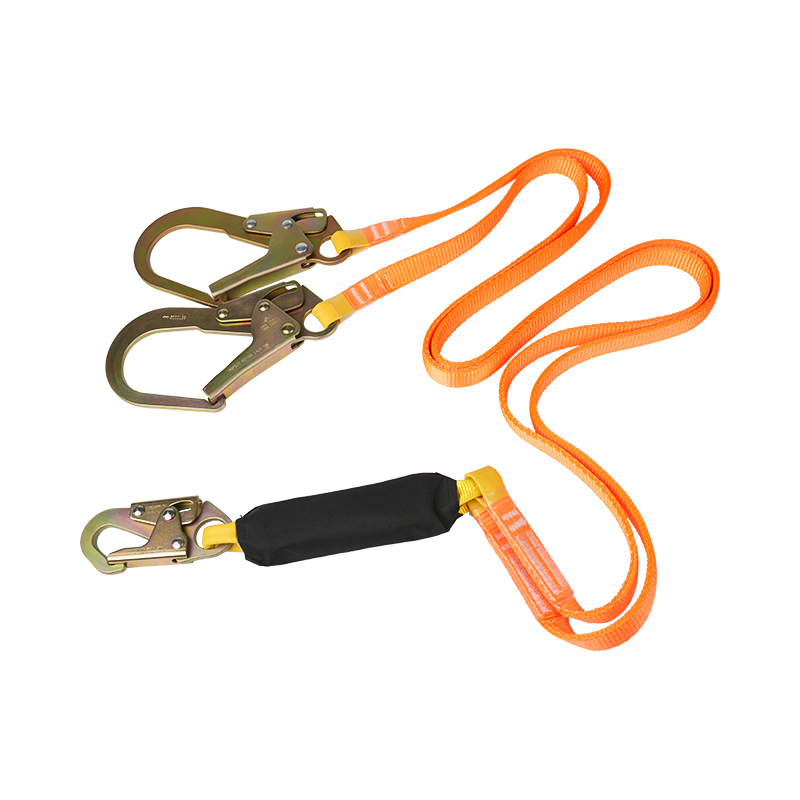
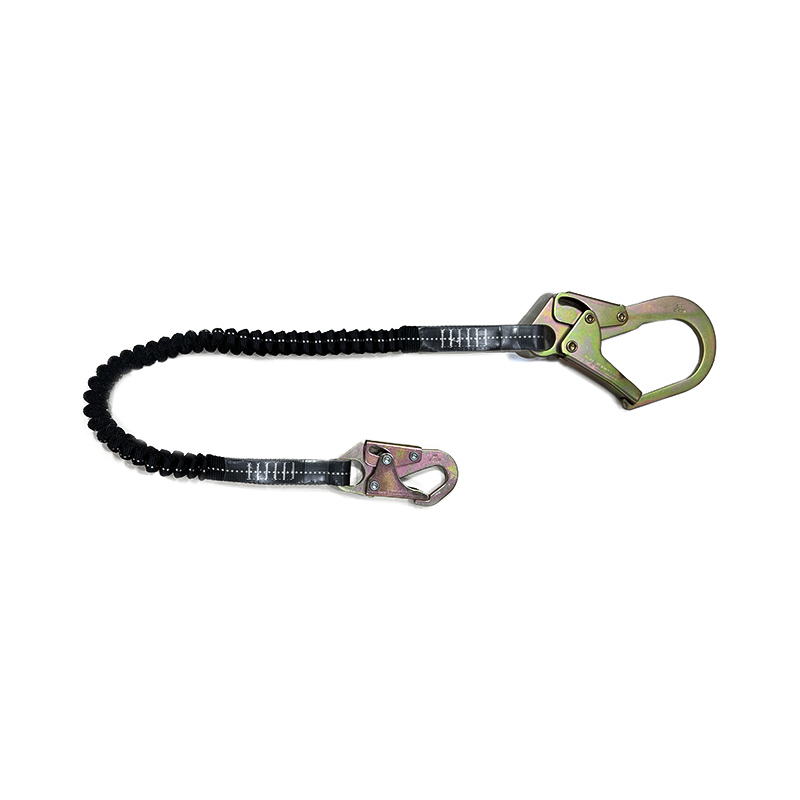
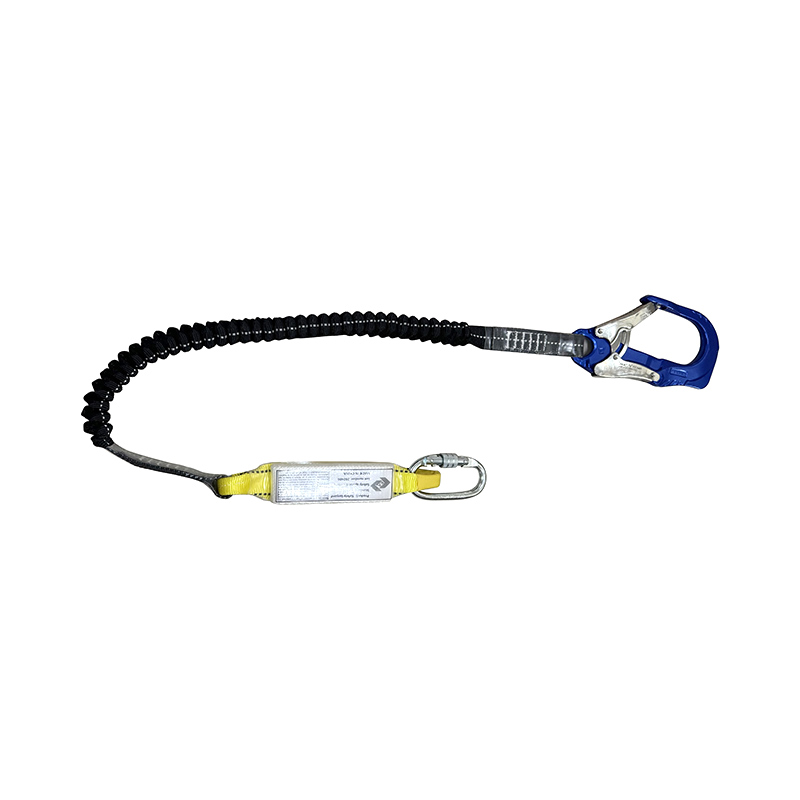
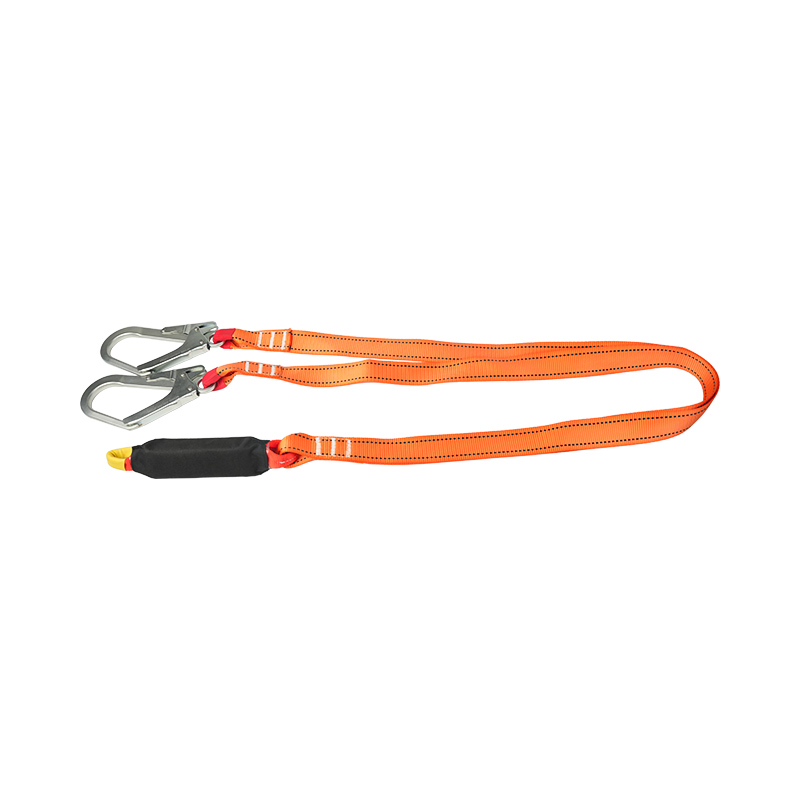
Shock-absorbing lanyards use a tear-away pack that deploys under load, limiting the arresting force on the body to a maximum of 900 pounds under ANSI Z359.13. They require a minimum of 17.5 feet of total fall clearance — the sum of lanyard length, deceleration distance, harness stretch, and a safety margin. Self-retracting lanyards (SRLs) work like seatbelts, paying out webbing or cable during normal movement but locking within inches during a fall. They demand less clearance, typically under 8 feet for Class A units, and keep the worker on a shorter leash. Positioning lanyards, by contrast, are not designed for fall arrest at all — they hold a worker in place at a work position, such as leaning back from a pole, while a separate fall arrest system provides backup.
Shock-absorbing lanyards remain the most widely deployed option on construction sites because they tolerate variable anchor heights and cost less per unit. SRLs dominate in environments where low clearance or frequent movement makes a trailing lanyard impractical. The table below maps the operational differences.
| Type | Fall Clearance Required | Max Arrest Force | Key OSHA/ANSI Reference | Typical Use |
|---|---|---|---|---|
| Shock-Absorbing Lanyard | 17.5 ft minimum | 900 lbs (ANSI) / 1,800 lbs (OSHA max) | OSHA 1926.502(d), ANSI Z359.13 | General construction, roofing, steel erection |
| Self-Retracting Lanyard (SRL) | Under 8 ft (Class A) | 900 lbs (Class A), 1,350 lbs (Class B) | OSHA 1926.502(d), ANSI Z359.14 | Low-clearance areas, frequent movement zones |
| Positioning Lanyard | Not for fall arrest | Not rated for dynamic loads | OSHA 1926.502(e), ANSI Z359.3 | Pole work, rebar tying, formwork |
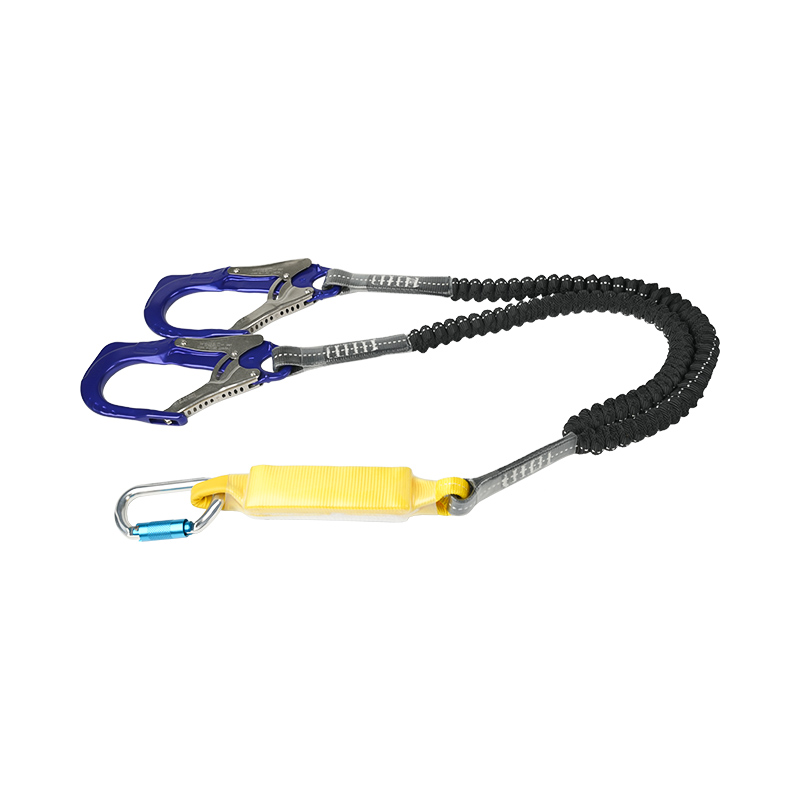
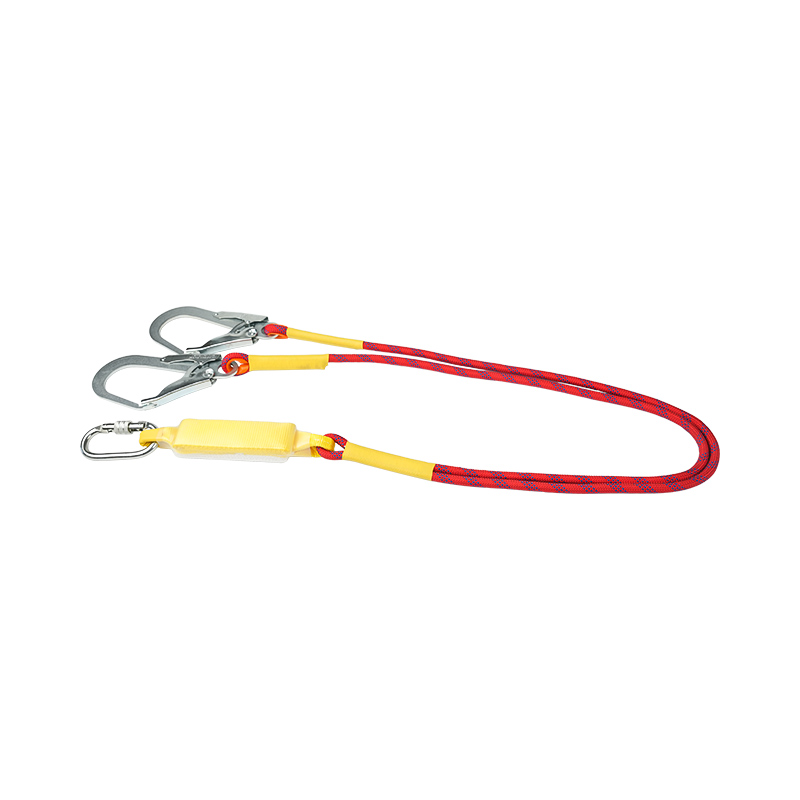
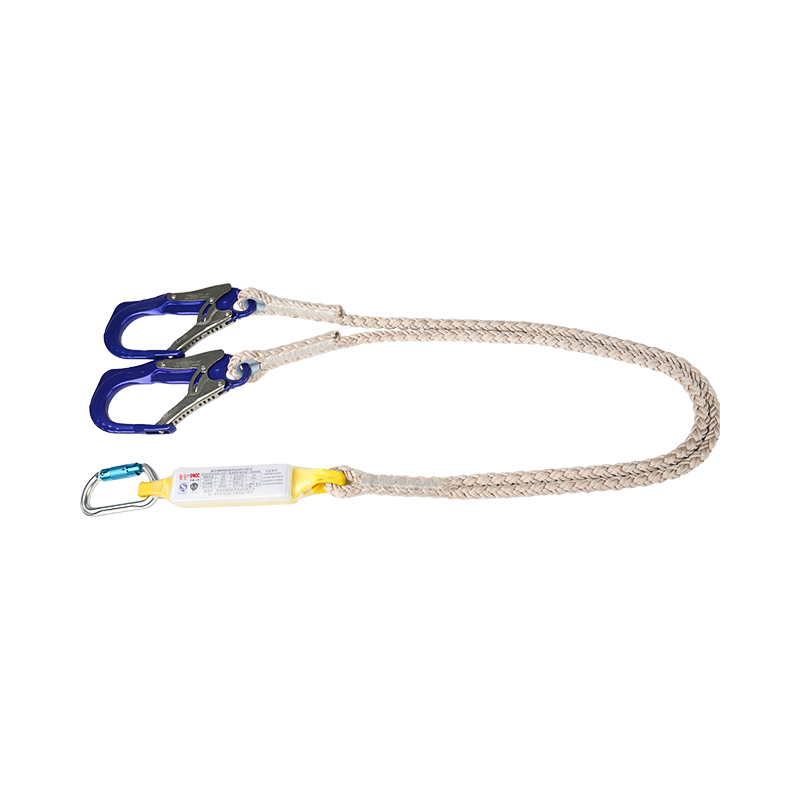
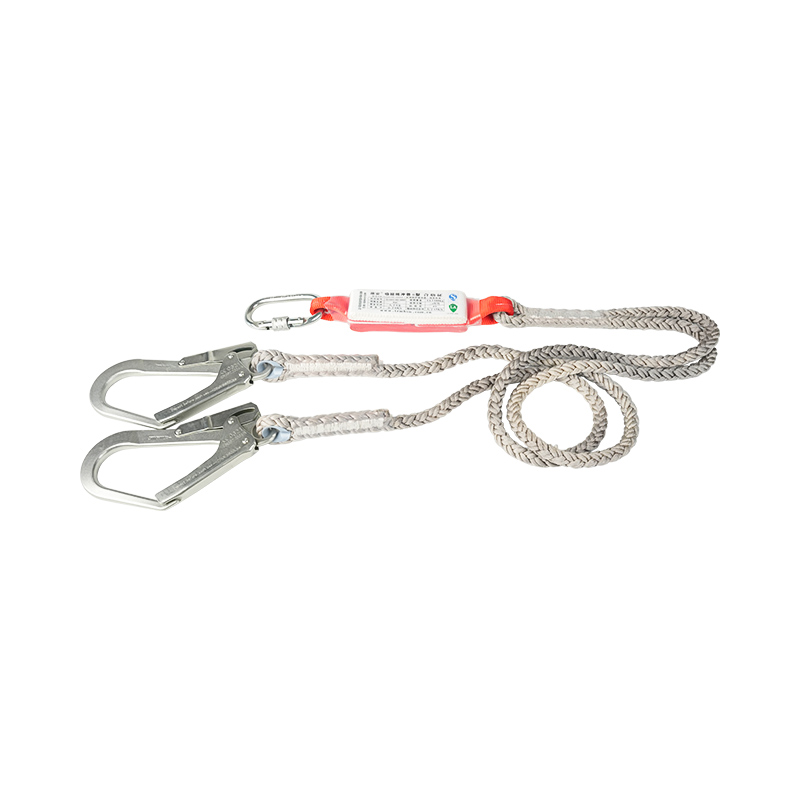
For projects where workers climb ladders or towers and need continuous attachment, a double safety lanyard with two legs allows 100% tie-off — one leg remains connected while the other is relocated to the next anchor. This eliminates the split-second gap where a worker is unprotected during a standard single-leg transfer.
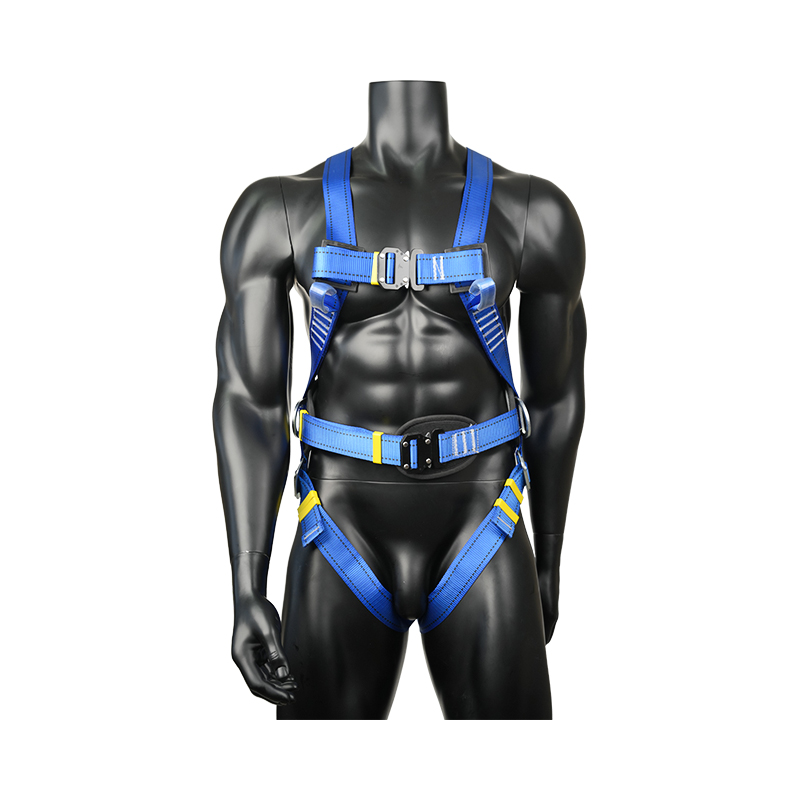
Not all full-body harnesses fit the same job. The number and placement of D-rings dictate which lanyard configurations are compatible, while buckle type and webbing width determine how long a worker can wear the harness before fatigue sets in. Selecting purely on price ignores variables that affect both compliance and adoption — a harness left unbuckled because it is uncomfortable is as dangerous as no harness at all.
Dorsal D-rings, positioned between the shoulder blades, serve as the primary fall arrest attachment point. Chest D-rings support ladder climbing systems and rescue retrieval. Side D-rings at the hips enable positioning work, while shoulder D-rings are used for confined-space entry and extraction. A general construction harness typically carries one dorsal and two side D-rings. Utility workers often need a dorsal, two side, and a chest D-ring for ladder devices.
Buckle choices split into three groups. Tongue buckles are the most economical but require manual threading and can loosen over a shift. Friction buckles, sometimes called mating or pass-through, adjust faster and stay set. Quick-connect buckles — either aluminum or dielectric plastic — snap together instantly and are preferred for multi-user sites where harnesses are donned and doffed repeatedly. Quick-connect buckles cut donning time by roughly 40% versus tongue buckles, a meaningful margin when crews rotate through harnesses across shifts.
Webbing width and material affect both strength and comfort. Standard polyester webbing at 1.75 inches wide supports a 310-pound capacity rating. Wider 2-inch webbing, often paired with additional padding at the shoulders and waist, extends comfort during prolonged suspension and supports higher weight ranges up to 420 pounds. For standard construction needs, a full-body safety harness with 1.75-inch polyester webbing and forged steel D-rings meets most OSHA compliance requirements at a manageable price point.
Material selection for lanyards is not a cosmetic decision. Each fiber behaves differently under UV exposure, moisture, abrasion, and heat. A nylon lanyard that performs well indoors may degrade within months on a sun-exposed rooftop. Understanding these properties prevents premature failures that visual inspections alone might miss.
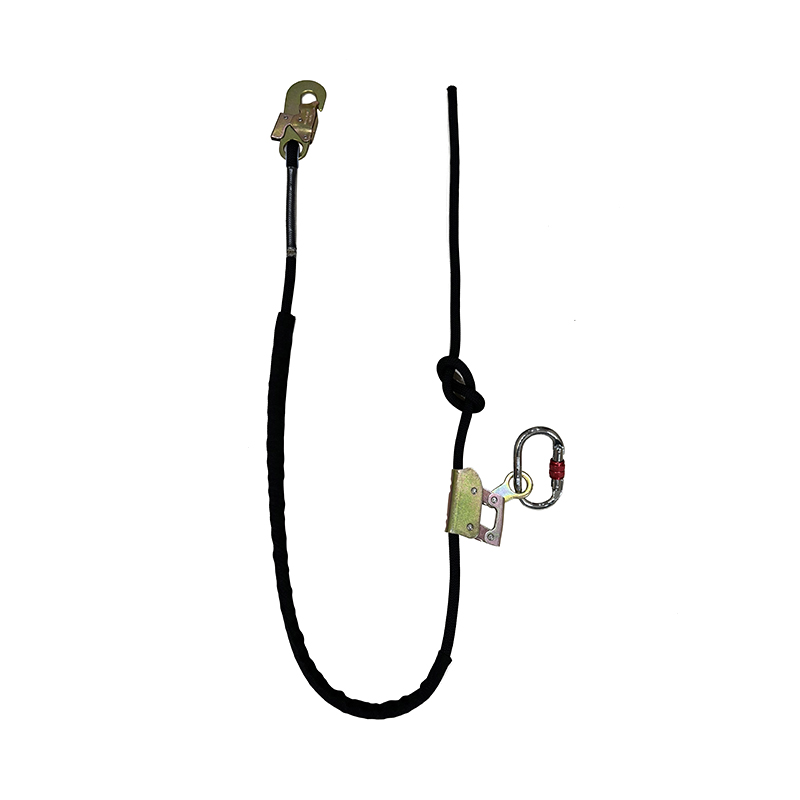
Nylon offers high elasticity and excellent shock absorption — it stretches under load, which reduces peak force on the body. The drawback is water absorption. Nylon fibers absorb up to 8% of their weight in moisture, losing up to 15% of their tensile strength when wet and becoming heavier. Polyester absorbs less than 1% moisture, retains full strength wet or dry, and resists UV degradation better than nylon. It has become the default material for general-outdoor lanyards. For heavy-duty rope-based applications, an 11mm UV-weather-resistance polyester safety rope delivers consistent performance across seasons.
UHMWPE (ultra-high-molecular-weight polyethylene) fibers like Dyneema provide strength-to-weight ratios roughly 15 times that of steel by weight, with near-zero stretch and complete water resistance. The trade-off is lower melting point — UHMWPE begins to soften around 150 degrees Fahrenheit, limiting its use near hot surfaces or welding splatter. Kevlar, an aramid fiber, excels in heat and cut resistance, tolerating continuous exposure up to 400 degrees Fahrenheit, making it the choice for foundries, glass plants, and fire-adjacent work. It is, however, sensitive to UV degradation unless sheathed and costs roughly three to five times more than polyester.
| Material | Breaking Strength (kN, 12mm) | Water Absorption | UV Resistance | Heat Tolerance | Best Application |
|---|---|---|---|---|---|
| Nylon | 28-30 kN | High (up to 8%) | Moderate | Up to 250 deg F | Indoor work, dry climates, short-term use |
| Polyester | 26-28 kN | Low (under 1%) | High | Up to 300 deg F | Outdoor construction, general fall arrest |
| UHMWPE | 35-40 kN | Negligible | Moderate (sheath recommended) | Up to 150 deg F | High-strength needs, wet environments |
| Kevlar | 22-25 kN | Low | Low (must be sheathed) | Up to 400 deg F | Welding, foundry, high-heat zones |
For most outdoor construction and utility applications, polyester wins on the balance of durability, cost, and weather resistance. UHMWPE justifies its premium when weight matters — for instance, tower climbers who carry lanyards on their harness for hours at a time. Kevlar is the only viable choice when heat or sparks are part of the work environment.
Standard harnesses and lanyards contain metal D-rings, steel buckles, and conductive webbing that can channel electrical current through the body. For linemen, wiremen, and substation technicians working near energized lines, that conductivity is a lethal risk. Dielectric fall protection equipment replaces every conductive component with non-conductive alternatives rated for specific voltage exposure levels.
Dielectric harnesses use insulating materials at every contact point. D-rings switch from forged steel to reinforced nylon or thermoplastic. Buckles use non-conductive polymers instead of aluminum or steel. Webbing is treated or manufactured from inherently non-conductive fibers, and all metal hardware — when it must exist — is fully encapsulated. A properly rated dielectric harness, such as models designed for electrical utility work, can provide insulation up to 20kV, compared to zero voltage protection in a standard harness.
The same principle applies to lanyards. A dielectric safety lanyard eliminates the metal snap hooks and steel cable cores found in conventional lanyards. Instead, it uses non-conductive fiber ropes and plastic or composite connectors. Dual-layer webbing construction doubles the insulation path, ensuring that even if the outer layer is damaged, the inner layer maintains electrical isolation. Utility crews and electricians operating near live lines cannot substitute standard gear — the risk is simply not comparable.
When selecting dielectric harnesses, verify the voltage rating on the label matches the maximum expected exposure. Look for independent lab testing reports, not just manufacturer claims. Check that every component — not just the webbing — is non-conductive, including adjusters, grommets, and labels. A single metal grommet on an otherwise insulated harness creates a path to ground.
Matching the right harness to the right lanyard is where most purchasing mistakes happen. A construction supervisor might buy premium SRLs and mate them with harnesses lacking front D-rings, making the SRLs incompatible. Or a tower crew might pair twin-leg lanyards with harnesses that have only a dorsal D-ring, forcing unsafe workarounds. The system works only when every connection point on the harness matches the lanyard configuration it will receive.
The table below maps three common worksite profiles to recommended harness-lanyard combinations. Each recommendation accounts for D-ring configuration, lanyard type, material exposure, and the relevant ANSI standard class.
| Jobsite Profile | Harness Type | D-Ring Configuration | Lanyard Type | Material | Capacity / Standard |
|---|---|---|---|---|---|
| Building Construction / Roofing | Full-body, general fall arrest | 1 dorsal, 2 side | Shock-absorbing single or twin-leg | Polyester webbing | 310 lbs / ANSI Z359.11 |
| Electrical Utility / Substation | Dielectric full-body | 1 dorsal, 2 side, 1 chest | Dielectric shock-absorbing twin-leg | Non-conductive polymer / nylon composite | 310-420 lbs / ASTM F887 |
| Tower Climbing / Telecom | Lightweight full-body | 1 dorsal, 1 chest, 2 side | Twin-leg with scaffold hooks, or SRL | UHMWPE or polyester | 310 lbs / ANSI Z359.11, Z359.14 |
| Confined Space / Rescue | Full-body with shoulder D-rings | 1 dorsal, 2 shoulder, 1 chest | Retrieval SRL with winch compatibility | Stainless steel cable or Kevlar | 310-420 lbs / ANSI Z359.4 |
Roofers need twin-leg shock-absorbing lanyards because they traverse the roof surface, repeatedly moving anchor points. Utility crews working near energized conductors must use dielectric harnesses and dielectric lanyards as a complete set — mixing one conductive component into a non-conductive system defeats the entire purpose. Tower climbers benefit from lightweight UHMWPE lanyards that reduce the cumulative weight carried during climbs exceeding 100 feet.
Regulatory compliance is not a suggestion — it is a legal obligation with direct liability consequences. OSHA mandates the performance thresholds. ANSI defines the testing protocols and design requirements that prove equipment meets those thresholds. Understanding both prevents the common mistake of buying equipment labeled "ANSI compliant" without verifying what specific ANSI standard it meets.
OSHA 1926.502(d) governs personal fall arrest systems. The critical numbers: maximum arresting force on the body must not exceed 1,800 pounds. The system must bring a falling worker to a complete stop within a deceleration distance of 3.5 feet maximum. Anchorage points must support at least 5,000 pounds per attached worker, or maintain a safety factor of at least two under the supervision of a qualified person. Lanyards and harnesses must be inspected before each use, and any equipment subjected to a fall must be removed from service immediately.
ANSI Z359.13 tightens the arresting force requirement from OSHA's 1,800 pounds down to 900 pounds for shock-absorbing lanyards, measured using a 282-pound test mass. It also mandates that the lanyard's maximum deployment length — the combined stretch of the energy absorber and lanyard body — not exceed 42 inches. These are not optional upgrades. Contractors working under general industry standards that reference ANSI Z359 must comply with the tighter requirements, not just the OSHA minimum.
SRLs fall under ANSI Z359.14, which divides units into Class A (maximum arrest force 900 pounds, maximum arrest distance 24 inches) and Class B (maximum arrest force 1,350 pounds, maximum arrest distance 54 inches). Class B SRLs are typically used for leading-edge applications where the lanyard line may contact a sharp edge during a fall.
Procurement for a crew of 50 is not the same as buying a single harness off a shelf. Volume pricing, consistent fit across workers, and the ability to brand equipment with company logos and colour schemes change the purchasing equation. B2B buyers evaluating safety harnesses and lanyards at scale need to think in terms of per-unit landed cost, not just list price.
Smaller orders of 1 to 50 units typically fall into off-the-shelf pricing with limited customization beyond colour selection. Orders in the 50 to 500 unit range unlock tiered discounts and open the door to partial customization — logo printing on labels, custom colour webbing, and branded packaging. Orders exceeding 500 units can justify full OEM production: custom moulds for buckles, proprietary webbing patterns, custom label designs, and packaging fully branded to the distributor's identity. Minimum order quantities for full OEM harnesses and lanyards typically start around 200 to 500 units per SKU, with lead times of 30 to 45 days from artwork approval to shipment.
For businesses looking to build a private-label fall protection line, working with a manufacturer that controls the full supply chain delivers leverage. When the same facility extrudes the rope fibres, weaves the webbing, stitches the harness, and assembles the lanyard, there are no intermediary markups and no finger-pointing if a batch fails testing. Custom options range from a custom safety harness built to your exact D-ring configuration to a custom safety lanyard with your specified material, length, and hook type. Every unit ships with traceable batch numbers and, upon request, third-party lab certification.

San Ye Road, Si Xiang Sub-district, Hai Ling District, Tai Zhou City, Jiang Su Province, China

+86 151-5262-8620
Copyright @ Taizhou KA Protection Products Co., Ltd. All Rights Reserved



 English
 Español
 عربى
عربى
