Content
If you have ever watched a lifeline run across the top of a parapet, a roof curb or a steel beam, you already know the uncomfortable truth: the edge is a hazard in its own right. A leading edge self retracting lifeline is the device engineered for exactly that geometry — an anchorage at or near foot level, a worker who can move out and away from the anchor, and a line that may come into contact with a corner during a fall.
This is the situation where a standard retractable is quietly out of its depth. Below we walk through what makes these units different, when the extra capability is genuinely needed, and how to plan clearance so the numbers work on the day someone actually falls.
A leading edge self retracting lifeline is a retractable fall arrester that has been specifically tested and rated for use where the lifeline can pass over and contact an edge, and where the anchorage may be at foot level rather than overhead. That single change in geometry reshapes almost everything about the design brief.
On a standard unit, the anchor sits above the worker and the line stays vertical. On a leading edge setup, the worker can walk far enough out that the line runs almost horizontally over a corner, then drops. The device has to survive the resulting pendulum, a longer free fall, and the abrasion and cutting force of a thin structural edge — often all at once.
Ask yourself one question before reaching for the catalogue: can the lifeline ever touch an edge, or the ground, during a fall? If the honest answer is yes, or even "probably", you need a unit rated for it. The table below is the reference we use when talking with contractors and safety managers.
| Work situation | Rated for leading edge? | What to watch |
|---|---|---|
| Anchor at foot level, worker moving horizontally over a parapet | Required | Setback distance and clearance below the edge |
| Roof work along an unguarded edge with a mobile anchor point | Required | Anchor strength and swing-fall path |
| Anchor directly overhead, line always vertical, no contact possible | Not required | Confirm no horizontal travel is possible |
| Confined space entry with a retrieval winch | Usually not applicable | Check the device is rated for retrieval, not just arrest |
| Steel erection with an I-beam or beam flange as the edge | Required | Sharp-edge abrasion and cable inspection after any event |
There is no prize for over-specifying. If the anchorage is genuinely overhead, the work area is directly below it, and the line cannot reach an edge or the ground, a standard retractable is lighter, cheaper and perfectly appropriate. Where teams get into trouble is the grey zone: a fixed anchor that is sometimes overhead and sometimes used at foot level by a different crew. In our experience, if a device is going to travel between sites, buy the leading edge rated version once and stop arguing with the risk assessment.
Two rating systems come up most often in tenders. Under ANSI/ASSP Z359.14, the current edition uses Class 1 and Class 2 designations, and it is the Class 2 devices that are accepted for leading edge applications. In Europe, EN 360 units must demonstrate horizontal-use performance before they may be sold for this kind of work. Either way, the marking on the housing and the user manual remain your authority — not a supplier's sales page.
Clearance is where most planning errors happen. A leading edge fall can begin with a much longer free fall than an overhead one, because the worker may be several metres out from the anchor when the line goes taut. Add the absorber extension, the worker's height, and a safety margin, then compare that total with the distance to the next surface below. Never estimate this from a catalogue table alone; use the manufacturer's clearance chart for the exact model and the exact anchorage height you intend to use.
Our own engineers keep a longer explanation of the standard in the guide to Class 2 SRL requirements under ANSI Z359.14, which is worth reading alongside this article.
A retractable is only one link. The harness has to hold the body upright after the shock, and the anchorage has to hold everything. For general construction, platform and maintenance work, a full-body harness with multiple D-rings gives you the flexibility to switch between fall arrest at the back and work positioning at the hips without changing kit.
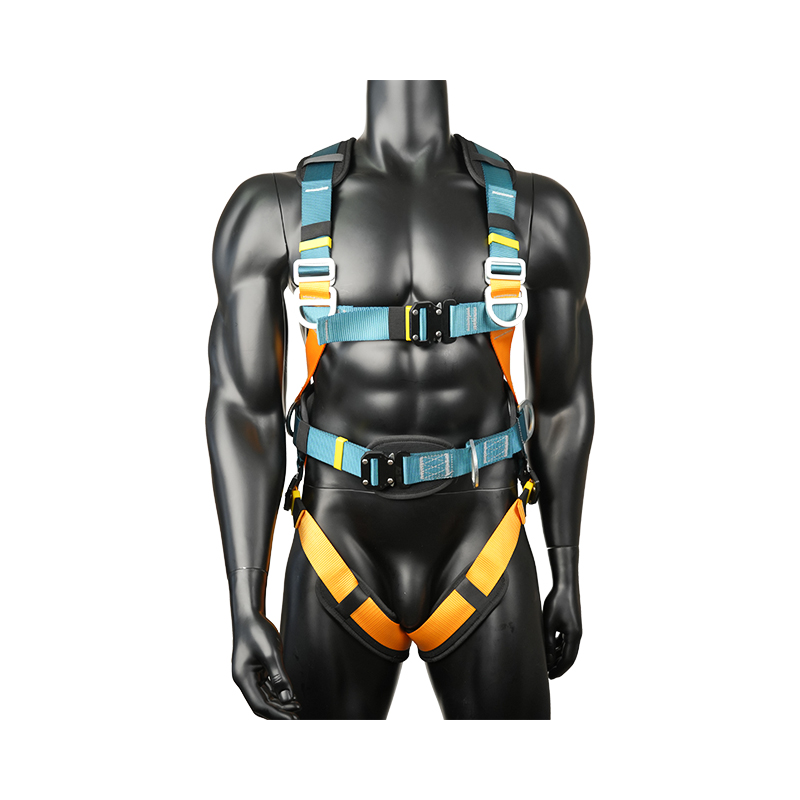 KA01 Universal Full Body Safety HarnessA five-point full-body harness with six D-rings, breathable padding and quick-release buckles, suited to construction, platform and maintenance work.View Product →
Where the job involves a fixed work position — rebar tying, welding on a beam, facade work — a positioning lifeline used as a supplement keeps hands free and limits the distance a fall can develop. It does not replace fall arrest, but it reduces how often a worker relies on it.
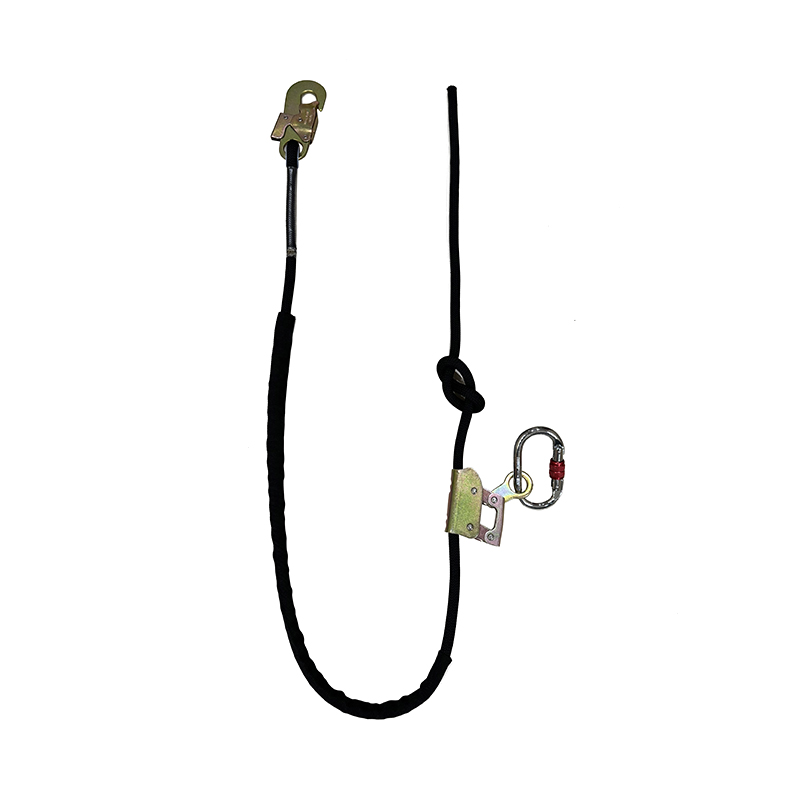 KA-PL1 Positioning Lifeline with Nylon RopeA 12 mm static-rope positioning lifeline with rope grab and two hooks, EN 358 certified for fixed work positions needing hands-free support.View Product →
Any unit that has arrested a fall, or whose line has been loaded against an edge, must come out of service immediately — even if it looks fine. Cable develops broken wires and flat spots; webbing develops glazing and fuzz. The load indicator, where fitted, tells you unambiguously. Between events, inspect before each use for cuts, corrosion, retraction speed, and a working swivel and connector gate. Store units indoors, hanging or coiled, away from solvent and standing water.
For distributors and safety managers building a catalogue, the practical question is rarely "which single unit" but "which supplier can hold the consistency". Our workshop in Taizhou has been making rope and textile safety products since 1986, moving into export markets in 2013 and aligning harness and lanyard production with EN and ANSI expectations along the way. That background matters when you need a consistent cable grade, matching hardware, and documentation that holds up to an audit.
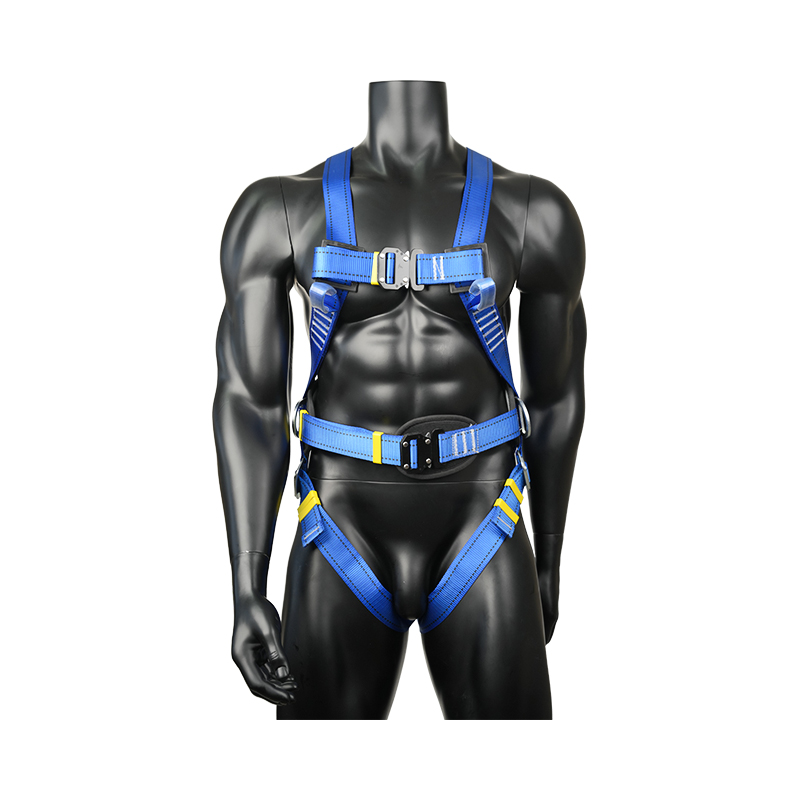 Custom Safety Harness for Branded PPE ProgrammesA customizable safety harness with options for webbing colours, D-rings, buckles, logo and packaging, suited to distributor catalogues and application-specific needs.View Product →
If your programme needs a house brand, custom webbing colours or a specific connector combination, custom PPE development is where that conversation usually starts.
A leading edge self retracting lifeline is not a premium upgrade for its own sake. It is the correct device for a specific, common and genuinely dangerous geometry — and the wrong device when the anchorage is overhead and the line stays vertical. Match the rating to the fall path, do the clearance arithmetic honestly, and the rest of the system will behave the way it was designed to.

San Ye Road, Si Xiang Sub-district, Hai Ling District, Tai Zhou City, Jiang Su Province, China

+86 151-5262-8620
Copyright @ Taizhou KA Protection Products Co., Ltd. All Rights Reserved


 English
 Español
 عربى

