Content
A safety lanyard is the connecting link between a worker's full-body harness and a certified anchor point. In a fall protection system, it is the component responsible for arresting a fall, absorbing energy, and keeping workers safely suspended until rescue. While lanyards may look like simple straps or ropes, choosing the wrong type can have fatal consequences.
Falls from height remain one of the leading causes of fatalities in the construction and industrial sectors. According to federal fall protection guidelines for general industry and construction, employers are required to provide adequate fall protection for workers at elevations of 6 feet or more in construction and 4 feet in general industry. Selecting between a single and a double safety lanyard is one of the most consequential decisions a safety manager can make — and the correct answer depends entirely on the nature of the work being performed.
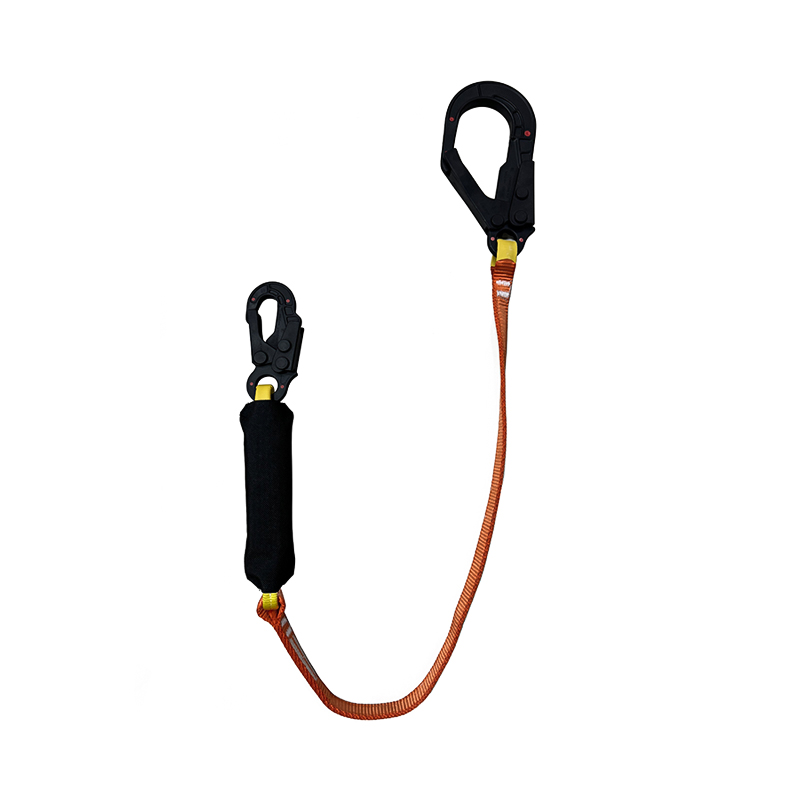
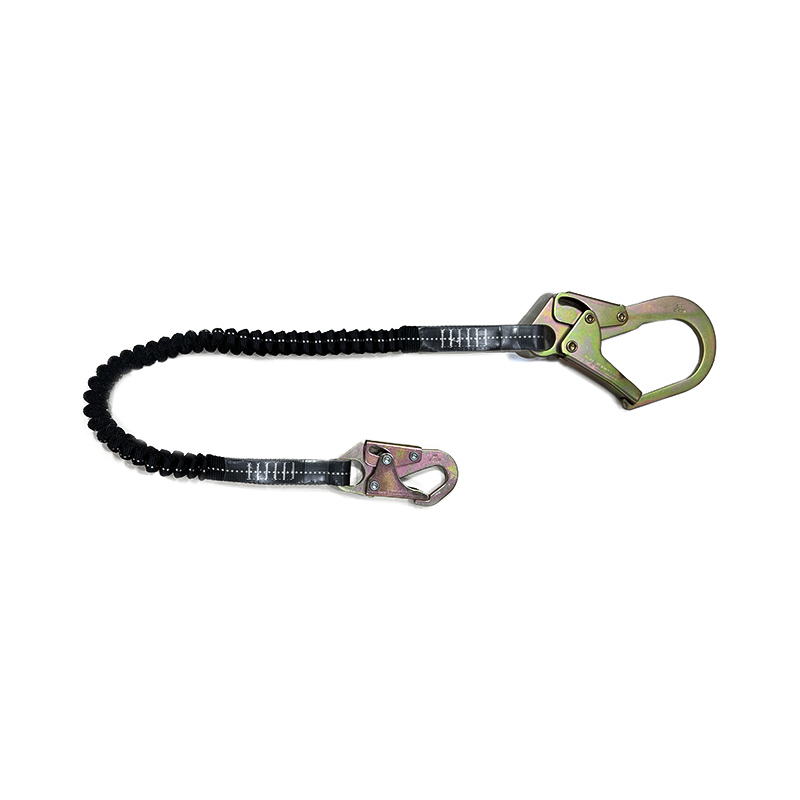
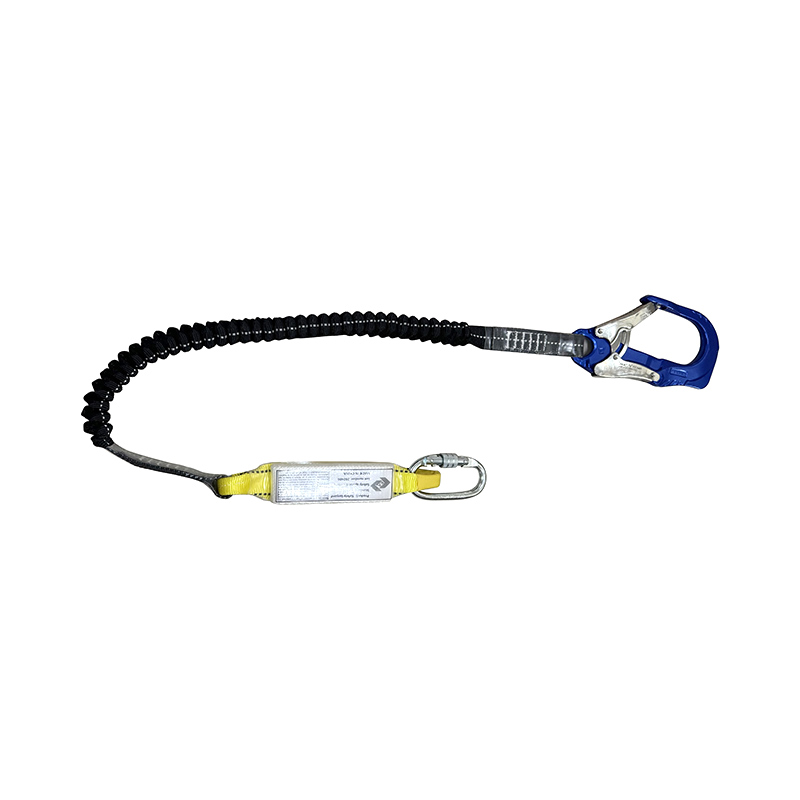
A single safety lanyard consists of one leg — a single line connecting the harness D-ring to an anchor point. It is the more compact, lightweight option in the lanyard family, and its simplicity makes it ideal for a specific category of work: stationary or low-mobility tasks where the worker remains near a single, fixed anchor point.
Typical configurations include a shock-absorbing pack integrated into the lanyard body, which deploys during a fall to reduce peak arrest forces to below 6 kN — the threshold required by both OSHA and ANSI standards. Common hardware options include snap hooks, carabiners, or scaffold hooks, depending on the anchor structure.
Single lanyards are widely used in general construction, roofing, utility maintenance, and elevated platform work where the worker does not need to transition between multiple anchor points. Their reduced bulk makes them easier to manage in tight or confined elevated spaces, and their lighter weight reduces fatigue over extended shifts.
Explore our range of single-leg fall arrest lanyards for controlled job sites, available in elastic and rope configurations with ANSI-certified hardware.
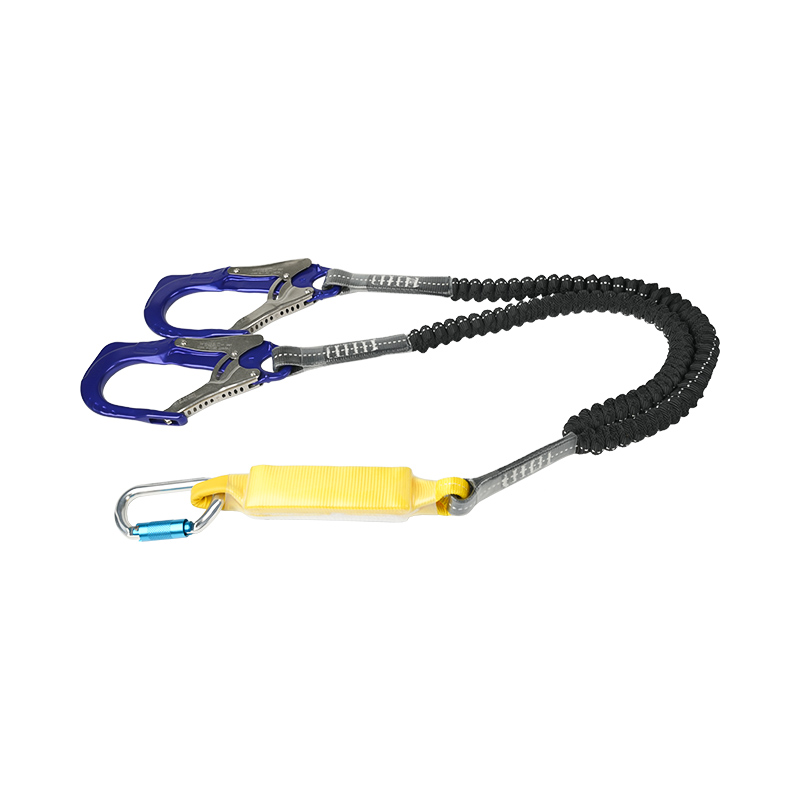
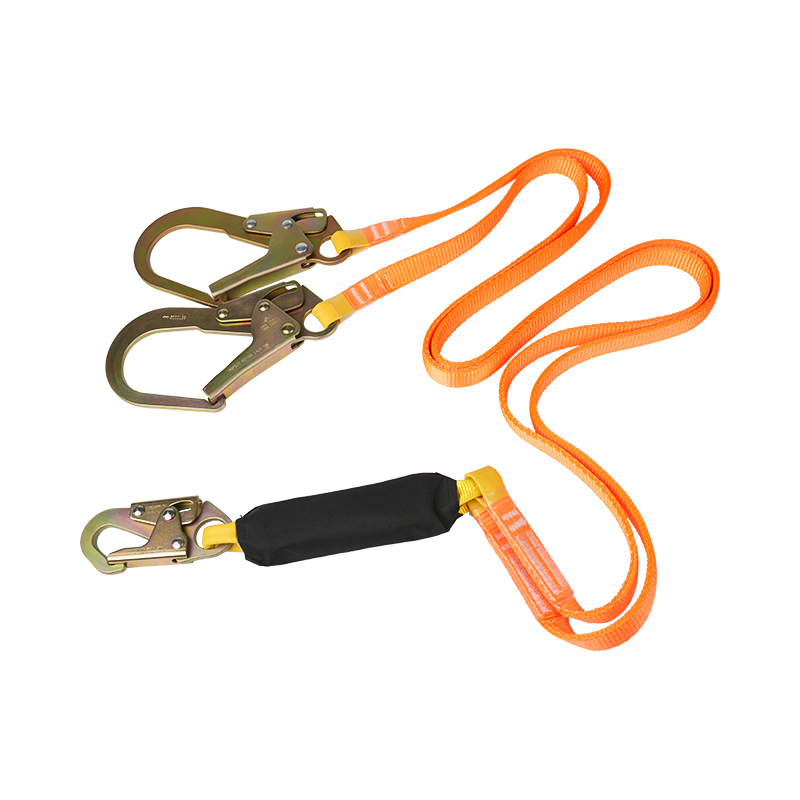
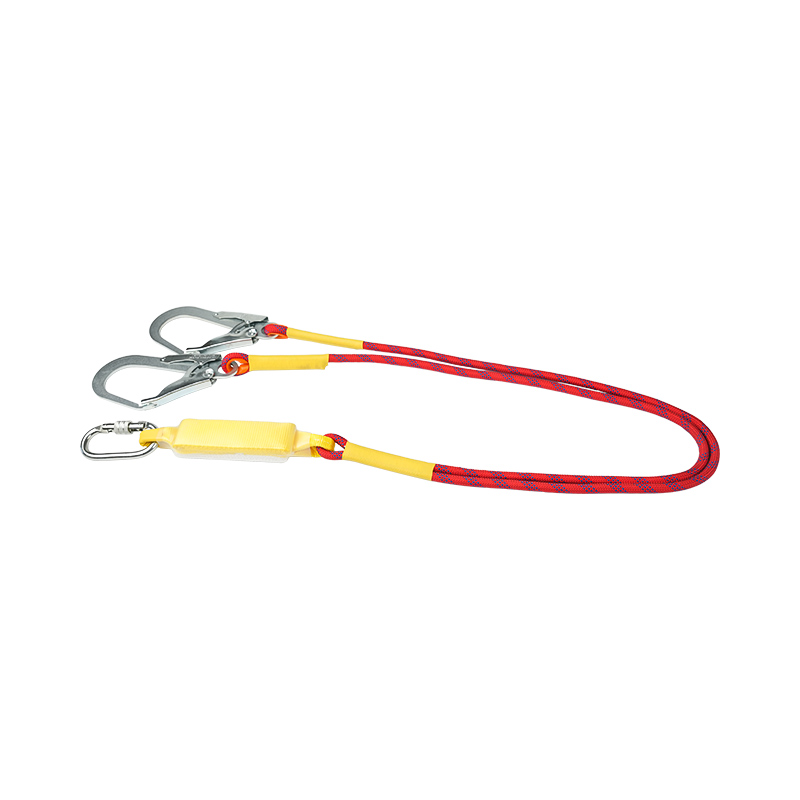
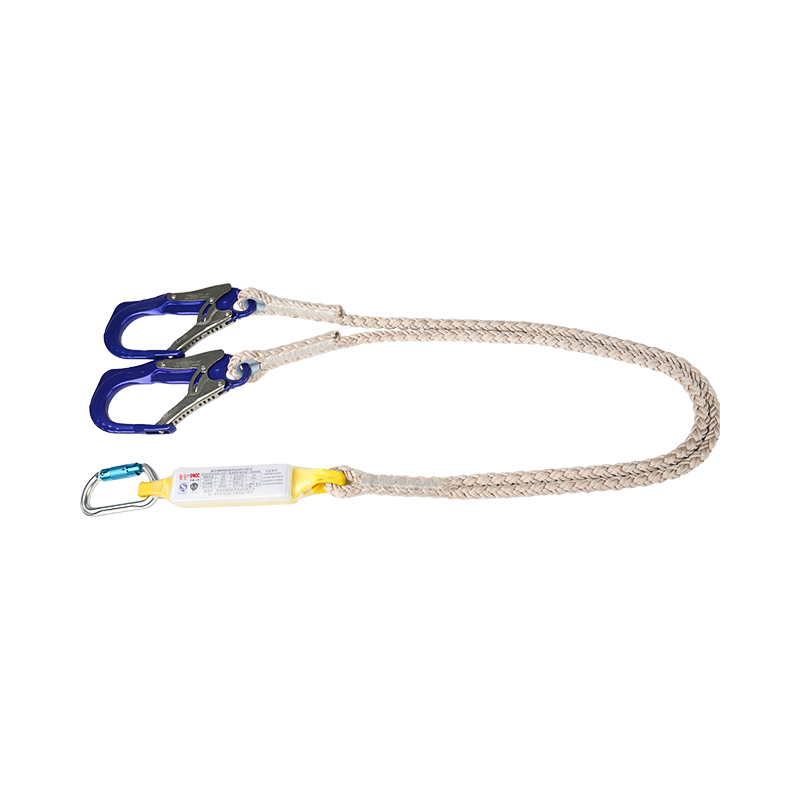
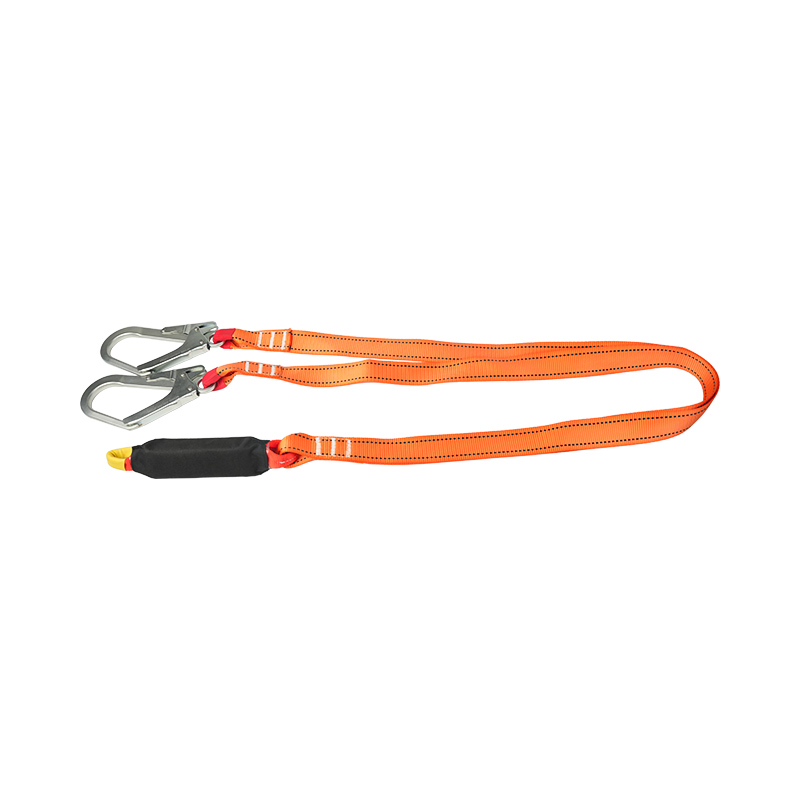
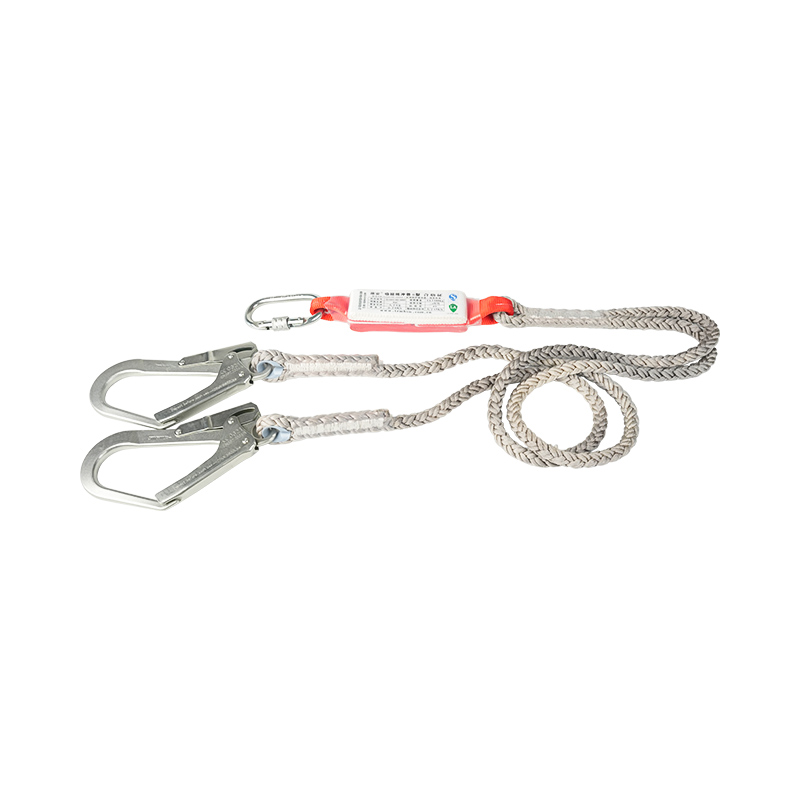
A double safety lanyard — also referred to as a twin-leg, Y-lanyard, or dual-leg lanyard — features two separate legs extending from a shared connection point at the harness end. This Y-shaped design is engineered around one critical principle: 100% tie-off at all times.
When a worker needs to move from one anchor point to another, the double lanyard allows them to clip the second leg to the new anchor before unclipping the first. At no point during the transition is the worker disconnected from a secured anchor. This uninterrupted protection eliminates the brief window of exposure that would exist with a single lanyard during anchor transitions — a window that, on a scaffolding structure or communication tower, can be the difference between life and death.
Most double lanyards incorporate an integrated energy absorber, which manages fall forces across both legs. When one leg is in use for fall arrest and the other is free, the active leg absorbs 100% of the fall energy. Models with internal or external shock packs can limit arrest forces to within OSHA's mandated 1,800 lbf (approximately 8 kN) threshold.
Browse our certified double safety lanyards with shock-absorbing systems, built with high-strength polyamide rope and aluminum alloy hardware for demanding environments.
The table below provides a practical comparison to help safety managers and procurement teams evaluate both options across the dimensions that matter most on the job site.
| Feature | Single Safety Lanyard | Double Safety Lanyard |
|---|---|---|
| Number of legs | 1 | 2 |
| 100% tie-off capability | No | Yes |
| Suitable for anchor transitions | No | Yes |
| Weight & bulk | Lighter, more compact | Heavier, bulkier |
| Best work environment | Fixed, stationary positions | Mobile, multi-anchor environments |
| Typical industries | Roofing, construction platforms, utilities | Scaffolding, tower climbing, telecommunications |
| Compliance requirement | OSHA, ANSI Z359.13 | OSHA, ANSI Z359.13 (mandatory for 100% tie-off sites) |
| Cost | Lower | Higher |
Certain work environments make 100% tie-off not just a best practice, but a regulatory necessity. In these settings, a single lanyard simply cannot meet the protection requirements, and double lanyards become the standard:
OSHA's fall protection standard under 1926.502(d) does not mandate double lanyards explicitly in all cases, but does require that workers never be exposed to a fall hazard. For any task involving anchor point transitions, a double lanyard is the only practical means of achieving continuous compliance.
When selecting between a single and double safety lanyard for your workforce, the decision should be guided by a structured evaluation of four core factors:
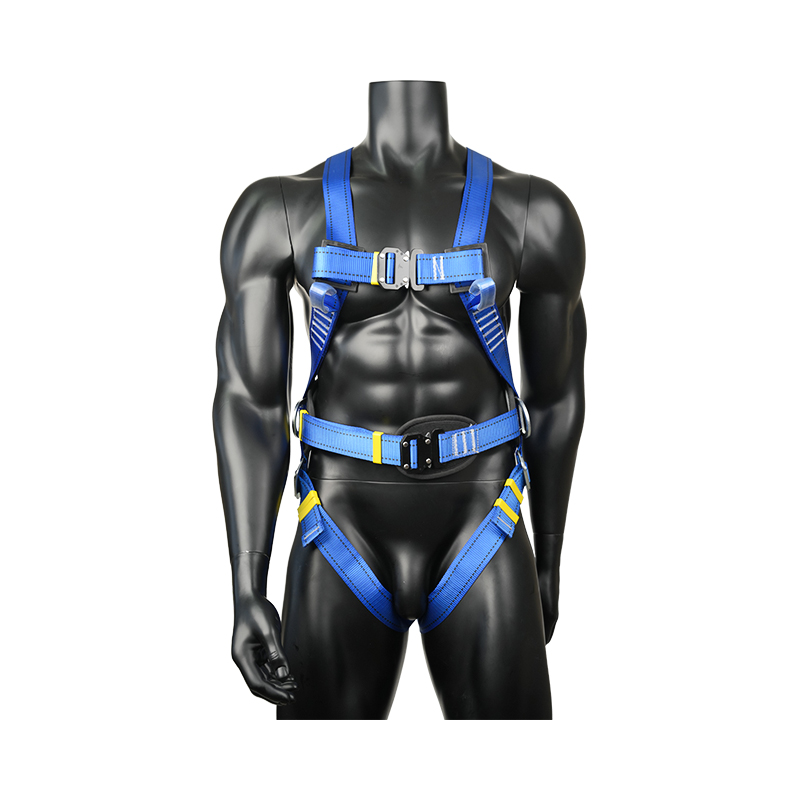
For workers operating across complex elevated environments, pairing the right lanyard with compatible full-body fall protection harnesses is equally essential to system performance and worker comfort.
Regardless of which type you select, proper inspection and maintenance are non-negotiable. Even a high-quality lanyard becomes a liability if it is damaged, worn, or incorrectly stored.
If your operations span multiple job site types, configurations, or regulatory environments, consider working with a manufacturer to build a customized solution. Our customized fall protection lanyard solutions are engineered to your specific work requirements, material preferences, and certification standards.
The right lanyard is the one matched precisely to the job at hand. By understanding the fundamental differences between single and double safety lanyards — and applying the selection criteria above — safety managers can ensure every worker on every site has the protection they need, exactly when they need it.

San Ye Road, Si Xiang Sub-district, Hai Ling District, Tai Zhou City, Jiang Su Province, China

+86 151-5262-8620
Copyright @ Taizhou KA Protection Products Co., Ltd. All Rights Reserved



 English
 Español
 عربى
عربى
