Content
Falls remain the leading cause of fatalities across the utility industry. According to the U.S. Bureau of Labor Statistics, electrical power-line installers and repairers consistently rank among the most dangerous occupations in the country, with fall-related incidents accounting for a disproportionate share of deaths and serious injuries each year. For safety managers and operations leaders at utility companies, having a structured, field-ready fall protection equipment checklist is not optional—it is a fundamental safety obligation.
This guide walks through every major category of fall protection gear your utility crews need, covers the specific demands of electrical work environments, and provides a practical pre-use inspection checklist aligned with OSHA standards. Whether your teams are climbing distribution poles, maintaining substations, or accessing rooftop equipment, the information below gives you a clear framework to build and audit a compliant fall protection program.
OSHA's fall protection regulations apply broadly under 29 CFR 1910 (General Industry) and 29 CFR 1926 (Construction), and both frameworks impose strict requirements on utility employers. For electrical work specifically, OSHA 1910.269 governs electric power generation, transmission, and distribution operations—mandating fall protection whenever employees are exposed to falls of four feet or more in general industry settings, or six feet or more in construction-related utility work.
Beyond the regulatory floor, the physical environments utility workers face demand a higher level of preparation than most industries. Crews routinely operate on wooden poles exceeding 100 feet, climb communication and transmission towers, access confined transformer vaults, and work around energized equipment where a fall and electrical contact can occur simultaneously. No other industrial sector combines height, electrical hazard, and environmental exposure at this frequency. This combination makes the right equipment selection—and its consistent, pre-use inspection—critical to keeping workers safe on every shift.
Utility fall protection systems share the same fundamental architecture as other industries—anchorage, body support, and connection hardware—but the specific products required reflect the unique demands of utility work. Below are the essential categories every utility safety program must address.
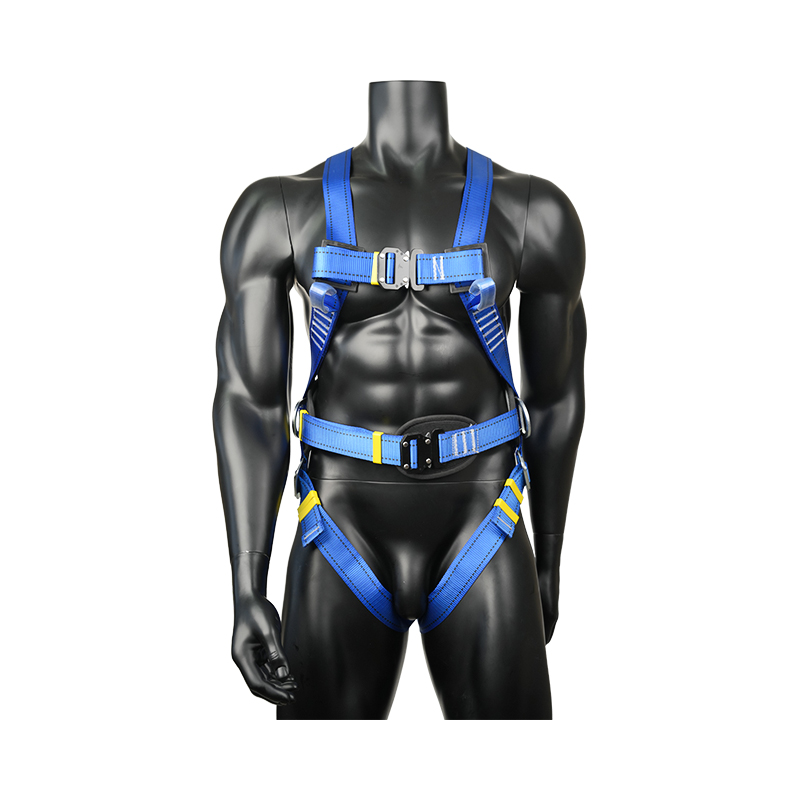
The full-body safety harness is the foundation of any personal fall arrest system. Unlike simple body belts (which are no longer OSHA-compliant for fall arrest), full-body harnesses distribute fall forces across the chest, shoulders, and thighs, dramatically reducing the risk of internal injury upon arrest. For utility linemen, look for harnesses with multiple D-ring attachment points—dorsal for fall arrest, sternal for ladder climbing, and side D-rings for positioning. Quick-release buckles are strongly preferred in electrical environments, enabling rapid don and doff in emergency situations.
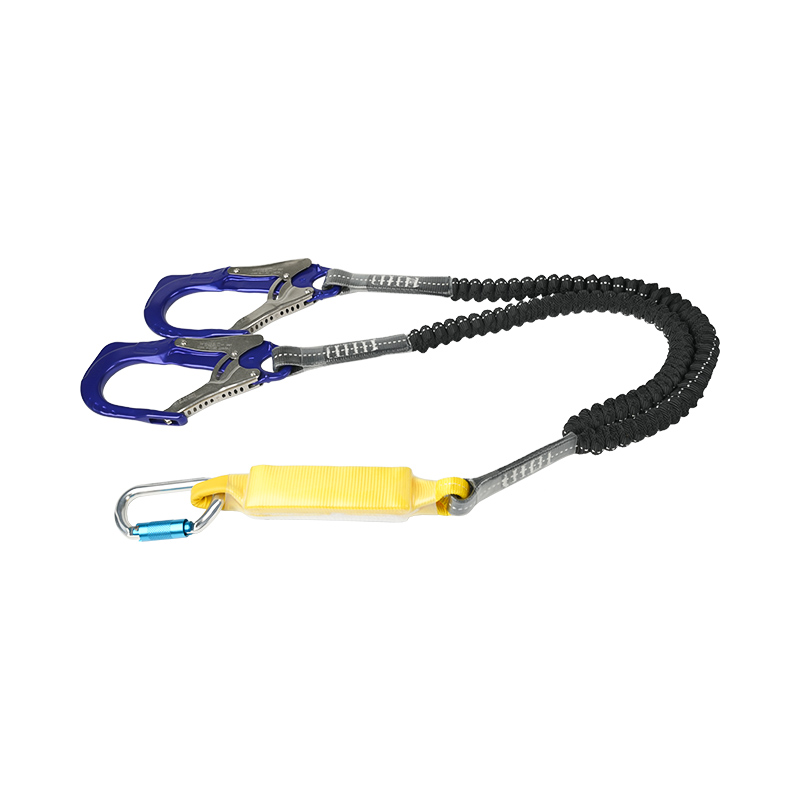
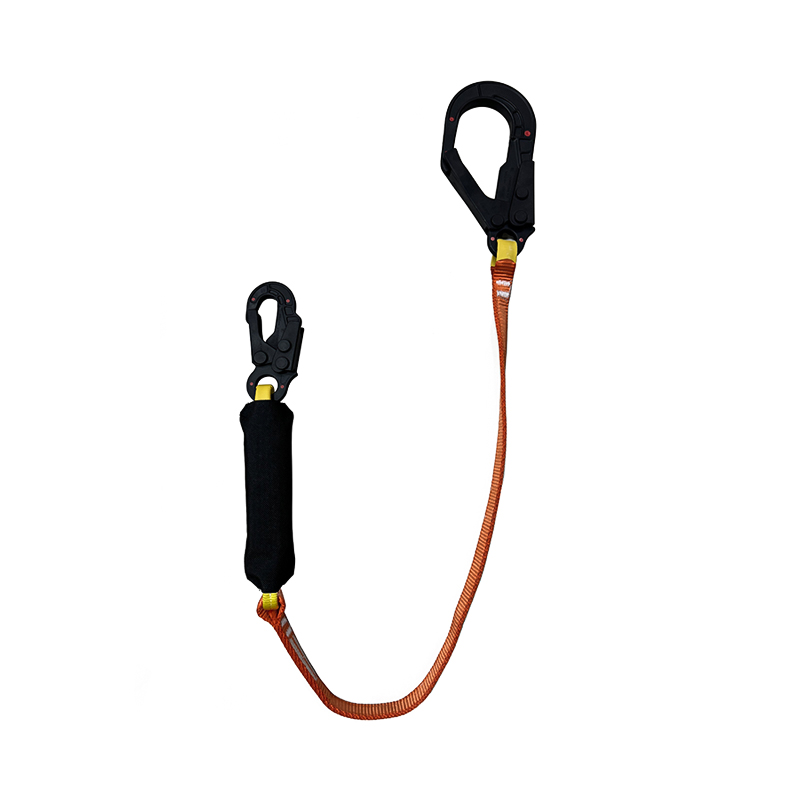
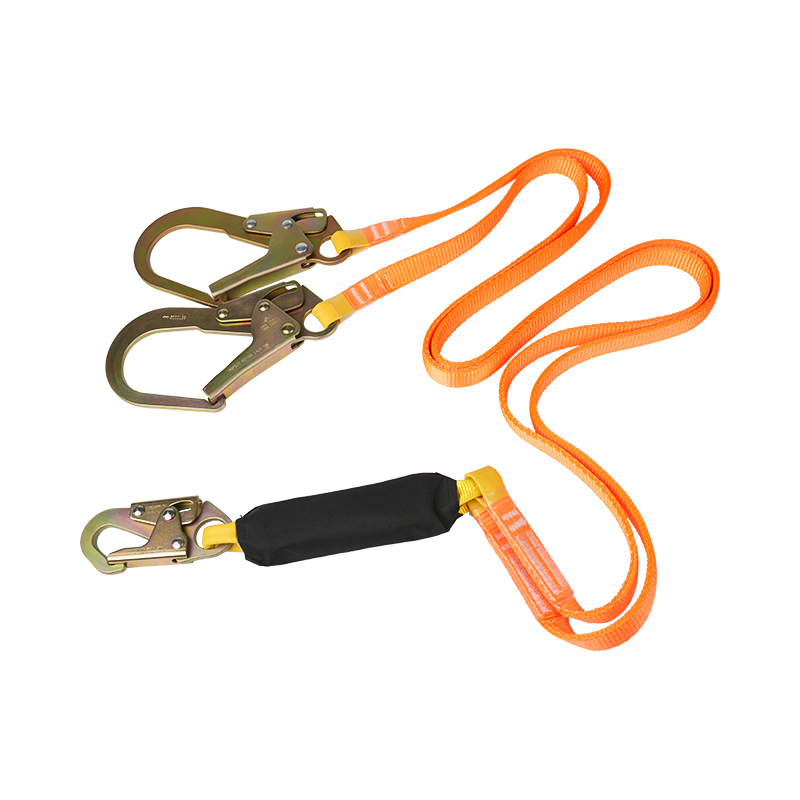
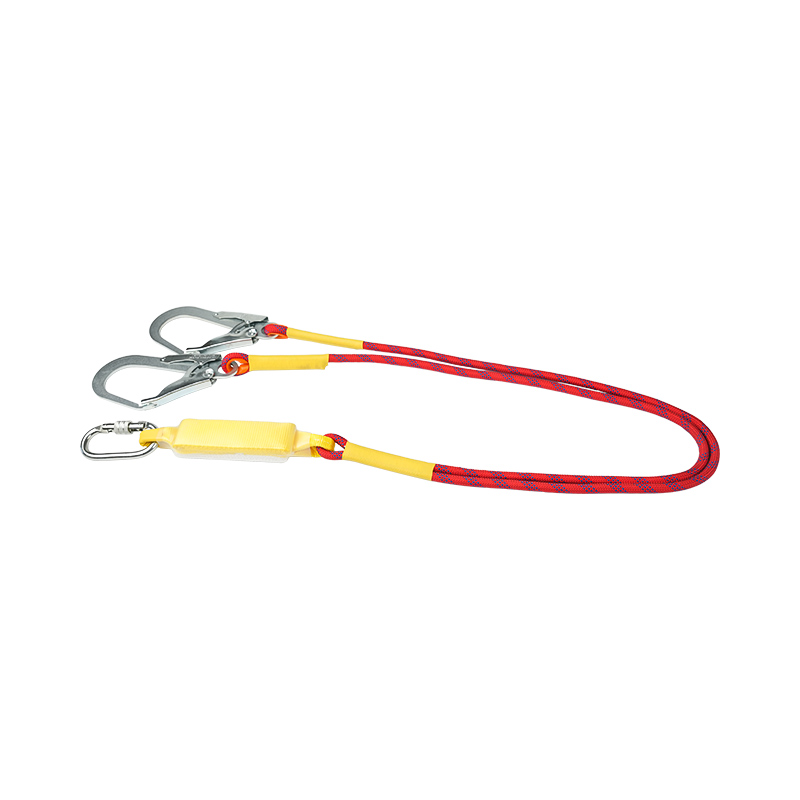
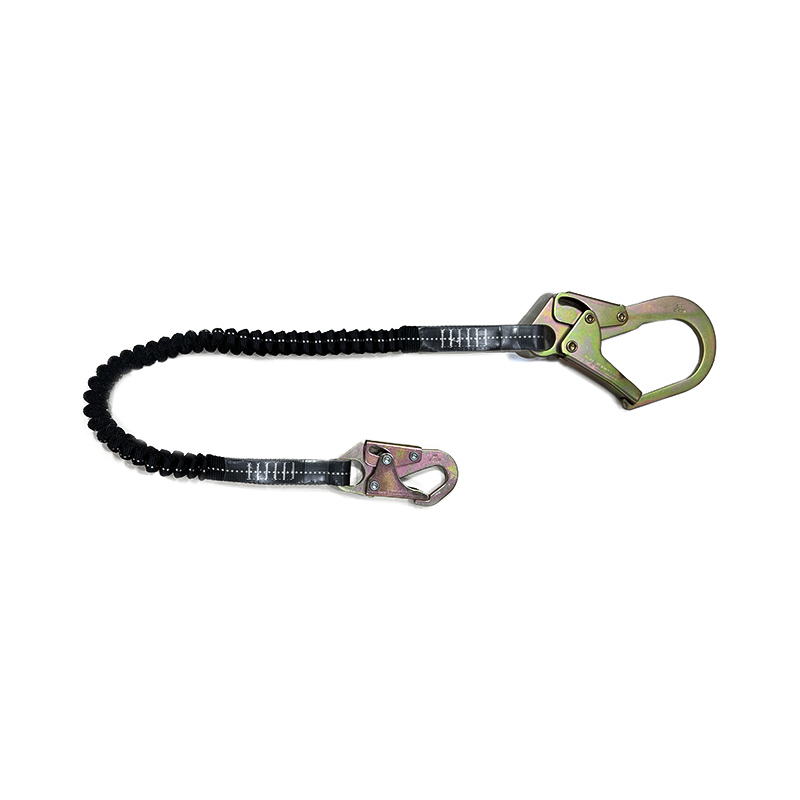
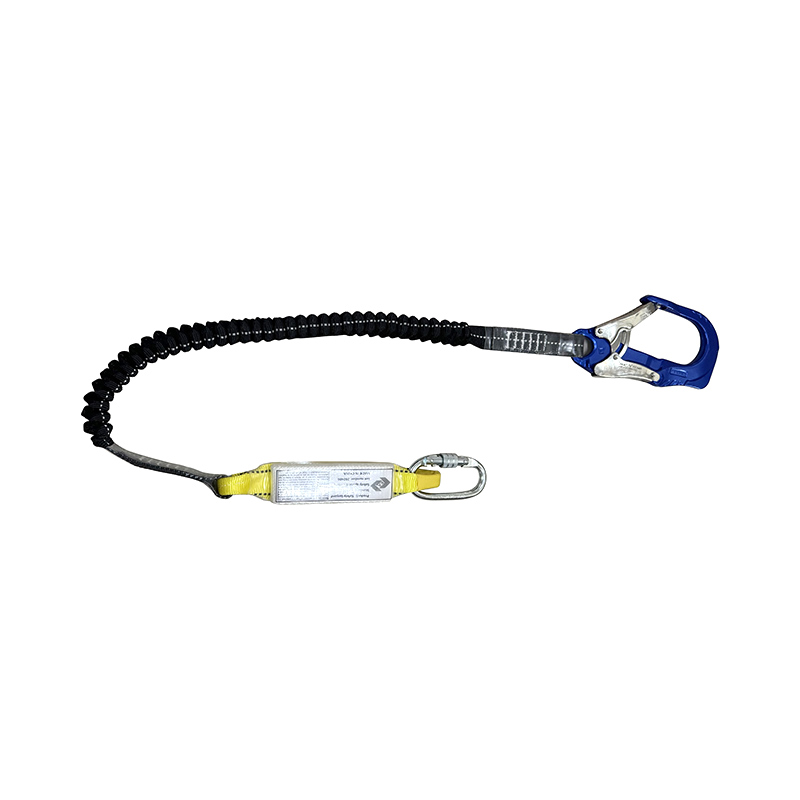
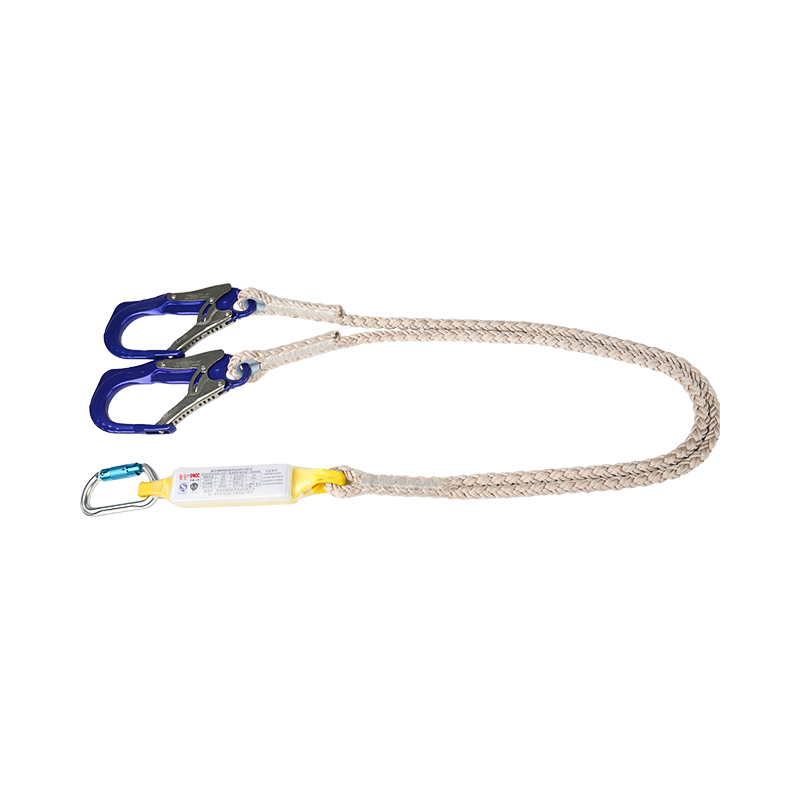
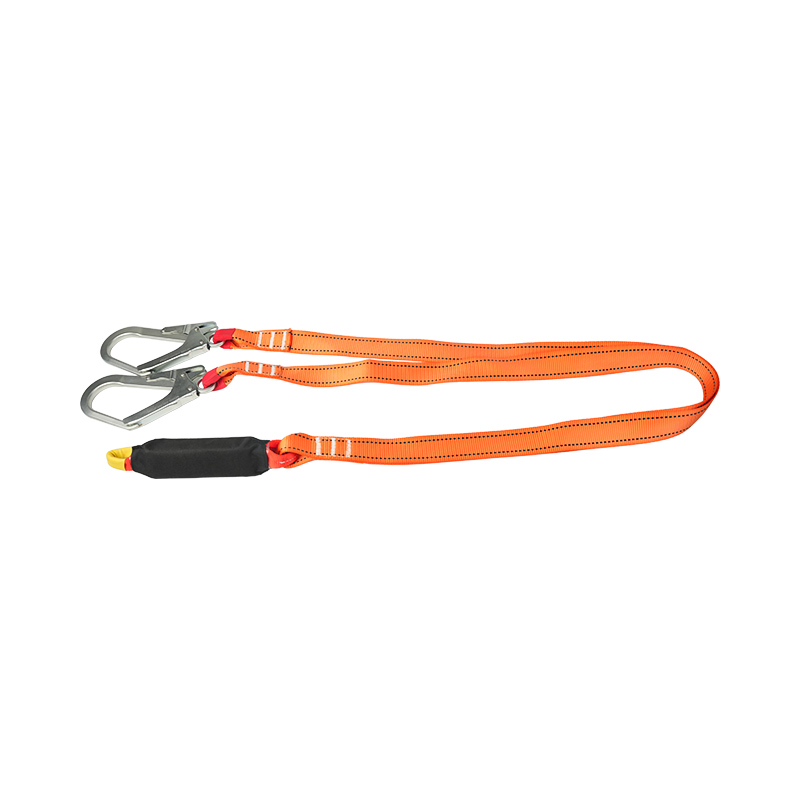
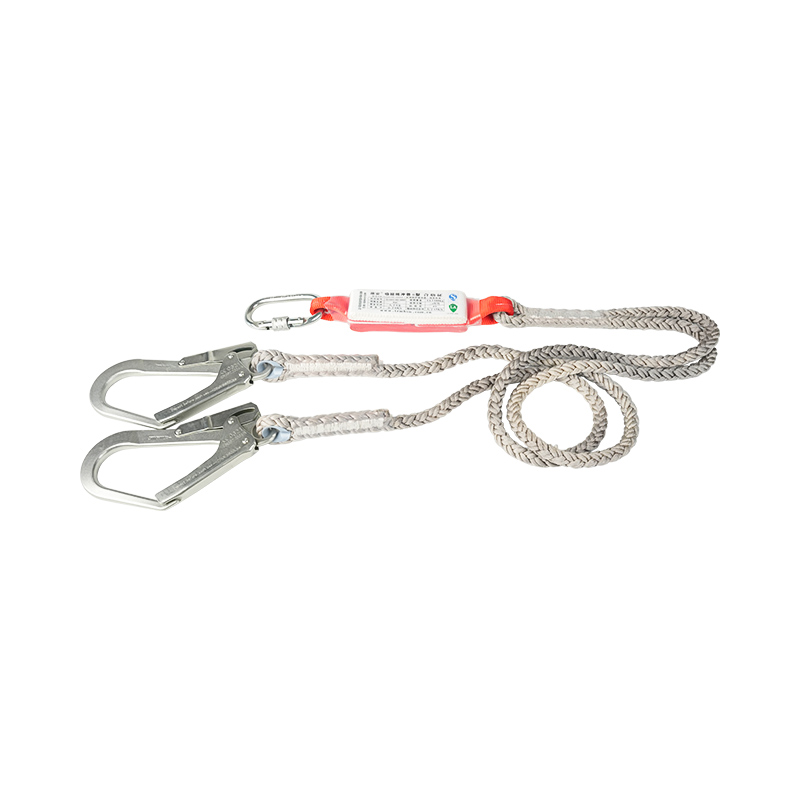
Lanyards connect the harness to an anchor point or lifeline. Double safety lanyards (also called twin or Y-lanyards) are standard for utility pole and tower climbers because they allow 100% tie-off—the worker is always connected to the structure even while transitioning between anchor points. Single lanyards are appropriate for stationary positioning tasks where continuous connection is maintained throughout the work. All shock-absorbing lanyards must comply with ANSI/ASSP Z359.13 and be rated to arrest a fall with a maximum arresting force of 1,800 lbs. For a deeper comparison of lanyard types and positioning lines, see our guide on safety harness vs. shock-absorbing lanyard vs. positioning line.
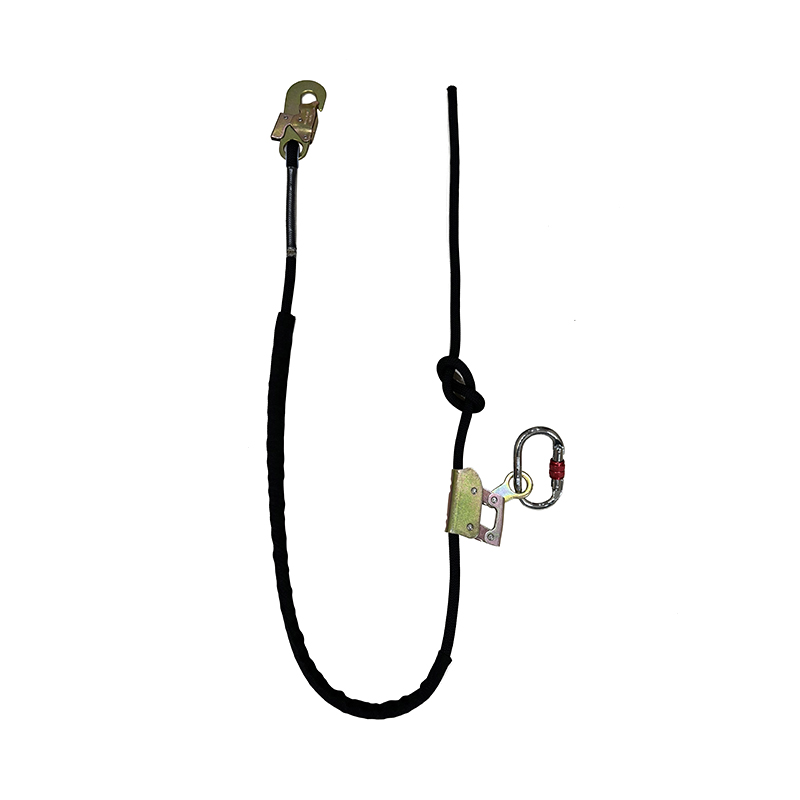
A positioning line is not a fall arrest device—it holds a worker in a working position hands-free on a pole or structure. Positioning lines must be rigged so that a free fall is limited to two feet or less, and they must be used in conjunction with a fall arrest system (harness and lanyard) to remain OSHA-compliant.
Every fall protection system requires a certified anchorage capable of supporting at least 5,000 lbs per attached worker, or designed and installed by a qualified person as part of a complete system. For utility work, anchor types include pole straps, cross-arm straps, beam clamps, and engineered fixed anchors on substations or rooftop equipment platforms. Never use process piping, conduit, or electrical equipment as improvised anchor points.
SRLs automatically take up slack as the worker moves, arresting a fall within inches rather than the several feet a standard shock-absorbing lanyard allows. They are ideal for vertical climbing applications on fixed ladders and towers, and for workers moving laterally across a flat or low-slope rooftop. SRLs are available in cable or webbing construction, and leading-edge-rated SRLs are required wherever workers could fall over a sharp or unprotected edge.
Standard fall protection harnesses and lanyards are manufactured from conductive materials or hardware that can create an electrical path between the worker and energized equipment. For utility crews working near or on energized lines, transformers, or switchgear, dielectric (electrically insulated) fall protection equipment is essential—not a premium upgrade.
A dielectric safety harness is engineered with non-conductive hardware—insulated D-rings, buckles, and connectors—designed to break the electrical circuit in the event of accidental contact with energized components. These harnesses are tested and certified to ASTM F887 standards, and many meet or exceed both CE and ANSI/ASSP Z359.11 requirements. Look for harnesses with Kevlar®/Nomex® webbing if arc flash exposure is a regular part of your crew's environment, as these materials resist ignition and flame spread.
Equally critical is the dielectric safety lanyard. Insulated hooks and double-deck polyester webbing prevent current from traveling along the lanyard from an energized structure to the worker. Twin dielectric lanyards with shock absorbers are the recommended configuration for any lineman performing live-line work or climbing in proximity to energized conductors.
Do not assume that wearing rubber gloves alone provides adequate protection when working at height near energized components. A complete dielectric fall protection system—harness, lanyard, and insulated connectors—is the only way to address both the fall risk and the electrical risk simultaneously.
OSHA requires that all personal fall protection equipment be inspected before each use by the worker, and at least annually by a competent person. The following checklist covers the four primary equipment categories. If any inspection point results in a "No" answer, the equipment must be immediately removed from service. For a practical step-by-step guide on donning and connecting equipment, refer to our article on how to use a safety harness and lanyard.
| Equipment | Inspection Point | Pass Criteria |
|---|---|---|
| Full-Body Harness | Webbing condition | No cuts, frays, burns, abrasions, or chemical discoloration |
| Stitching | No pulled, broken, or missing stitches at stress points | |
| D-rings | No cracks, distortion, corrosion, or sharp edges; moves freely | |
| Buckles & adjusters | Function smoothly; no cracking, corrosion, or deformation | |
| Labels | Manufacturer label legible; no evidence of prior fall arrest activation | |
| Lanyard / SRL | Rope or webbing | No cuts, kinks, abrasions, heat damage, or chemical exposure |
| Snap hooks & carabiners | Self-locking gate closes and locks automatically; no corrosion or distortion | |
| Shock absorber pack | Pack intact, not deployed; no tears or damage to deployment cover | |
| SRL housing | No cracks, dents, or missing labels; line retracts freely under light tension | |
| SRL impact indicator | Indicator in undisturbed position (not pulled out or exposed red band) | |
| Positioning Line | Rope or strap body | No cuts, abrasions, or degradation along full length |
| Adjustment hardware | Rope grab or adjuster locks securely at all positions | |
| Terminal connections | Thimbles and ferrules intact; no splicing damage | |
| Anchorage / Pole Strap | Strap or sling material | No tears, holes, UV degradation, or heat damage |
| Hardware connectors | D-rings and hooks free of corrosion and deformation | |
| Attachment integrity | Stitching at load-bearing end points fully intact |
Knowing when to retire fall protection gear is as important as knowing how to inspect it. The following conditions require immediate removal from service—no exceptions, regardless of remaining scheduled inspection dates:
Removed-from-service equipment should be physically destroyed or marked with a permanent "DO NOT USE" tag to prevent accidental redeployment.
A checklist is only as effective as the program that supports it. For utility companies, a compliant and functioning fall protection program requires three institutional commitments beyond individual equipment inspection.
First, formal training for all workers exposed to fall hazards. OSHA requires that each worker be trained by a competent person in the recognition of fall hazards, the proper use and donning of fall protection equipment, and the limitations of each system component. Training must be documented and refreshed whenever equipment, procedures, or work conditions change, or following any fall-related incident.
Second, annual competent person inspections. In addition to daily pre-use checks, all fall protection equipment must be formally inspected at least once per year by a competent person—someone with the knowledge and authority to identify defects and take gear out of service. These inspections must be documented with dates, inspector identification, equipment serial numbers, and findings.
Third, a written fall protection plan for high-hazard tasks. OSHA 1910.269 and related standards require a documented plan for any task where conventional fall protection systems cannot be used. This plan must be site-specific, prepared by a qualified person, and available on site during the work. It should address hazard identification, selected protection methods, equipment specifications, and emergency rescue procedures should a worker become suspended in their harness.
Falls in the utility industry are preventable. The combination of the right equipment—including dielectric gear for electrical environments—consistent pre-use inspection, and a structured program framework gives your crews the protection they deserve and your organization the compliance foundation it requires.

San Ye Road, Si Xiang Sub-district, Hai Ling District, Tai Zhou City, Jiang Su Province, China

+86 151-5262-8620
Copyright @ Taizhou KA Protection Products Co., Ltd. All Rights Reserved



 English
 Español
 عربى
عربى
